Baktash Siawash, a former lawmaker from Afghanistan, has begun a sit-in camp outside the European Parliament in Brussels, calling on European governments to take stronger action against Taliban restrictions on women and girls.
Siawash said on Wednesday that he started the move to draw attention to “gender apartheid” in Afghanistan and to press the European Union to formally recognize it as such.
He said more than 1,600 days have passed since women and girls were effectively barred from education and many forms of employment following the Taliban’s return to power in 2021. He questioned why European governments had not yet recognized the situation as gender apartheid and called for an end to diplomatic engagement with the Taliban.
He also urged European countries to designate the Taliban as a terrorist organization, arguing that current policies amount to what he described as “silent diplomacy” and indirect complicity.
Siawash said the protest in Brussels marked the start of a broader campaign and that he planned to travel to other European cities to continue advocating for women’s rights.
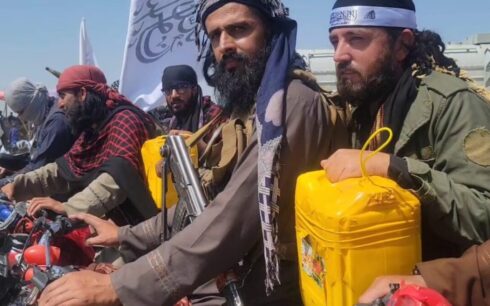
The demonstration comes amid sustained international concern over the status of women and girls in Afghanistan, where Taliban have imposed sweeping restrictions on education, employment and public life.
According to international organizations, the Taliban have issued more than 70 directives limiting the rights of women and girls since 2021. United Nations experts have said the policies may amount to crimes against humanity and have raised the possibility that they constitute gender apartheid.
Meanwhile, Richard Lindsay, the UK’s special representative for Afghanistan, on Wednesday said his country joins a group of UN experts who condemned Taliban ban on women employees in United Nations offices in Afghanistan, warning that such measures undermine humanitarian operations. “Without women, the ability to support vulnerable communities is severely constrained,” he said, adding that respect for women’s rights is essential for effective aid delivery.
Some women and girls in Afghanistan, particularly those barred from school and work, said the protest offered a measure of recognition but emphasized the need for concrete action.
“We just want to study and work,” said Fereshta, a Kabul resident. “When we see that others have not forgotten us, it gives us hope that these restrictions might one day be lifted.”
Despite growing international criticism, Taliban have defended their policies as consistent with their interpretation of Islamic law.