Human Rights Watch on Friday said a Pakistani airstrike on a rehabilitation center in the east of Kabul this month was unlawful and a possible war crime, adding to growing scrutiny over one of the deadliest cross-border attacks in Afghanistan in recent months.
In a statement, the rights group said that based on figures by international agencies, the March 16 strike hit the Omid Rehabilitation Center, a 2,000-bed facility in eastern Kabul, killing at least 143 people and injuring more than 250 others, most of them patients. It called on Pakistani authorities to conduct a prompt and impartial investigation and hold those responsible to account.
“The available evidence indicates that the Pakistani airstrike against a well-known Kabul medical facility killing dozens of patients was unlawful,” Patricia Gossman, Human Rights Watch’s senior associate Asia director, said in the statement.
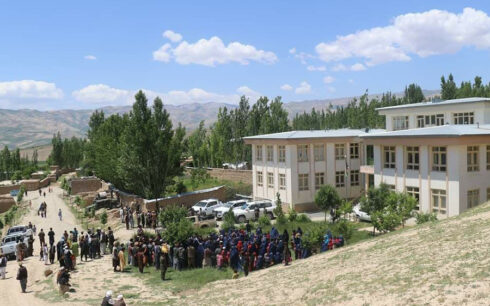
The attack struck a sprawling treatment complex that has operated since 2016 on the grounds of Camp Phoenix, a former NATO base. According to an employee interviewed by Human Rights Watch, three buildings were hit: a dining hall, a residential building housing 450 patients and a guard room where eight men were working.
An official with an international agency told the group that many patients were in the dining area at the time, gathering to break the Ramadan fast. The United Nations separately described the “complete destruction” of a block housing adolescents receiving drug treatment.
Pakistan has publicly described the March 16 operation as a set of “precision airstrikes” on what it called technical support infrastructure and ammunition storage facilities. But Human Rights Watch said the available evidence did not support that account.
The organization said it verified a video posted by Pakistan’s information minister the next day showing a missile hitting the largest building in the compound, followed by explosions at two other structures. Humanitarian officials told researchers that the main building was used as a dining hall and for accommodation, an assessment Human Rights Watch said it corroborated through earlier photographs and video.
The group also analyzed satellite imagery from March 23, which it said showed widespread destruction across the compound, including the destruction of the largest building and two smaller structures, with other buildings heavily damaged or burned.
Human Rights Watch said it found no evidence that the Omid center was being used for military purposes. Under the laws of war, hospitals and clinics receive special protection, and even where questions arise about military use, warnings must be given and civilian harm must not be excessive in relation to the anticipated military gain.
“On the basis of available information,” the group said, the strike appeared to be unlawfully indiscriminate. It added that even if a military objective had been present, the attack appeared to violate the prohibition on disproportionate strikes.
The organization said serious violations of the laws of war committed deliberately or recklessly can amount to war crimes.
The aftermath has been compounded by Afghanistan’s weak forensic capacity. Human Rights Watch said poor health infrastructure and the lack of DNA testing had made identification of the dead difficult. One Afghan forensic doctor said some bodies could not be identified. A father quoted in the statement said his family searched hospitals before finding the victim’s body at the forensic medicine department.
The center also housed detainees and prisoners transferred from Pul-e-Charkhi prison, as well as people detained during anti-drug sweeps in Kabul, according to former employees and aid officials. Some of the missing, Human Rights Watch said, may include prisoners and patients who fled in the chaos after the strike.
The group placed the attack in the context of worsening tensions between Pakistan and Afghanistan. Pakistani officials have repeatedly accused Taliban authorities of harboring and supporting Tehrik-i-Taliban Pakistan, an armed group responsible for deadly attacks inside Pakistan. Cross-border violence has surged in recent months, and the United Nations documented dozens of civilian deaths and hundreds of injuries from Pakistani airstrikes across Afghanistan in February.
Human Rights Watch urged foreign governments to press Pakistan for accountability and to ensure that any failures in intelligence, target verification and military decision-making are identified.
Previously, sources confirmed to Amu TV that at least three bombs hit the center on March 16, including one bomb on the dining area and two others on nearby containers in the complex where dozens of patients were waiting to be discharged.