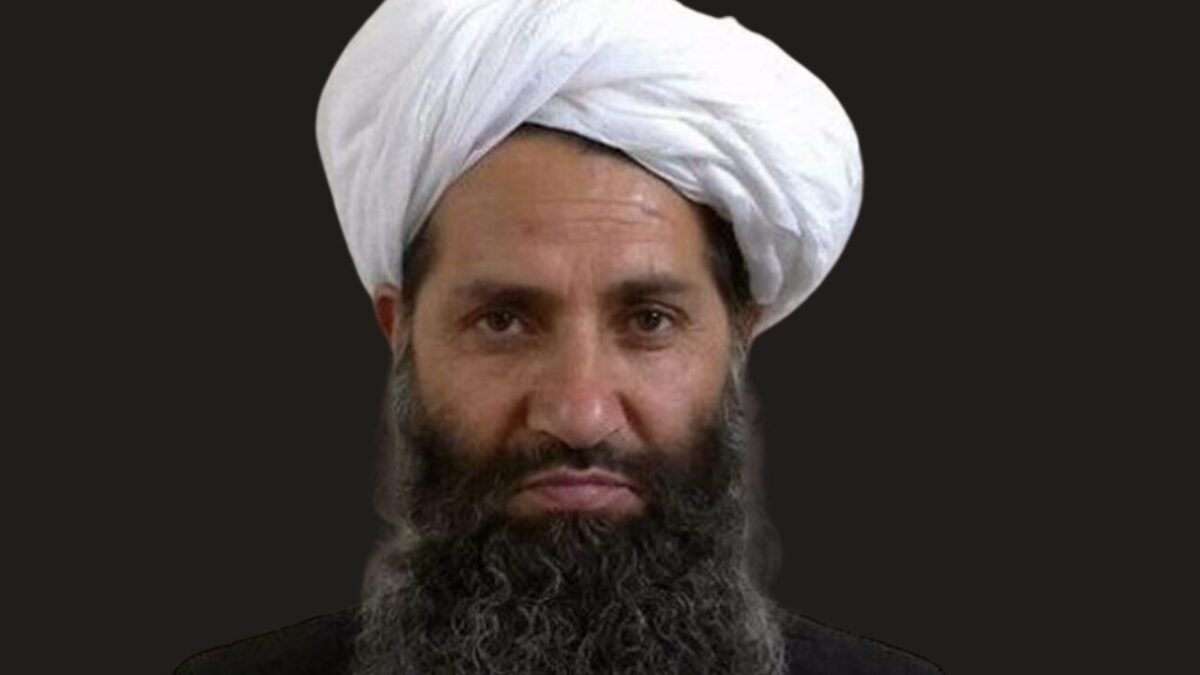
The Taliban’s supreme leader, Hibatullah Akhundzada, made no reference to recent Pakistani airstrikes, including reported civilian casualties in Kabul, in a message delivered during Eid prayers in Kandahar.
In an audio recording of a 42-minute speech released by Taliban, Akhundzada focused on enforcing Islamic law, urging loyalty to the Taliban system and emphasizing unity, faith and religious values.
“We will not be defeated by force,” he said. “Even if we are bombed or attacked, our strength does not come from weapons or aircraft, but from faith, unity and brotherhood.”
The speech did not mention Monday night’s reported airstrikes in Kabul, which Taliban officials say killed more than 400 people and wounded more than 250 others. Sources have told Amu TV that at least 200 people have been killed in the attack that targeted a rehabilitation facility in the east of Kabul.
The omission comes amid escalating cross-border clashes between Taliban forces and Pakistan, now in their third week, with growing concerns over civilian casualties.
Akhundzada also called for expanding religious education for children in mosques, urging communities to create learning spaces where needed.
“People should establish educational circles and ensure their children receive proper instruction,” he said, adding that mosques should be equipped to provide such education where facilities are lacking.
His remarks come as girls in Afghanistan have been barred from attending school beyond primary level for more than four years under Taliban rule — a policy widely criticized by the international community.
In another part of the speech, Akhundzada defended policies introduced by his administration, saying they were rooted in Islamic law.
“All these laws and rulings are derived from Islamic texts and Sharia,” he said.
He also rejected international criticism, particularly over human rights and women’s rights, saying such concerns were used by opponents to create division.
“Enemies try to create divisions among you,” he said. “They raise issues like human rights and women’s rights, claiming rights are being violated. We have done nothing wrong.”
The United Nations and other international organizations have repeatedly criticized Taliban policies, particularly restrictions on women and girls, describing them as violations of fundamental human rights.
In June last year, the International Criminal Court issued arrest warrants for Akhundzada and Abdul Hakim Haqqani, the Taliban’s chief justice, on allegations of crimes against humanity.