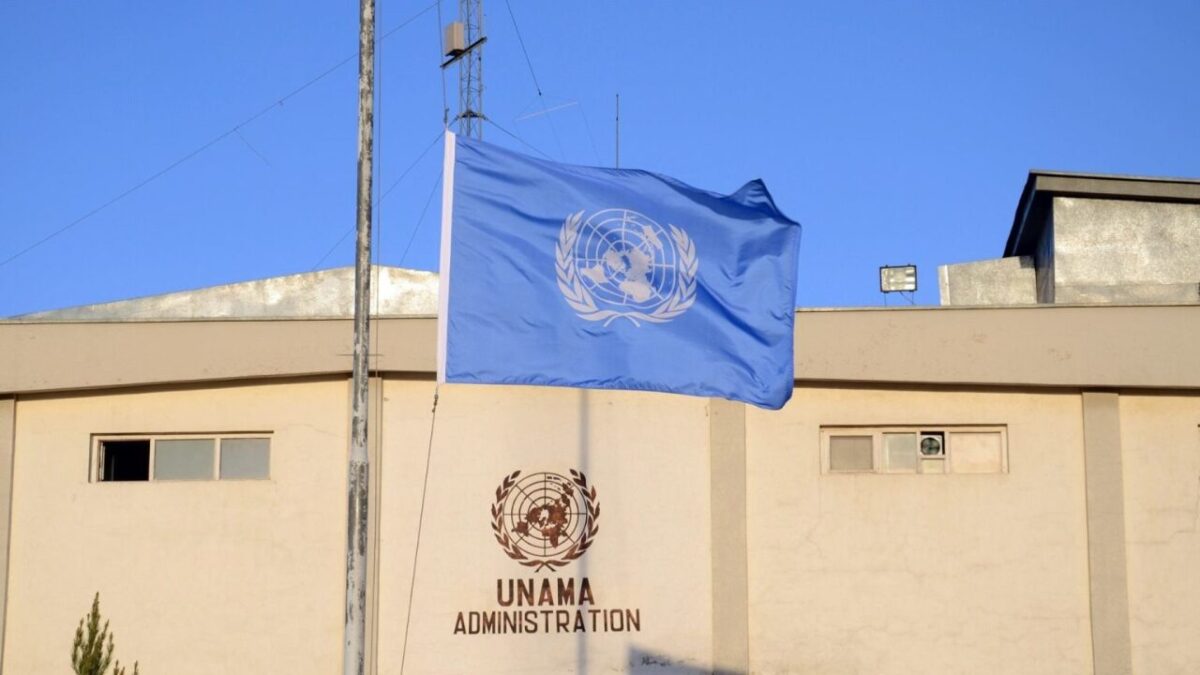
The UN Security Council is expected to renew the mandate of its political mission in Afghanistan for only three months on Monday, an unusual move that breaks with the mission’s traditional one-year extensions after the United States pushed for a shorter renewal and a broader review of the operation.
The United Nations Assistance Mission in Afghanistan (UNAMA) has typically had its mandate renewed annually since the mission was established in 2002. The latest compromise among council members would extend the mission’s mandate until June 17, instead of the usual one-year period.
China, which leads negotiations on Afghanistan at the council, initially circulated a draft resolution seeking to renew UNAMA’s mandate for one year. Most council members supported that approach and emphasized the importance of maintaining the mission’s presence in Afghanistan.
But the United States called for a three-month “technical rollover,” arguing that the council should first conduct a broader review of the mission before committing to a longer extension.
According to council diplomats, Washington argued that UNAMA is one of the United Nations’ most costly special political missions and operates in a highly complex environment. A shorter extension would give the council time to assess whether the mission’s mandate remains appropriate and fully workable under current conditions in Afghanistan.
Several other council members opposed the proposal, warning that a short-term renewal could signal uncertainty about the mission’s future and risk undermining its standing on the ground.
During closed consultations earlier this month, Georgette Gagnon, the UN’s deputy special representative and acting head of UNAMA, also urged the council to approve a full one-year extension, warning that a shorter mandate could weaken confidence in the mission and the UN’s work in the country.
The compromise text now before the council reflects the US proposal for a three-month extension while reaffirming the importance of UNAMA’s continued presence in Afghanistan.
The draft resolution also expresses serious concern over what it describes as the “widespread erosion” of human rights in Afghanistan and calls on Taliban authorities to reverse policies restricting the rights of women and girls, including their access to education, employment, health care and participation in public life.
It further urges the Taliban to take demonstrable steps to combat terrorism and stresses the importance of preventing weapons and ammunition from falling into the hands of militant groups.
UNAMA was established in 2002 to coordinate international assistance and support political engagement in Afghanistan. Since the Taliban returned to power in 2021, the mission has played a central role in humanitarian coordination, political outreach and monitoring the country’s human rights situation.
The position of the mission’s head has remained vacant since Roza Otunbayeva completed her term as special representative in September 2025. The draft resolution asks the UN secretary-general to appoint a new envoy to lead the mission.