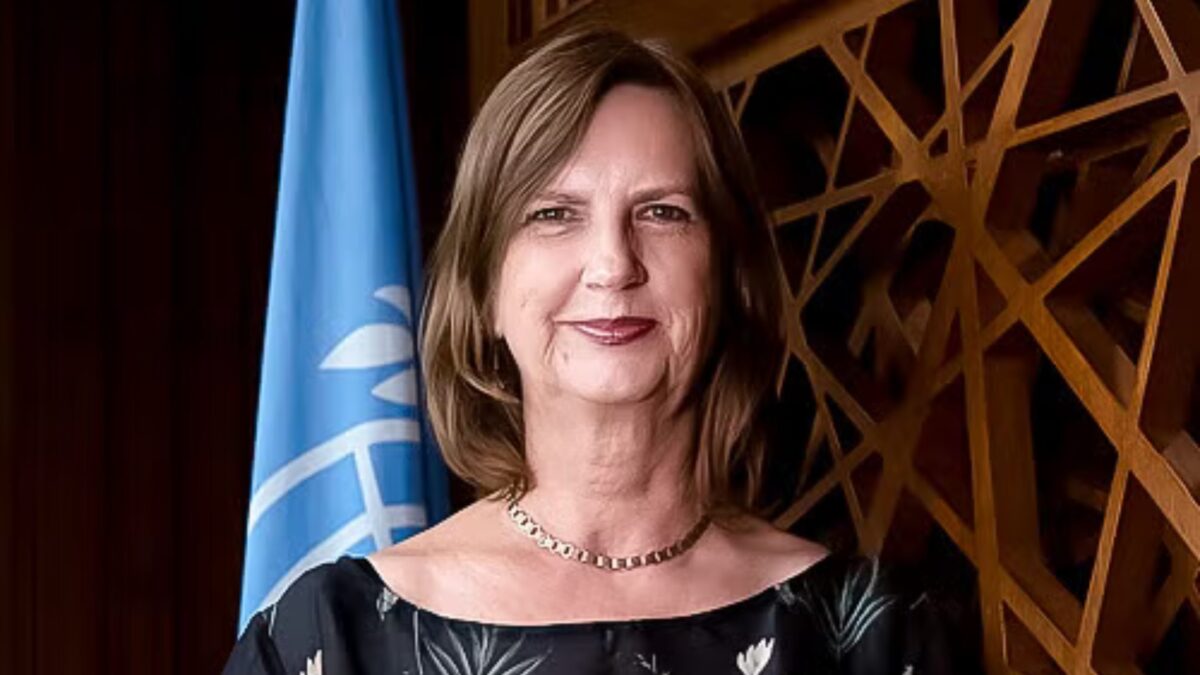
Susan Ferguson, the UN Women special representative in Afghanistan, has warned that the Taliban’s penal code further erodes the rights of women and girls in Afghanistan, removing legal equality and exposing them to greater risks of violence.
In a statement, Ferguson said the Decree No. 12, referred to the Taliban’s newly-enacted penal code, formally eliminates equality between men and women before the law and places husbands in a position of authority over their wives.
The penal code, which was shared with Taliban courts for implementation in early January, limits women’s ability to seek protection or justice, the agency said.
Under the decree, a husband is criminally liable for violence within marriage only if he causes severe and visible physical injuries. Other forms of abuse — including psychological and sexual violence — are not prohibited, according to the statement.
The measure also imposes significant barriers for women seeking justice. Ferguson said women must prove abuse before a male judge, appear fully covered and be accompanied by a male guardian, who could be the alleged perpetrator of the violence.
It further allows women, or their relatives, to be jailed if they frequently visit a relative’s home without their husband’s permission.
Acts deemed “immoral” or “corrupt” are defined as crimes punishable by the harshest penalties, including death, she said, adding that women are considered particularly vulnerable under those provisions, given existing Taliban restrictions on their movement and participation in public life.
According to UN Women, the penal code also criminalizes criticism of Taliban officials, their policies or their interpretation of Sharia law, with penalties that may include imprisonment or corporal punishment. This further reduces women’s participation in public space and limits advocacy for their rights, the statement said.
Ferguson said UN Women was “profoundly concerned” about the implications of the measure.
“Afghan women and girls have the right to live free from violence and discrimination,” she said. “They are entitled to dignity, safety, freedom of movement and participation in public life.”
The envoy called on the Taliban to ensure that all laws and policies protect the rights of women and girls in line with international human rights treaties and conventions to which Afghanistan is a party.
The Taliban’s penal code, consisting of a preamble, three sections, 10 chapters and 119 articles, has been approved by the Taliban leader. The Taliban said the code will soon be published in their official gazette.
Human rights organizations have sharply criticized the document, calling it a further step to “erase” women from Afghanistan’s society.