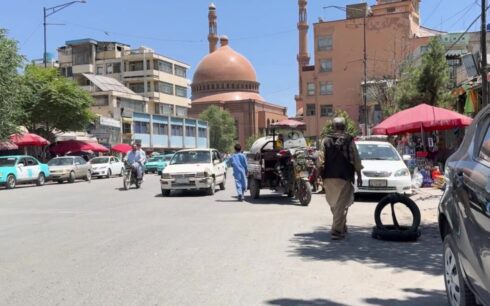
As Ramadan approaches, Kabul’s markets have taken on a familiar bustle. From early morning, residents stream into bazaars to buy flour, rice, cooking oil and other staples for the Ramadan days.
In neighborhoods like Taimani, vendors say foot traffic has increased compared with recent weeks. But many shoppers say that while the markets are livelier, their purchasing power has diminished.
“Unfortunately, this year many families are facing serious economic problems,” said Najia, a Kabul resident shopping for her household. “The high cost of food and unemployment have made it difficult even to prepare the basic needs for iftar and suhoor. We hope the authorities will pay attention to people’s situation and that traders will show fairness during this holy month.”
For some families, the financial strain is even more acute.
Halima, the sole breadwinner for her family of seven in Badghis Province, said her monthly income of 5,000 afghanis — about $70 — barely covers rent and electricity, leaving little for food. A mother of six, she said the challenges double during Ramadan.
“I earn 5,000 afghanis a month,” she said. “I pay 1,500 for rent and electricity. There is almost nothing left for my children to eat. I have six children. My 11-year-old son cleans shoes.”
The concerns in Kabul and beyond come as international officials warn of broader hardship. In a message marking Ramadan, António Guterres, the United Nations secretary general, said that from Afghanistan to Yemen, Gaza and Sudan, people are suffering from conflict, hunger, displacement and discrimination. He urged the global community to bridge divisions, deliver aid and uphold human dignity.
At the same time, the Taliban Supreme Court called on citizens to assist in sighting the Ramadan moon. Some observers have questioned whether the authorities have access to reliable, modern technology for confirming the start of the holy month.
As the city prepares for Ramadan, the markets reflect both tradition and strain: a season of spiritual anticipation shadowed by economic uncertainty.