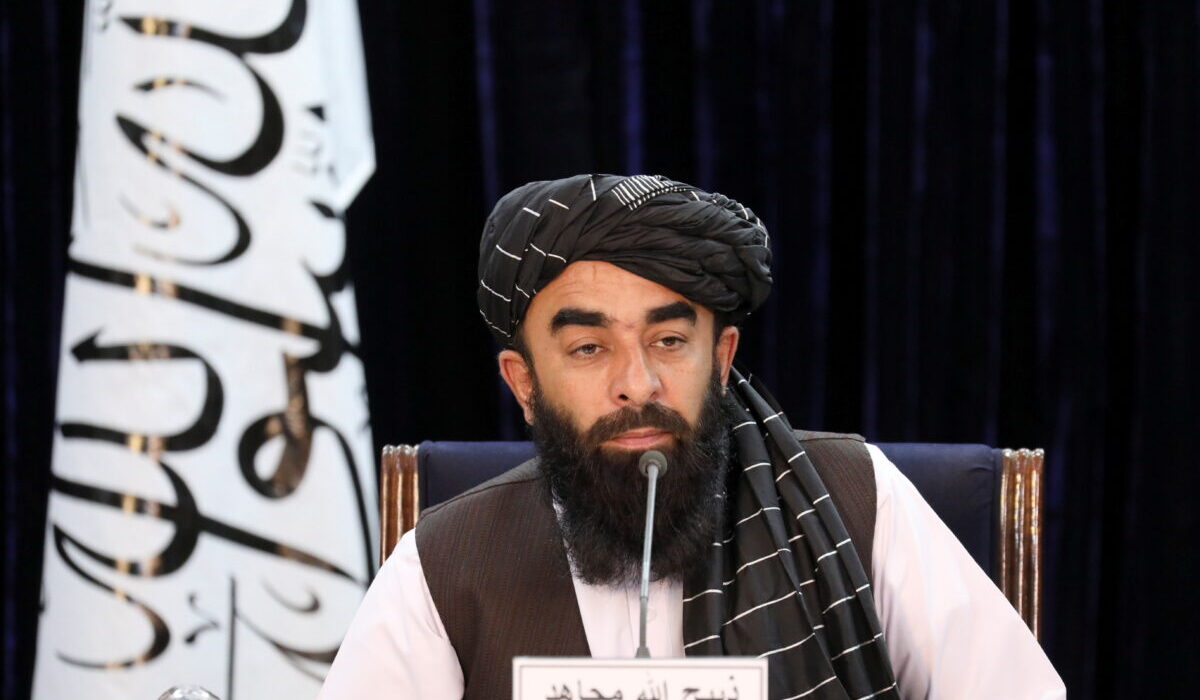
Taliban chief spokesman Zabihullah Mujahid on Friday described the extension of UN sanctions monitoring targeting the Taliban and associated individuals and entities as an “unsuccessful” policy of pressure, urging Western countries to reconsider their approach.
Speaking to Taliban-affiliated Radio Hurriyat, the spokesman said the renewal of the sanctions monitoring team’s mandate was a “repeated and failed experience” that would not help resolve existing problems.
His comments came after the UN Security Council unanimously adopted a resolution extending for one year the mandate of the team monitoring sanctions imposed under the so-called 1988 regime targeting the Taliban. The draft resolution was prepared by the United States.
China, Russia and Pakistan welcomed the extension, stressing the need to combat militancy.
Tammy Bruce, US deputy representative to the United Nations, said that “the Taliban use detainees as leverage in negotiations against the US and other countries.”
“The Taliban must end all forms of hostage-taking and wrongful detentions,” she said.
“The Taliban must end all forms of hostage-taking and wrongful detentions,” she said, adding that the 1988 sanctions regime and its monitoring team remained vital tools for holding the Taliban accountable.
China’s UN ambassador Fu Cong urged the Taliban to take decisive action against Islamic State and al Qaeda and prevent Afghanistan from becoming a threat to regional security.
“Counterterrorism is the primary objective of the 1988 sanctions regime,” Fu said, adding that Afghan territory should not be used to support militant activities or threaten other countries.
Russia’s deputy UN ambassador, Anna Evstigneeva, also underscored the importance of countering militancy but warned that overemphasis on human rights issues at the expense of tackling militancy and drug trafficking could undermine the effective implementation of sanctions.
Pakistan’s UN ambassador Asim Iftikhar Ahmad told the council that Tehrik-e-Taliban Pakistan (TTP), al Qaeda, Islamic State and the Balochistan Liberation Army were present in Afghanistan under Taliban rule, raising concerns for Islamabad.
“With the adoption of this resolution, the Security Council has sent a clear message to the Taliban authorities that Afghan territory must not be used to threaten or attack any country,” Ahmad said.
The Afghanistan sanctions committee was established in June 2011 under Resolution 1988 to oversee measures including asset freezes, travel bans and arms embargoes against individuals and entities associated with the Taliban.
Meanwhile, pointing to two US hostages in Afghanistan, White House counterterrorism chief Sebastian Gorka says President Trump has made clear that “the Taliban must cease their hostage-taking, or there will be consequences.”
“We will not rest until Dennis Coyle and Mahmood Habibi come home,” he added.
US Special Envoy for Hostage Response Adam Boehler said in a post on X that Taliban hold two Americans, Dennis Coyle and Mahmood Shah Habibi, in custody, calling it “unacceptable.”
He said that “the Taliban must end all forms of hostage taking.”