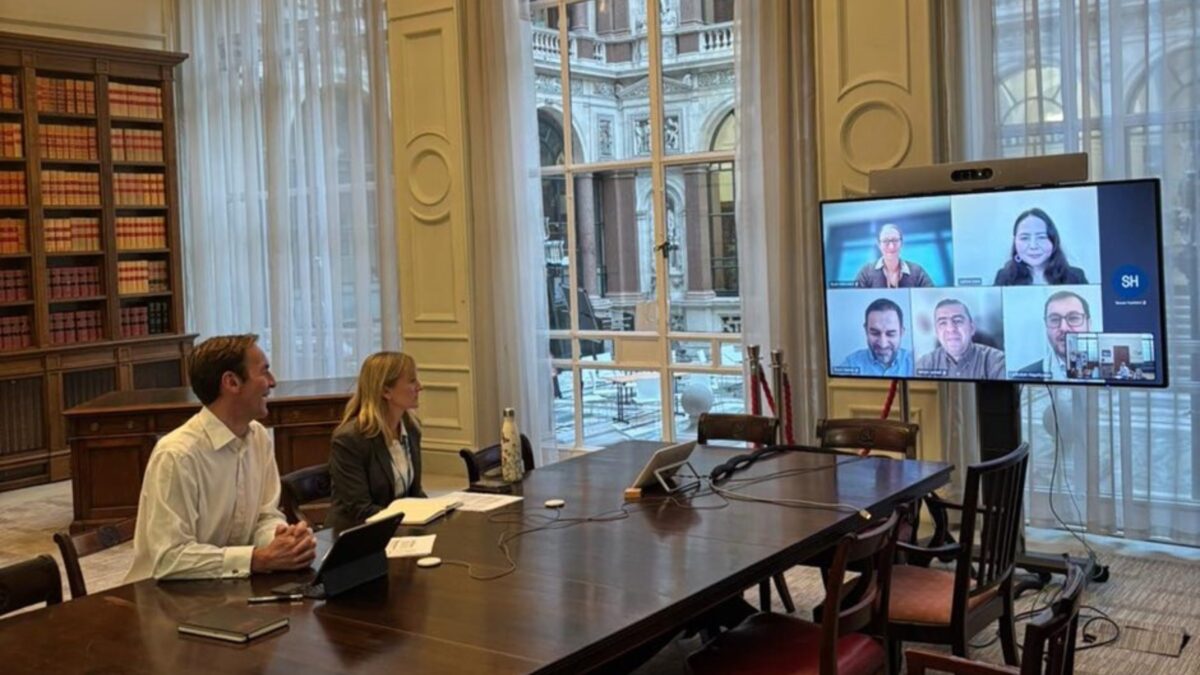
Richard Lindsay, Britain’s special representative for Afghanistan, said freedom of expression was essential for a safe and prosperous future for Afghans, following a meeting with independent media representatives.
Lindsay said in a post on X that he had discussed with “Afghan media” figures inside and outside the country the role outlets play in ensuring “Afghan voices” are heard.
“Meeting Afghan independent media representatives, we discussed how media outlets both inside and outside Afghanistan play a vital role; working together ensures Afghan voices are heard,” he wrote. “Freedom of expression is essential for a safe, inclusive and prosperous future for all Afghans.”
His comments come as media freedom has sharply deteriorated since the Taliban returned to power in 2021, imposing wide-ranging restrictions and censorship on domestic outlets.
The Taliban have closed 15 television stations in 2025 alone, their fourth year in power, according to journalists support groups. The year has remained challenging and risky for journalists across the country.
The Afghanistan Journalists Center said in its annual report that censorship, threats and violence against media by the Taliban increased by 13% in 2025 compared with the previous year.
The organization documented 205 cases of violence and media rights violations nationwide and said five journalists remained in Taliban custody at the end of 2025.
According to findings by Amu TV, the Taliban also enforced Article 17 of the Ministry for the Propagation of Virtue and Prevention of Vice law in 2025, banning the broadcast of images of living beings in 16 provinces.