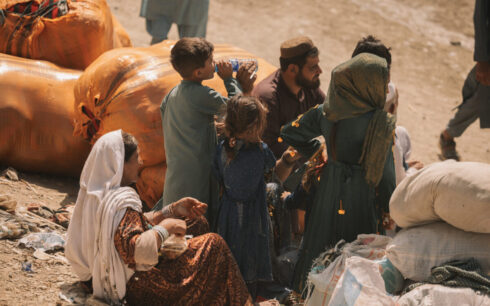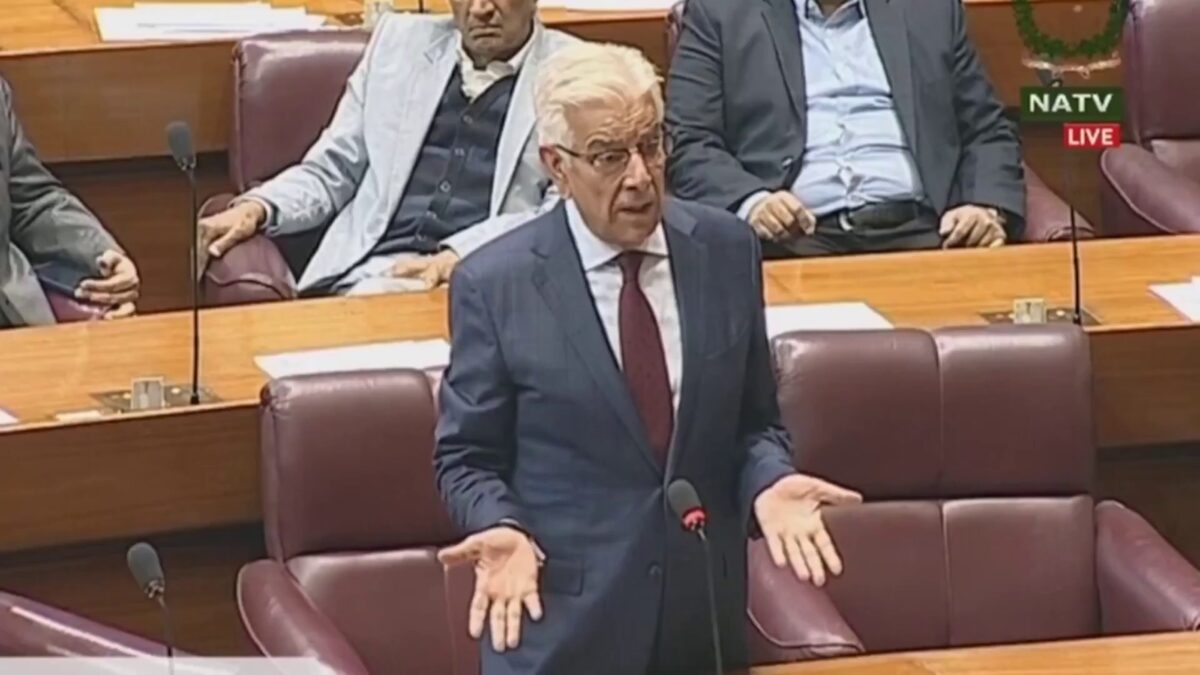
Pakistan’s defense minister said on Wednesday that Afghan refugees should return home because “Pashtuns are in power” in Afghanistan and the original causes of their migration no longer exist, while warning that Islamabad would respond “with blood” if militant attacks continue.
Speaking in parliament, Khawaja Muhammad Asif said Afghan migration to Pakistan began in the 1970s and continued through the Soviet occupation, the 1990s civil war, the post-2001 conflict and beyond.
“Today they have their own government and the reason for migration has ended,” he said. “There is no Soviet Union there, no NATO. It is their own government — the government of Pashtuns.”
He said that sending Afghan refugees back was “completely justified”.
“Fifty-five or 65 years of hospitality is enough, especially now that there is peace in their country and their own government is in place,” he said, adding that there should be no disagreement over the issue.
‘We will respond blood with blood’
Asif also struck a combative tone over militant violence, saying Pakistan was ready to pay a financial price for peace but would retaliate if necessary.
“If someone makes a sincere effort that produces real results, Pakistan is ready to participate,” he said. “If for peaceful living a price has to be paid, we are fully prepared to pay that financial price. But if they demand the price of blood, we will answer with blood.”
He said at one point “they” had asked him for 10 billion rupees and he had been prepared to pay, but questioned what guarantees existed that militants relocated elsewhere would not return.
“We cannot just hand over money like that,” he said.
Asif said he had provided parliament with a list of 2,500 Pakistani “martyrs” killed in attacks linked to various militant groups and asked who would be held accountable for that blood.
‘Afghanistan is not our province’
At the same time, Asif said Afghanistan was an independent country and rejected suggestions it could be treated as a subordinate territory.
“Afghanistan is an independent country. It is not our province, and we have no intention of calling it one,” he said. “Whoever says it is our fifth province lives in a fool’s paradise.”
He said Pakistan wanted peaceful coexistence with Afghanistan.
“We want to coexist peacefully. We do not want to fall in love with them, and perhaps they do not want to fall in love with us. But we can coexist,” he said.
Asif said he had interacted four times over the past two years with representatives of the Taliban administration, and that other Pakistani ministers and third countries had also engaged them to seek coexistence.
“But when terrorism is imposed on us,” he said, “we cannot ignore it.”
His remarks come amidst heightened relations between Taliban and Islamabad after deadly attacks in the neighboring country.
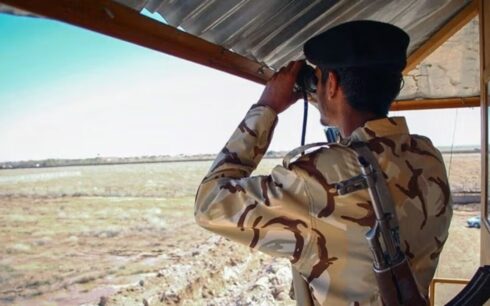
Since the Taliban returned to power in Kabul in 2021, Pakistan has conducted several cross-border strikes inside Afghanistan. In the most recent incidents, Pakistani forces carried out air strikes not only in border areas but also in Kabul and Kandahar, drawing strong condemnation from the Taliban administration.
Relations between Islamabad and the Taliban have deteriorated amid a rise in militant attacks in Pakistan. Recent deadly attacks in Balochistan and the capital Islamabad have been blamed by Pakistani officials on militants they say are linked to the Taliban and to India.