Members of the UN Security Council warned on Tuesday that Islamic State’s Khorasan affiliate (IS-K) in Afghanistan continues to pose a serious threat to regional and international security, despite a reported decline in attacks.
The council met under the agenda item “Threats to international peace and security caused by terrorist acts” to review the UN secretary-general’s latest strategic report on the Islamic State threat.
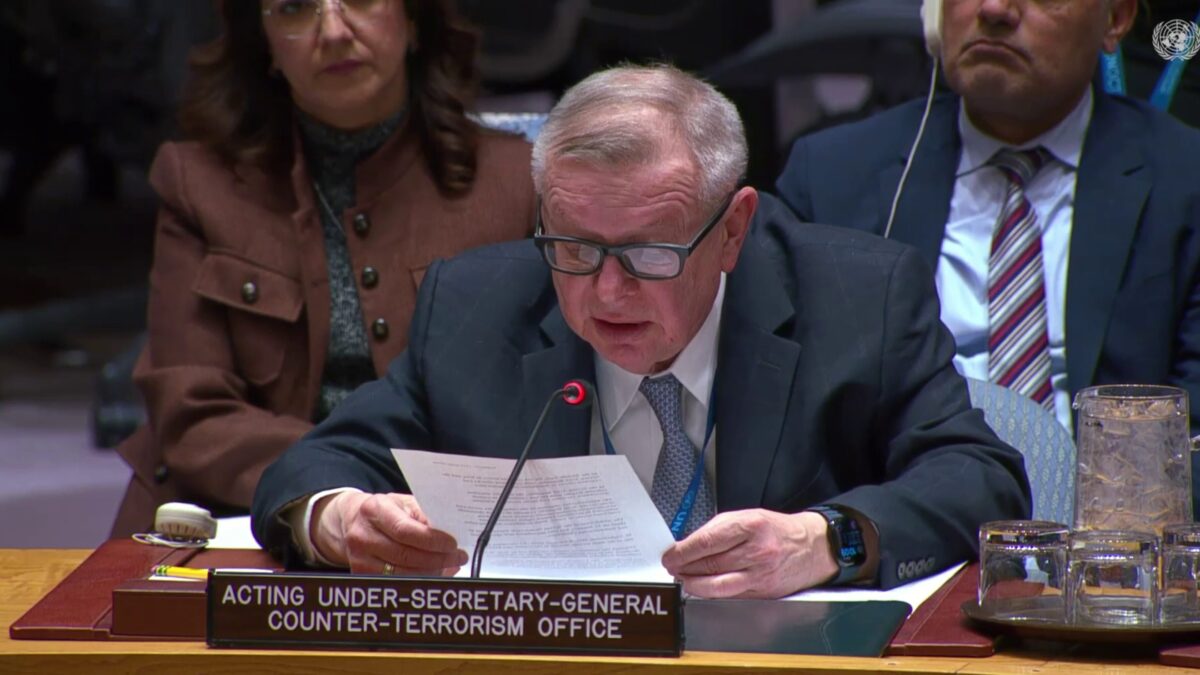
Briefing the council, Alexander Zouev, the UN’s acting under-secretary-general for counter-terrorism, said IS-K remained “one of the most serious threats to the region and beyond”.
“Although the number of attacks carried out by ISIL-Khorasan has declined, the group retains the ability to rapidly replenish its ranks, including through online recruitment,” Zouev said.
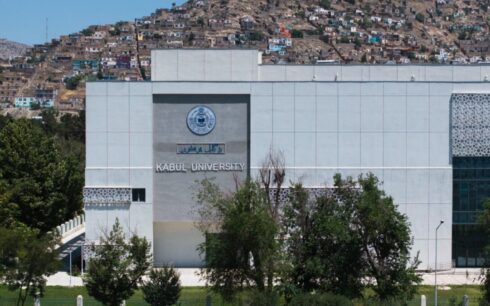
He cited a Jan. 19 attack on a restaurant in Kabul claimed by IS-K that killed seven people and wounded several others, including a child, an incident previously condemned by the council.
U.S. envoy Mike Waltz said the persistent threat from IS-K in Afghanistan, alongside the group’s growing focus on Africa and resilience in Syria and Iraq, underscored the need for sustained and coordinated counterterrorism efforts. He also warned that militant groups were increasingly exploiting new technologies, including artificial intelligence, drones and cryptocurrencies.
China’s representative said terrorist threats in Afghanistan must be taken seriously, urging the Taliban to take “concrete and effective measures” against groups including Islamic State, al Qaeda and the East Turkestan Islamic Movement to prevent Afghanistan from again becoming a hub for terrorism.
Pakistan’s UN ambassador Asim Iftikhar Ahmad told the council that militant groups had “got a new lease of life” following the Taliban’s return to power in 2021 and were operating with near impunity from Afghan soil.
The UK envoy said London remained focused on the threat posed by IS-K in Afghanistan and beyond and stressed the importance of international cooperation ahead of a review of the UN Global Counter-Terrorism Strategy later this year.
Responding to the meeting, Taliban spokesman Zabihullah Mujahid dismissed the concerns as unfounded, saying Afghanistan was secure and posed no threat to other countries.
“When we say Afghan soil will not be used against anyone, it means no country should have concerns,” Mujahid said, adding that Afghanistan was not represented at the meeting and that some countries were exploiting that absence.
The Taliban’s remarks contrast with findings in the secretary-general’s report, which said IS-K remains active in northern Afghanistan and areas near the Pakistan border and retains the capability and intent to carry out terrorist attacks in the region and beyond.