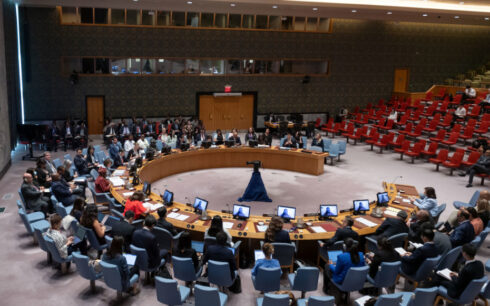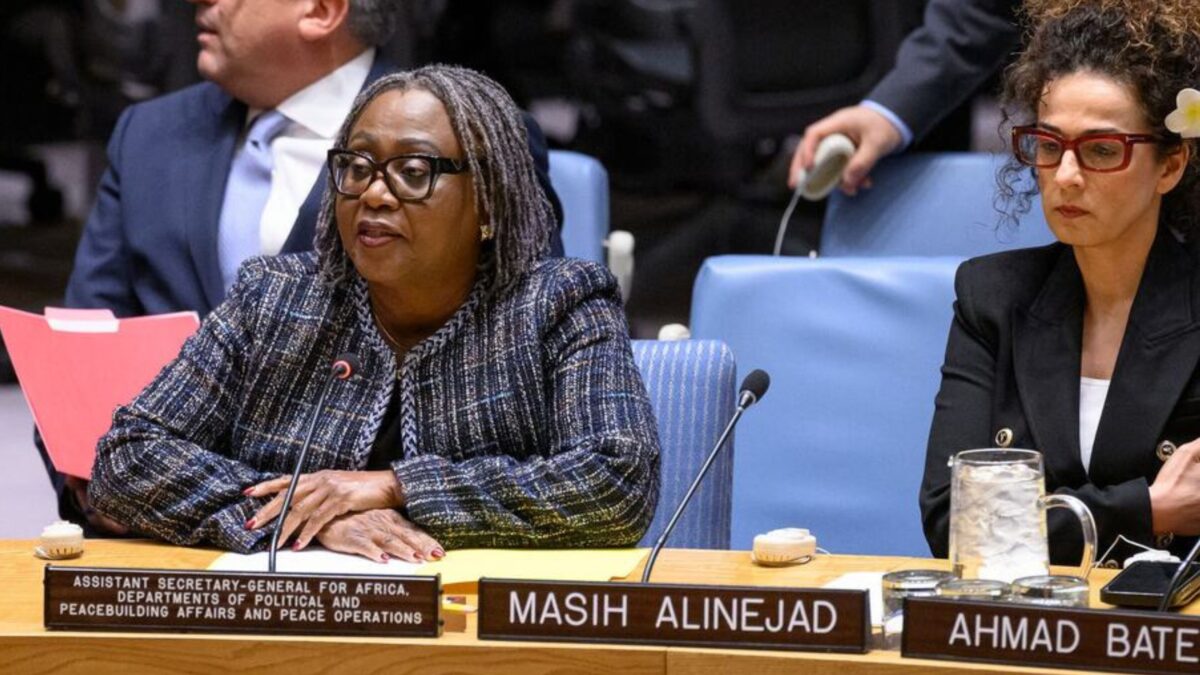
The United Nations Security Council met on Thursday to discuss Iran’s deadly nationwide protests, with senior UN officials urging “maximum restraint” to prevent further loss of life and a wider regional escalation, amid warnings from the United States that Tehran’s crackdown could threaten international peace and security.
Assistant Secretary-General Martha Pobee told the emergency meeting, requested by Washington, that the situation in Iran remained “fluid and deeply concerning”, even as protests appeared to ease after nearly three weeks of unrest.
“Protests continue, albeit reportedly at a smaller scale than last week,” Pobee said, adding that hundreds – and possibly thousands – of protesters and bystanders may have been killed, with more than 18,000 people estimated to have been detained, figures the United Nations has not been able to independently verify.
Pobee voiced alarm over public statements suggesting possible military strikes against Iran, warning that “this external dimension adds volatility to an already combustible situation”.
“All efforts must be undertaken to prevent any further deterioration,” she said.
She said UN Secretary-General Antonio Guterres believed all concerns related to Iran, including the protests and the nuclear issue, should be addressed through diplomacy and dialogue. He “urges maximum restraint at this sensitive moment and calls on all actors to refrain from any actions that could lead to further loss of life or ignite a wider regional escalation,” she added.
US Ambassador Mike Waltz told the council that the scale of Iran’s crackdown had implications beyond its borders. “The level of violence, the level of repression that the Iranian regime has unleashed on its own citizens has repercussions for international peace and security,” he said.
Waltz said Iranians were demanding freedom “like never before” in the Islamic Republic’s history and said President Donald Trump and the United States stood with the Iranian people. He criticised Tehran’s near-total internet blackout, saying it made it difficult to assess the true extent of the violence.
Iran’s deputy UN ambassador, Gholamhossein Darzi, rejected the US accusations, telling the council that Iran “seeks neither escalation nor confrontation” but would respond to any aggression.
“Any act of aggression, direct or indirect, will be met with a decisive, proportionate, and lawful response under Article 51 of the UN Charter,” Darzi said, accusing Washington of “direct involvement in steering unrest in Iran”.
Darzi said Iranian authorities had acted against what they described as “organised terrorists and rioters” who infiltrated protests, opened fire on security forces and civilians and sought to provoke foreign military intervention.
The protests erupted on Dec. 28 after shopkeepers in Tehran’s Grand Bazaar demonstrated against the collapse of the national currency, soaring inflation and worsening living conditions, before spreading nationwide into the largest anti-government demonstrations since 2022.
Iranian Foreign Minister Abbas Araghchi denied on Wednesday that Tehran planned to execute protesters, saying in an interview with Fox News that “there is no plan for hanging at all”.
The council also heard from Iranian civil society representatives, including Iranian-American journalist Masih Alinejad, who called for “real and concrete action” to hold Iranian officials accountable for protest deaths.
Thursday’s meeting came as the United States announced additional sanctions targeting senior Iranian officials it described as architects of Tehran’s response to the unrest. Iran has been under extensive US sanctions for years, pressures that analysts say have contributed to the country’s deepening economic crisis.