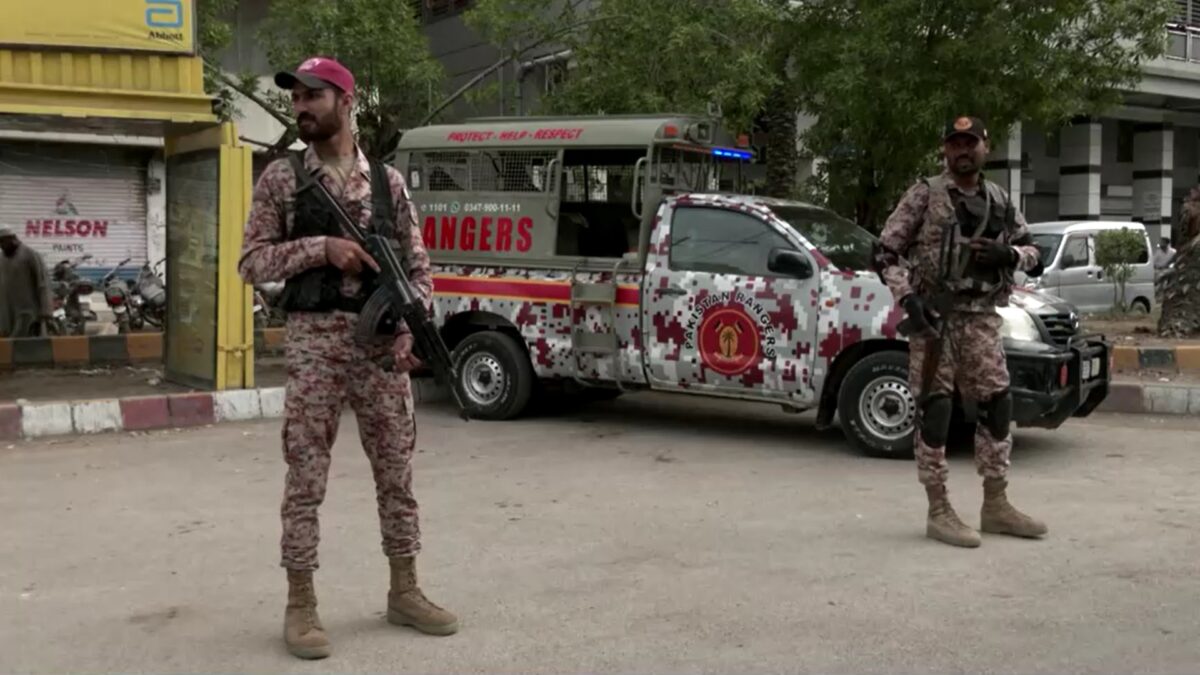
The closure of border crossings with Afghanistan has contributed to a decline in cross-border militant attacks and violence-related deaths in Pakistan in recent months, according to a report released by a Pakistani security research body.
The Pakistan Institute for Conflict and Security Studies (PICSS) said in its annual security assessment for 2025 that militant attacks fell by about 17% in December, following a 9% decline in November. Violence-related casualties among civilians and security personnel also dropped in the final quarter of the year, decreasing by about 4% in November and 19% in December, the report said.
Despite the recent decline, the institute said 2025 was Pakistan’s deadliest year in a decade, with overall violence rising by nearly 34% compared with the previous year.
According to the report, total deaths linked to militant violence and counter-terrorism operations increased to 3,417 in 2025, up from 2,555 in 2024 — an increase of 862 fatalities.
The report said Pakistan has experienced five consecutive years of rising violence since 2021, when the Taliban returned to power in Afghanistan. Annual increases were recorded at about 38% in 2021, more than 15% in 2022, 56% in 2023, nearly 67% in 2024 and 34% in 2025.
Khyber Pakhtunkhwa was the worst-affected province, with deaths rising to 2,331 in 2025 from 1,620 the previous year — accounting for more than 80% of the nationwide increase, the institute said. Fatalities in Balochistan also rose, increasing to 956 from 787 in 2024.
Pakistani officials have repeatedly accused Afghanistan’s Taliban rulers of allowing militant groups, including Tehreek-e-Taliban Pakistan (TTP), to operate from Afghan territory — an allegation the Taliban deny.
Taliban spokesman Zabihullah Mujahid has said that security incidents in Pakistan are an internal matter and that the Taliban do not support or host militant groups targeting neighbouring countries.
Pakistan has tightened border controls and periodically closed crossings with Afghanistan in recent months amid rising tensions between the two sides.