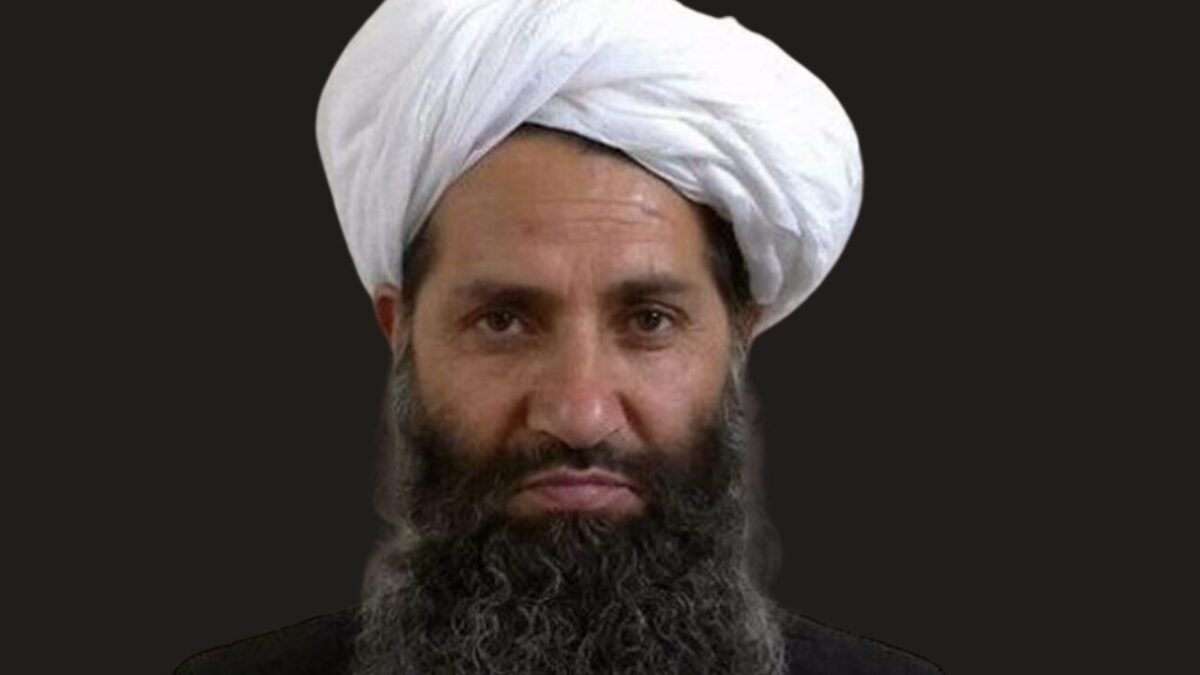
Taliban leader Hibatullah Akhundzada has claimed that his laws and decrees are rooted in Islamic principles rather than public opinion, arguing they are intended to guide people “towards the religion of God,” according to a statement released by Taliban deputy spokesman.
According to the statement, Akhundzada addressed at a three-day “reform and educational seminar” attended by senior Taliban officials in Kandahar, saying that his orders were not based on the views of “a few individuals” but derived from Islamic teachings.
Some decrees relate to religious practices such as prayer and fasting, while others, he said, are aimed at showing compassion to groups including migrants, people with disabilities, orphans, drug users and households without breadwinners.
Akhundzada also claimed that the Taliban administration had, at the outset of its rule, issued an order banning torture, beatings and the punishment of detainees without a court ruling.
The United Nations, however, has documented cases of torture and killings of former Afghan security personnel and government employees since the Taliban returned to power in August 2021. UN reports also say Akhundzada has issued more than 100 decrees restricting the rights of women and girls, including bans on secondary and higher education.
In his remarks, Akhundzada urged Taliban officials to behave in ways that foster goodwill among the population.
According to the statement, senior Taliban officials from multiple institutions attended the seminar, including representatives from the ministries of martyrs and disabled affairs, labour and social affairs, the Afghan Red Crescent, prison administration bodies, the interior ministry’s counter-narcotics department, and Taliban officials overseeing orphanages and religious schools.
The UN special rapporteur on human rights in Afghanistan and international rights groups have repeatedly described Taliban laws and decrees as violating fundamental human rights.
In August last year, the Taliban published a “Promotion of Virtue and Prevention of Vice” law, or the morality law, comprising 35 articles across four chapters, regulating issues ranging from dress and voice to music, imagery, hairstyles and aspects of private life, particularly for women and girls. The law grants sweeping enforcement powers to the Taliban’s morality ministry.