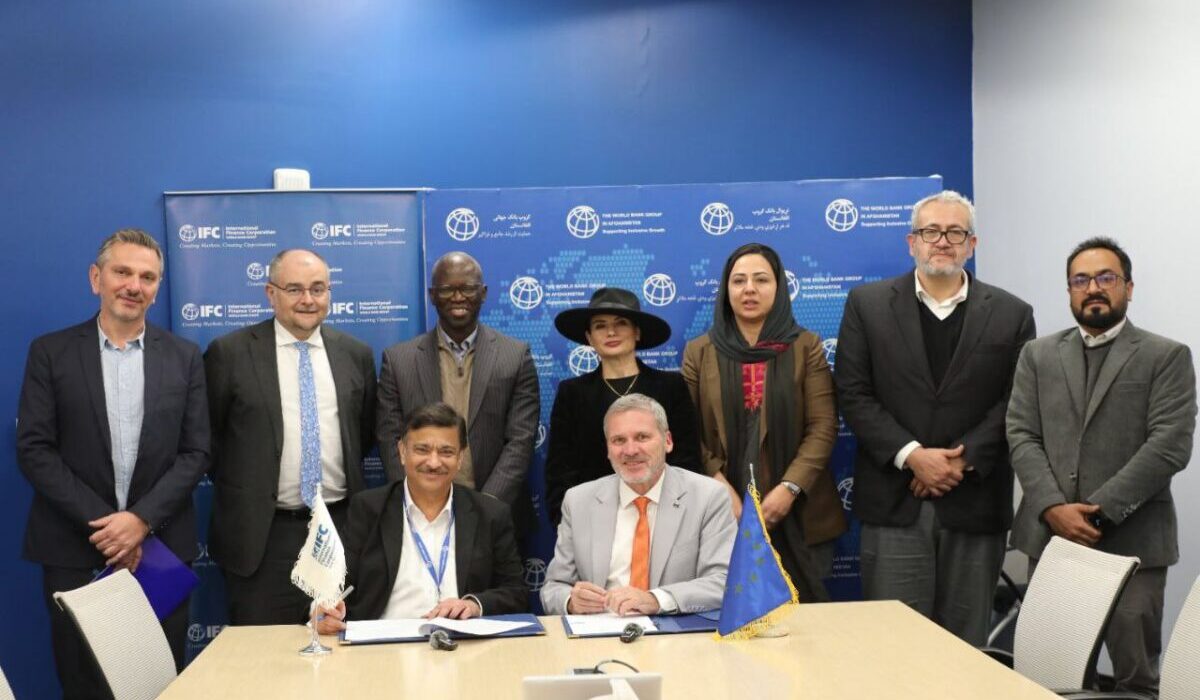
The European Union has allocated €5 million ($5.4 million) to support entrepreneurship and private sector development in Afghanistan, signing a new agreement with the International Finance Corporation (IFC), part of the World Bank Group.
Under the agreement, the funds will be used to implement the Afghanistan Private Sector Stabilisation Program, aimed at supporting small and medium-sized enterprises (SMEs), improving access to financial services and creating jobs through private sector-led economic recovery, the EU delegation in Afghanistan said in a statement on Monday.
The program will focus on expanding economic opportunities for women, young people and Afghan returnees, and will work with local businesses to improve conditions for investment and job creation, the EU said.
The initiative is part of a broader EU–World Bank partnership in Afghanistan and is intended to complement existing EU support, including rural development and microfinance programmes. The project is expected to start next month and run for 42 months.
The programme will prioritise strengthening business coordination and advocacy, building the capacity of SMEs and start-ups, improving financial inclusion, mobilising private capital and expanding women’s participation in the economy.
“This initiative is part of the European Union’s comprehensive support for the Afghan population, from immediate humanitarian assistance to longer-term efforts to strengthen the private sector,” said Veronika Boskovic-Pohar, the EU’s chargée d’affaires to Afghanistan. She said the programme aimed to support job creation and entrepreneurship, particularly for women, youth and returnees.
IFC regional director for the Middle East, Pakistan and Afghanistan, Khawaja Aftab Ahmed, said the partnership would help Afghan businesses stabilise and grow despite the country’s challenging economic environment.
Afghanistan’s economy has struggled since the Taliban returned to power in August 2021, with international sanctions, reduced foreign aid and restrictions on women’s participation in public life weighing heavily on growth and employment.