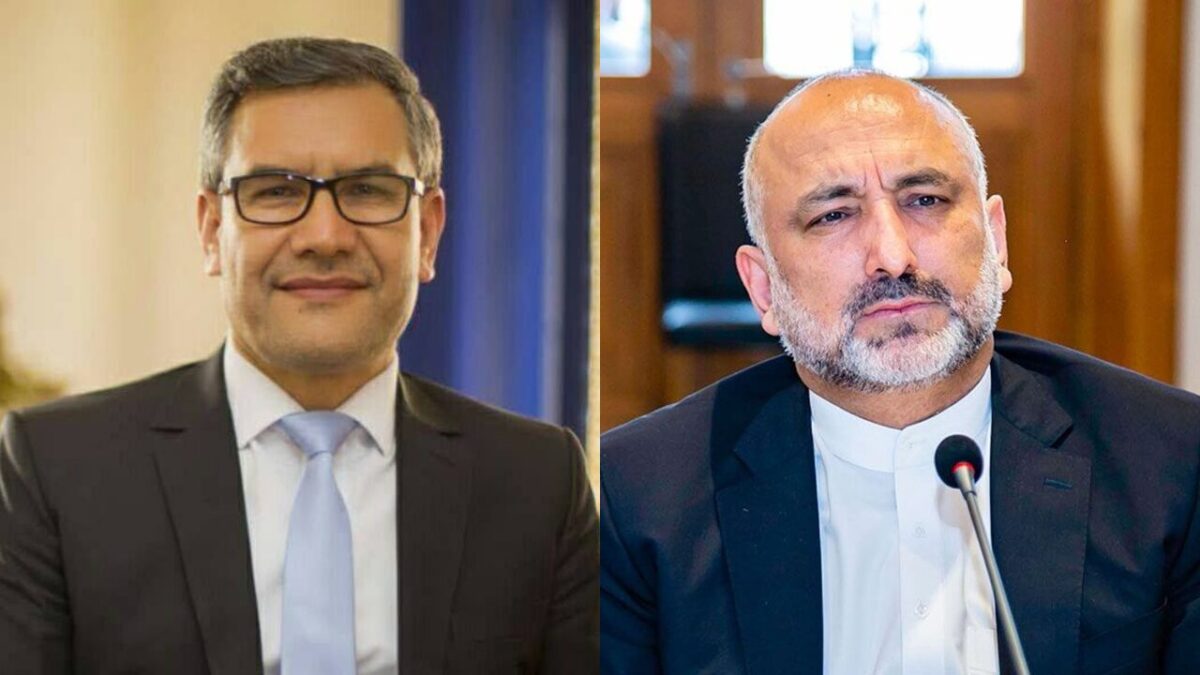
Mubariz Rashidi, a leadership member of the National Movement for Peace and Justice, announced Wednesday he has parted ways with the political group a day after three major opposition blocs publicly declared they had reached “political harmony” and would speak with a unified voice on the country’s future.
Rashidi said that several key founders and senior leaders opposed the announcement and did not join the online session where it was made.
The National Movement for Peace and Justice — led by former foreign minister Mohammad Haneef Atmar — joined the National Resistance Council for the Salvation of Afghanistan and the National Assembly for Salvation in Tuesday’s virtual meeting. The groups stressed they were not forming a coalition, but aligning around shared principles and a coordinated political message.
Prominent figures including Ahmad Massoud, Atta Mohammad Noor, Yunus Qanuni, Mohammad Mohaqiq, Umer Daudzai and Abdul Rashid Dostum participated or expressed support, while some others, including Salahuddin Rabbani, were absent. Ahmad Massoud and Mohamad Ismail Khan joined near the end of the event.
The movements endorsed the implementation of UN Security Council Resolution 2721 and the recommendations of the UN Independent Assessment, saying both offer a credible framework for launching UN-backed intra-Afghan dialogue. They also called for drafting a new constitution, creating conditions for future elections, and guaranteeing the participation of women and youth in any political settlement.
Rashidi, however, said Tuesday’s participation did not represent the movement as a whole. “Some individuals joined this initiative based on personal positions,” he wrote, adding that the majority of respected members of the founding and leadership councils had opposed involvement.
He said he would continue what he called his struggle for justice and planned to publicly clarify the reasons for the split.
In their joint statement, the three movements warned against Afghanistan becoming a battleground or a site of forced displacement, discrimination and rights abuses. They urged an end to restrictions on women’s education, work and movement, arbitrary detentions, land seizures and opaque mining sales. They also called for increased humanitarian assistance and for bans on women working with aid organisations to be lifted “immediately.”
Taliban have not commented. They reject calls for political negotiations and claim their administration represents all Afghans while a research by the Middle East Institute has showed that their cabinet is mostly made of individuals from one ethnic group and no woman has been given a role in it.