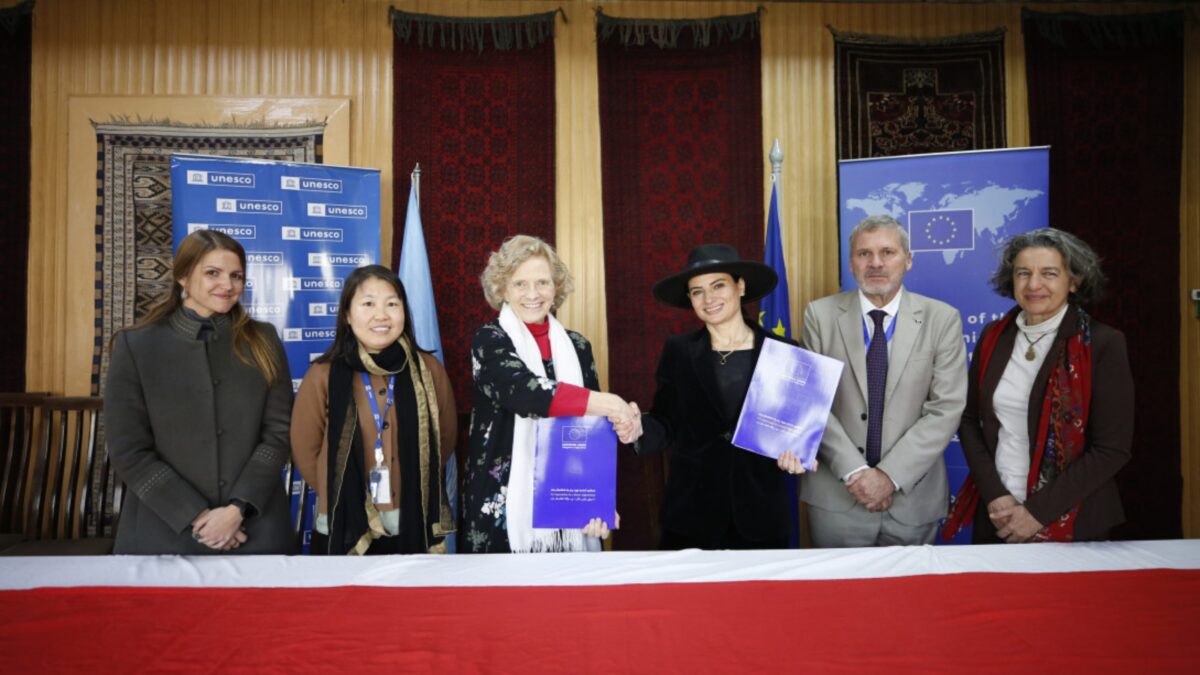
The European Union and UNESCO have launched a €4.7 million initiative aimed at strengthening literacy and livelihood skills for thousands of Afghans, the EU mission said on Tuesday.
The program will support 7,500 youths and adults — including members of returnee and host communities — across five Afghan provinces. It will provide community-based literacy courses equivalent to Grade 3 and vocational training tailored to local economic needs, including tailoring, dairy production, poultry farming and small-scale agriculture.
Veronika Boskovic Pohar, the EU’s Chargé d’Affaires, said the funding aims to equip communities with “concrete tools that contribute to livelihoods and local economic empowerment.” She said investing in skills would help Afghan families improve their well-being, adding that the EU “stands with the people of Afghanistan.”
UNESCO said the initiative builds on existing community-based education programmes that have reached more than 56,000 learners since 2023.
Patricia McPhillips, UNESCO’s representative in Afghanistan, said the new partnership would provide “practical tools to address daily challenges” and strengthen community resilience.
The initiative follows continued restrictions on formal education for girls and women under Taliban rule, which have prompted international organisations to expand informal and community-based learning to reach affected populations.