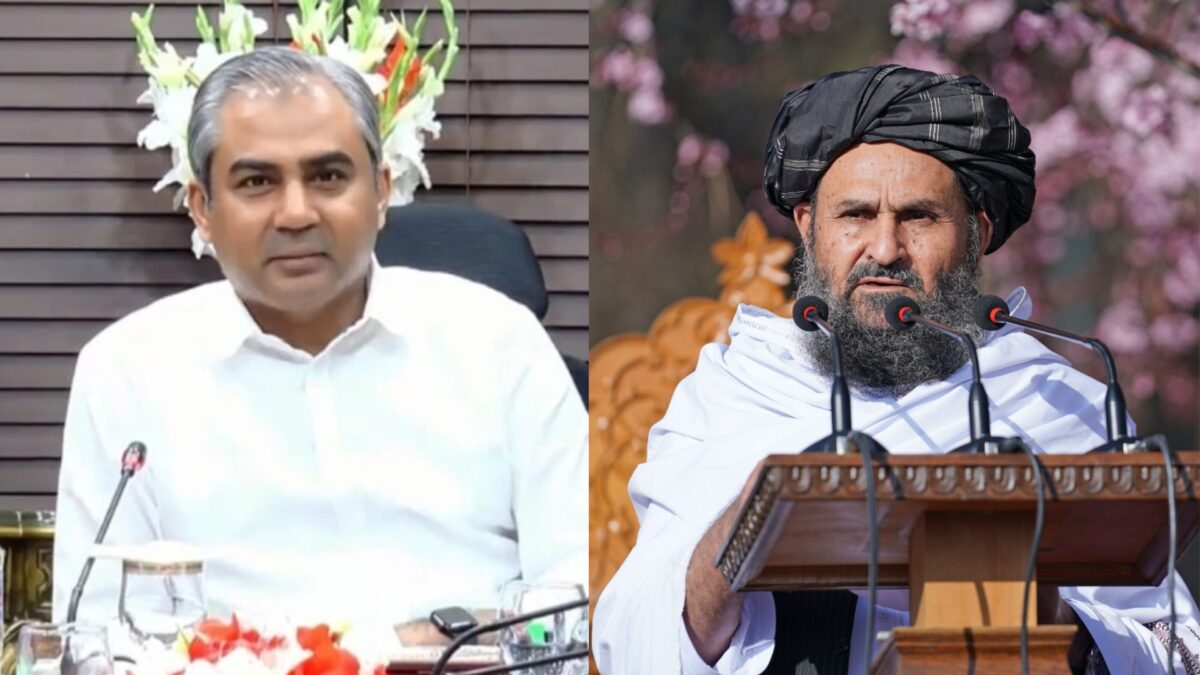
Political tensions between Pakistan and Taliban have escalated further this week, with senior officials on both sides exchanging pointed remarks amid stalled diplomacy and a worsening security dispute.
On Sunday, Taliban deputy chief minister for economic affairs, Abdul Ghani Baradar, delivered a veiled warning in a speech, saying the Taliban “have memory and calculation” and that “those who sow wrongly are forced to harvest accordingly,” while stressing the importance of principled dialogue with neighbours.
Pakistan’s interior minister, Mohsin Naqvi, responded a day later, saying Islamabad also had a long historical memory. “He may remember events from 10, 20 or 40 years ago, but we remember 5,000 years of history,” Naqvi told reporters.
In a separate interview with Deutsche Welle, Pakistan’s defence minister Khawaja Mohammad Asif said Islamabad had misjudged the Taliban, adding that some other countries now held “far greater influence” over the group than Pakistan. He said Pakistan’s recent dealings with the Taliban had eroded trust. “From how they treat Pakistan, it is clear they cannot be trusted because they do not trust each other,” he said.
Afghanistan’s former government repeatedly accused Pakistan of supporting the Taliban, an allegation both Islamabad and the Taliban have long denied. Analysts say Pakistan expected smoother relations after the Taliban returned to power in 2021, but instead the relationship has deteriorated to the point of armed clashes along the border.
Some Afghan political figures argue the Taliban are now using against Pakistan the same pressure tactics they believe Islamabad once applied to the previous Afghan government.