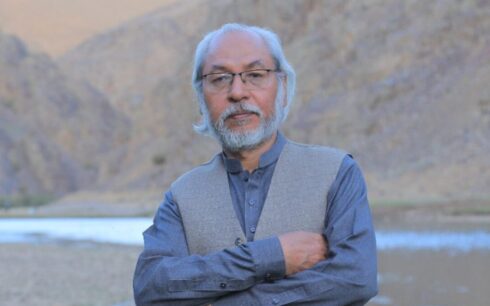
Richard Bennett, the UN Special Rapporteur on the situation of human rights in Afghanistan, warned on Friday that the country is facing a long-term “suppression of memory, identity and future possibility,” and called for greater international support for Afghan journalists — both inside the country and in exile.
In a video message played at the 3rd Annual Global Summit on Afghanistan’s Press Freedom in Berlin, Bennett said the media landscape in Afghanistan had changed drastically since the Taliban returned to power in 2021. Many journalists have fled the country due to repression, while those who remain face harsh restrictions and threats, particularly women.
“In this environment, Afghanistan’s hybrid media has become indispensable. Media organizations publishing and broadcasting from abroad are now among the primary defenders and documentors of what is happening in the country — amplifying voices from inside Afghanistan, reporting crimes and human rights violations, and safeguarding the historical record,” he said.
Bennett warned that these hybrid outlets, despite playing a critical role in reporting human rights abuses, preserving historical memory, and amplifying Afghan voices, are now under “severe strain” due to shrinking international support and financial pressures.
“Some fear not only losing their platforms,” he added, “but also losing the vision of Afghanistan they stand for — a vision rooted in creativity, justice, dignity, and human freedom.”
The United Nations envoy also emphasized that the work of journalists in Afghanistan remains crucial in the face of state propaganda and information blackouts. “Despite limitations, they’re keeping the skills and the flame of the fourth estate alive,” he said.
Hinting at journalists inside the country, Bennett said: “Your work matters, and your persistence in bringing facts to the Afghan and international public in the face of propaganda is essential.”
Bennett also called for international donors, media organizations, and governments to renew their commitment to press freedom in Afghanistan, including through direct funding and safety guarantees for journalists.
The summit in Berlin gathered Afghan journalists, international press freedom advocates, and civil society groups to discuss the shrinking space for independent journalism under Taliban rule. According to press freedom watchdogs, hundreds of Afghan media outlets have shut down since 2021, and dozens of journalists have been detained, harassed, or forced into exile.