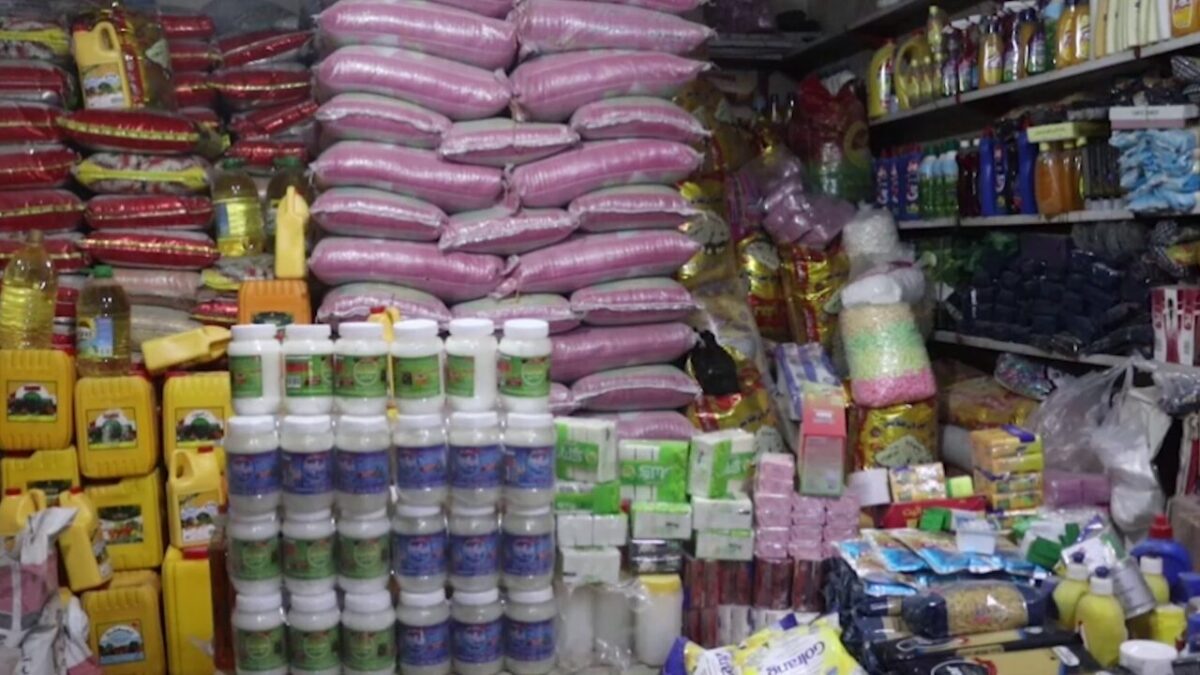
Residents and shopkeepers in Kabul say prices of staple food items have surged sharply — by up to 400 afghanis ($4.5) — as a result of the prolonged closure of key commercial border crossings with Pakistan, now entering its seventh week.
Vendors in Kabul report that the price of a 49-kilogram sack of flour has risen by 100 to 150 afghanis (approximately $1.50–$2.30), while a 16-liter container of cooking oil has jumped by 300 to 350 afghanis ($4). The cost of rice has increased by as much as 400 afghanis per sack, according to market estimates.
As of this week, a sack of flour is selling for 1,550 afghanis (approximately $23.38), up from 1,450 afghanis ($21.88) last week. Cooking oil has risen from 1,600 afghanis ($24.13) to 1,950 afghanis ($29.42), and a sack of rice has gone from 2,600 afghanis ($39.22) to 3,000 afghanis ($45.26) — an increase of more than 15 percent.
Traders attribute the price hikes to disruptions in imports from Pakistan, which remains a major source of food and consumer goods for Afghanistan. Commercial routes have been shut for 42 days amid escalating tensions between the two countries.
“Prices of basic items have gone up drastically since the border closed — flour, oil, rice, everything,” said Ebrahim, a grocer in Kabul’s Mandawi market. “People are struggling. May God help us — the prices are too high for ordinary families.”
The spike in costs is deepening concern among low-income residents as winter approaches. Many daily wage earners say they are now unable to afford essential food supplies.
“Flour and rice are beyond reach now. Daily workers like me can’t afford them,” said Sher Khan, a Kabul resident. “The government should act. The poor can’t survive like this.”
The Afghanistan Chamber of Commerce previously warned that each month of border closures could cost both countries up to $200 million in trade losses. Hundreds of travelers — including patients seeking treatment in Pakistan — remain stranded on both sides of the border.
As temperatures drop, residents say rising costs of food and fuel are compounding fears of a harsh winter ahead.