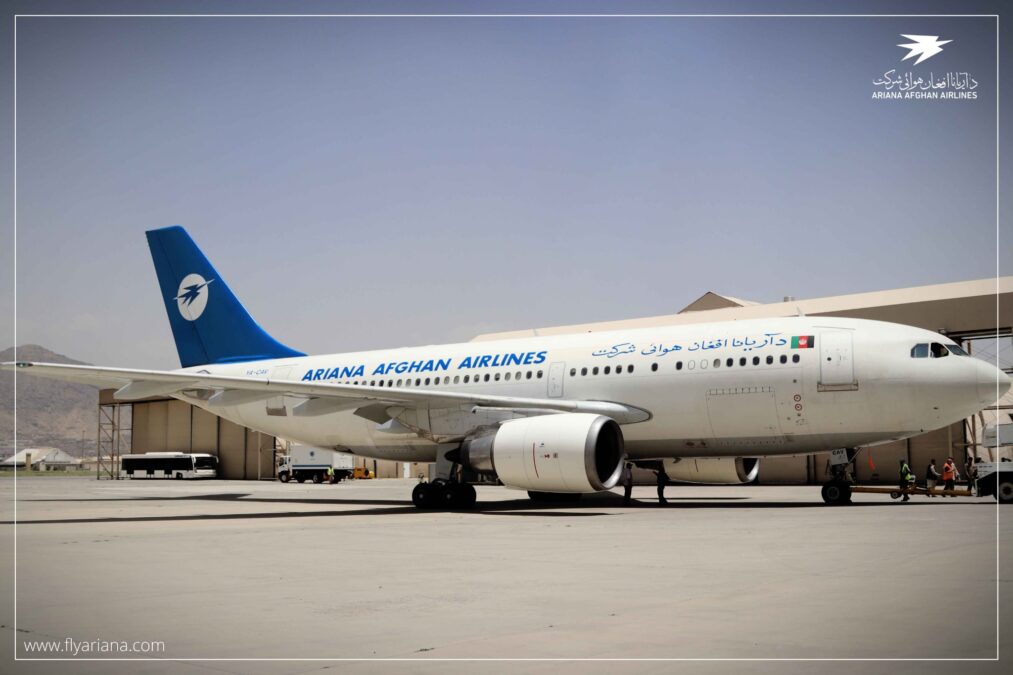
Ariana Afghan Airlines, Afghanistan’s national flag carrier, announced it will implement reduced cargo tariffs for trade with India starting Sunday, aiming to boost the country’s struggling export sector.
According to a statement released this week by the airline, cargo rates for shipments to and from Delhi will be lowered significantly, with export goods to be charged at $1 per kilogram and imports at $0.80 per kilogram. The decision was made based on directives from the Taliban’s economic deputy chief minister’s office.
Bakht-ur-Rahman Sharafat, the Taliban-appointed head of Ariana Afghan Airlines, said the move reflects the airline’s commitment to supporting Afghan producers and traders in accessing international markets.
“Ariana is proud to play its national role in facilitating the global transportation of Afghan goods,” Sharafat said. “Our goal is to ensure that Afghan products reach all corners of the world at affordable rates.”
Ariana said it will continue to operate regular cargo flights carrying a variety of Afghan goods—including dried and fresh fruits, saffron, carpets, and other export items—to international destinations. The airline called on Afghan businesses to take advantage of the reduced rates to expand their commercial reach and contribute to the country’s export-driven growth.
The statement added that despite existing challenges, Ariana Afghan Airlines remains committed to supporting national traders and standing “with the people during difficult times.”
The reduction in cargo tariffs comes at a time when Afghanistan’s private sector is grappling with high transportation costs, limited trade routes, and ongoing restrictions due to political isolation. With overland trade with Pakistan severely disrupted by ongoing border closures, air corridors like the Kabul–Delhi route have taken on added significance.
Trade analysts say such incentives could help partially offset the economic damage caused by the recent slowdown in cross-border commerce, though broader challenges—including access to banking and customs services—remain a major hurdle for Afghan exporters.