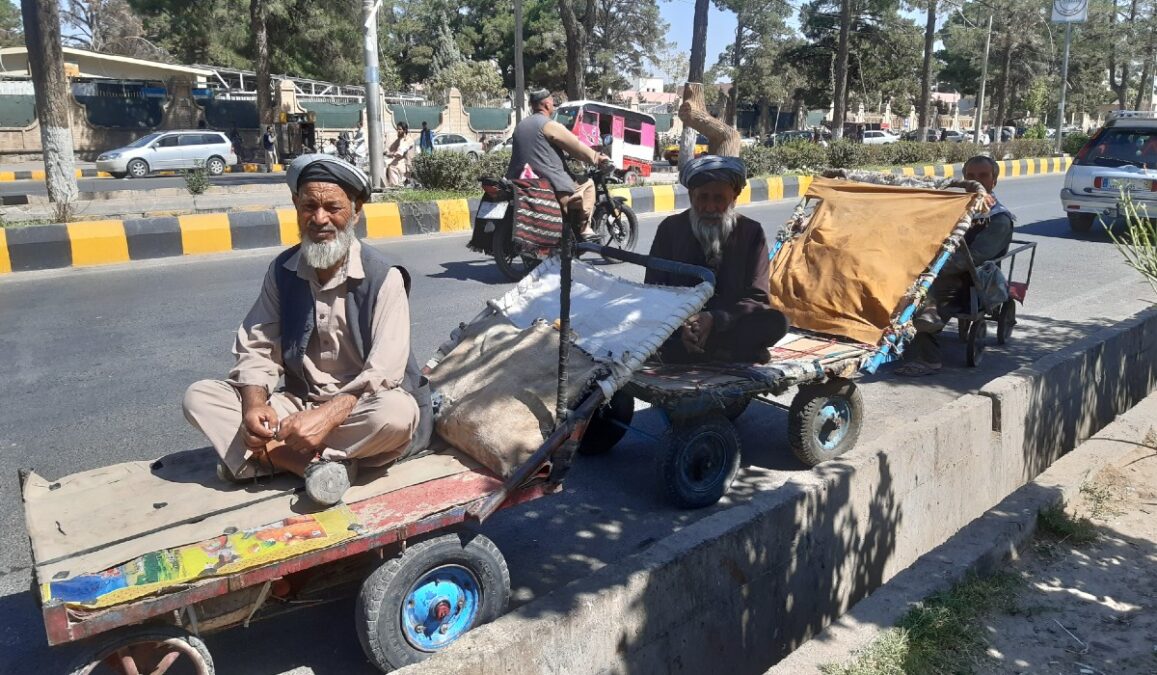
Afghanistan’s economy is facing mounting pressure as nine out of ten Afghan families are now resorting to desperate measures — skipping meals, taking on debt, or selling assets — just to survive, a new report by the UNDP says.
The report, titled “Afghanistan’s Areas of Return: From Return to Recovery,” finds that widespread poverty, the mass return of Afghan migrants from neighboring countries, and the continued exclusion of women from the workforce have pushed the country to the edge of a humanitarian and economic breakdown.
Based on a nationwide survey of nearly 49,000 households, including more than 1,500 returnees, the UNDP said that the combination of mass deportations, economic stagnation, and Taliban-imposed restrictions on women has left millions struggling to meet basic needs. The organization warned that without immediate policy changes, Afghanistan risks entering a prolonged cycle of poverty and dependency.
‘Families are on the edge’
“Afghanistan’s economic recovery is collapsing,” the UNDP said in the report. “Nine in ten households are using negative coping strategies — such as reducing meals, selling assets, or borrowing — to survive.”
Kanni Wignaraja, UN Assistant Secretary-General and UNDP’s Regional Director for Asia and the Pacific, said the crisis is particularly acute for women-headed households.
“In some provinces, one in four families depends on a woman as the primary breadwinner,” she said. “When women are barred from working, families, communities, and ultimately the country suffer.”
Since the Taliban’s return to power in 2021, women have been banned from most public-sector jobs, from working in nongovernmental organizations, and from attending universities or secondary schools. International agencies say these restrictions have crippled the country’s labor force and driven thousands of households deeper into poverty.
The UNDP urged the Taliban to lift all restrictions on women’s employment, warning that excluding half the population from economic life “not only harms families but undermines Afghanistan’s prospects for recovery.”
Returnees deepen economic strain
The report also highlights the pressure caused by mass returns of Afghan migrants and refugees from Pakistan and Iran, noting that the influx is overwhelming local economies already battered by drought, earthquakes, and a severe lack of investment.
“Return areas are under mounting pressure,” the report said. “Communities are struggling to absorb returnees amid economic stagnation, climate shocks, and the lingering effects of natural disasters.”
Most returnees, the report found, have settled in the country’s poorest and most climate-affected provinces in the east and north, where access to clean water, healthcare, and education — particularly for women and girls — remains extremely limited.
The United Nations has launched a winter relief campaign for Afghanistan and other regional crises, seeking at least $35 million to provide shelter, heating, blankets, medicine, and food for families at risk.
Farhan Haq, the UN’s deputy spokesperson, said that “freezing temperatures and damaged infrastructure have left thousands of families facing life-threatening conditions.”
Aid agencies warn that Afghanistan’s worsening economic outlook — combined with restrictions on women and the return of hundreds of thousands of displaced people — threatens to undo decades of development progress.
“The situation is precarious,” Wignaraja said. “Afghans are facing a crisis they did not create, yet they are paying the highest price.”
Despite widespread calls for engagement, most foreign governments have withheld direct assistance to Taliban-run institutions, citing human rights violations and concerns over governance. This has left much of the international aid effort operating independently, with limited reach across the country.
UNDP’s report concludes that without international coordination and a policy shift from the Taliban, Afghanistan’s economy could “enter a state of permanent fragility,” unable to sustain recovery or absorb new shocks from conflict, climate change, or migration.