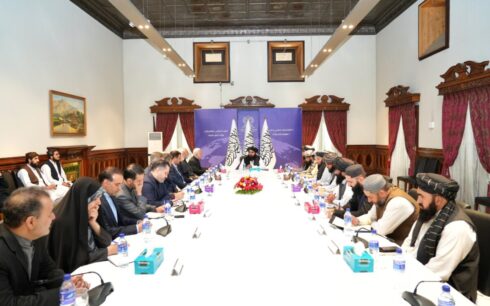
India is cautiously moving to upgrade its diplomatic presence in Afghanistan, even as concerns remain over the security of its personnel in Kabul. According to a source in the Taliban-run Foreign Ministry, Indian officials have emphasized that the safety of diplomats and embassy staff is a prerequisite for any further engagement.
The discussions follow the Taliban Foreign Minister Amir Khan Muttaqi’s visit to New Delhi last month, where he met Indian officials amid growing speculation that New Delhi may formally appoint a full ambassador or significantly expand its embassy operations in Kabul — a mission that has remained limited in scope since the Taliban took power in August 2021.
India has not officially recognized the Taliban rule but has maintained a technical mission in Kabul since June 2022, when it reopened its embassy after initially closing it during the US and NATO withdrawal. The move marked a pragmatic shift in India’s approach, aimed at protecting its strategic and economic interests in the region, particularly in humanitarian aid and infrastructure projects.
In a press briefing this week, India’s Ministry of External Affairs spokesperson Randhir Jaiswal confirmed that discussions are ongoing about the future role and scope of the Indian mission in Kabul.
“As you know, our technical mission in Kabul has been upgraded to embassy status. We are currently evaluating how it functions, its responsibilities, and how to enhance its capabilities,” Jaiswal said. “These are issues under active consideration.”
The source has said that that India’s key concern is the security of its diplomats in Afghanistan. “New Delhi has repeatedly underscored this issue in high-level meetings,” said a Taliban foreign ministry source, adding that during Muttaqi’s visit, India sought concrete assurances on the protection of its staff and premises in Kabul.
A report from Indian outlet Start News Global also stated that New Delhi remains hesitant to move forward with a full-scale upgrade without firm guarantees of safety. The report also suggested that the Taliban may soon appoint a chargé d’affaires to take charge of the Afghan embassy in New Delhi, a post that has remained in limbo since the fall of the previous government.
Taliban have insisted that the security situation in Kabul is “under control,” and have offered reassurances that diplomatic missions are safe under their protection. However, continued attacks by ISIS-K, the Islamic State’s affiliate in Afghanistan, and recent cross-border tensions with Pakistan have added layers of complexity.
India’s engagement with the Taliban contrasts sharply with its historically strong support for the former Afghan Republic government, overthrown when the Taliban seized Kabul in 2021. Over the past two decades, India invested heavily in Afghan infrastructure and development, including roads, schools, and the Afghan parliament building.
This comes as Pakistan — once seen as the Taliban’s primary backer — now finds itself in deepening conflict with the Taliban over cross-border attacks allegedly carried out by the Tehrik-i-Taliban Pakistan (TTP) from Afghan soil. Three rounds of peace talks between Pakistani and Taliban delegations have been held in Doha and Istanbul in recent weeks, but have failed to produce a breakthrough. The most recent round ended in a stalemate, with both sides accusing each other of acting irresponsibly.
Some analysts suggest that India’s engagement with the Taliban may even be accelerating in response to the deteriorating Pakistan-Taliban relationship.
“India sees an opening to assert its influence in a changing Afghan landscape, especially as Pakistan’s leverage over the Taliban seems to be waning,” said Shreya Singh, a South Asia analyst based in New Delhi. “But New Delhi is proceeding cautiously — the risks remain high, particularly around security and international legitimacy.”