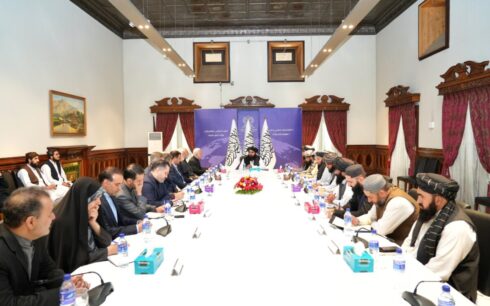
A senior Taliban official said discussions between Taliban and Pakistani officials in Turkey, which ended in deadlock earlier this week, may yet resume, despite both sides publicly trading blame over the breakdown of negotiations.
The official, who spoke to Amu on the condition of anonymity because he was not authorized to speak publicly, said Turkish officials had signaled that “talks could continue,” although “nothing is certain at this stage.”
The four-day negotiations, held in Istanbul and mediated by Turkey and Qatar, collapsed in the midst of this week over disagreements on key security issues—most notably, Pakistan’s demand that the Taliban prevent the Tehrik-i-Taliban Pakistan (TTP) from launching attacks from Afghan soil.
According to the Taliban official, Islamabad had requested written assurances from the Taliban that they would prevent TTP operations in Pakistan. The Taliban delegation, he said, responded by asserting that it was not their responsibility to control events inside Pakistani territory.
“We told them we can only prevent armed groups from using Afghan soil to attack Pakistan, but we are not responsible for activities already happening within Pakistan,” the official said.
Taliban raise concerns over ISIS and drone activity
The Taliban delegation, in turn, raised its own concerns, demanding that Pakistan prevent the Islamic State Khorasan Province (ISIS-K) from using Pakistani territory to stage attacks against Afghanistan, according to the official. Taliban officials have increasingly accused Islamabad of harboring or tolerating anti-Taliban militants, a charge Pakistan denies.
Another point of contention was Pakistani drone activity. The Taliban official said his delegation requested a halt to drone flights over Afghan territory, which he described as a violation of Afghanistan’s sovereignty. “We made three key requests during the talks,” he said. “But the Pakistani side showed no willingness to commit to any of them.”
The stalled talks in Istanbul come at a time of deepening distrust between the two sides, despite Pakistan being one of the few countries to maintain working-level engagement with the Taliban since their return to power in 2021.
Mutually accusatory tone follows talks
In the days following the collapse of negotiations, both sides have issued strongly worded statements accusing the other of undermining regional stability.
Pakistan’s Minister of Defense, Khawaja Asif, made headlines earlier on Wednesday, Oct. 29, when he warned that Pakistan “does not require even a fraction of its full arsenal to completely obliterate the Taliban regime and push them back to the caves.” His remarks drew outrage from Taliban officials, who in turn accused Pakistan of threatening Afghan sovereignty and ignoring its internal security failures.
A Taliban spokesperson responded by claiming that TTP is “an internal problem of Pakistan,” and reiterated that they have no policy of allowing any group to use Afghan soil against other nations. However, they stopped short of offering any formal guarantees.
Tensions have been escalating between the Taliban and Pakistan for months, particularly in the wake of a spike in cross-border attacks claimed by the TTP and the recent deportation of thousands of Afghan migrants from Pakistan.
Earlier this month, the Pakistani government announced a crackdown on undocumented Afghans, which human rights organizations say has resulted in arbitrary arrests, home raids, and family separations. Figures by the Taliban-run refugees commission show that in just two days this week, Pakistan has deported at least 16,000 migrants.
Analysts say that despite repeated mediation efforts by regional players including Qatar and Turkey, there appears to be no immediate path forward.