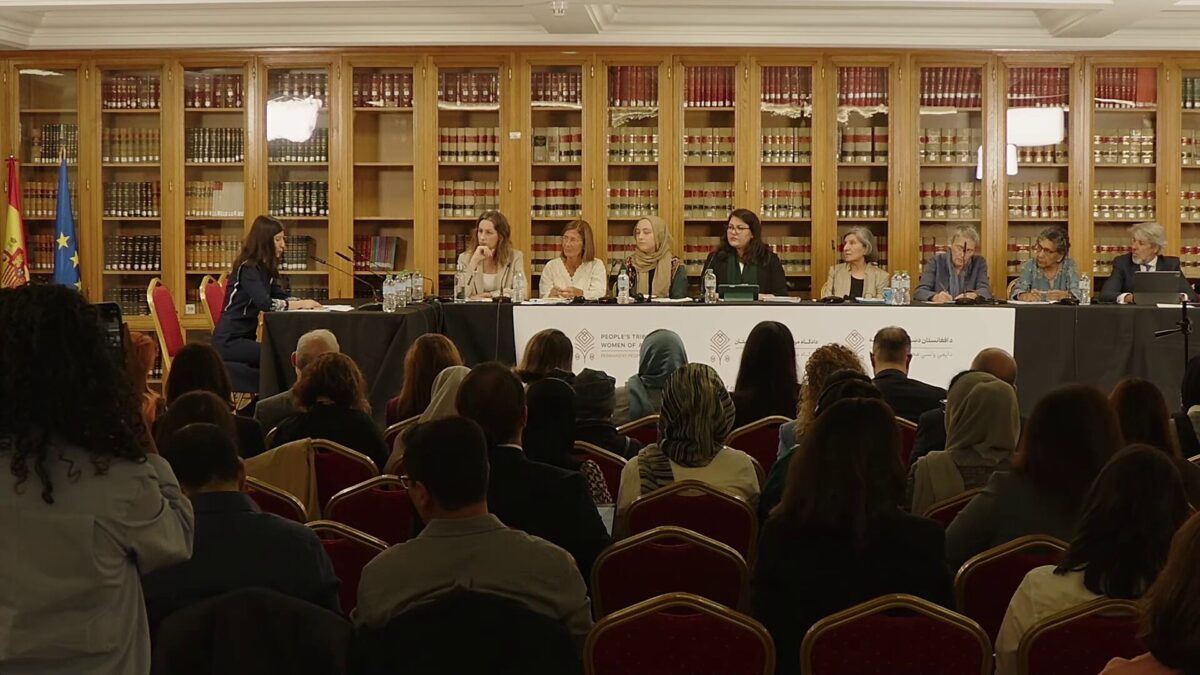
The Afghan Women’s Movement for Justice and Awareness said the people’s tribunal convened in Madrid, Spain, to “try Taliban leaders” represents “a cry from broken hearts for global justice.”
In a statement Thursday, the group said the symbolic court, organized by Afghan women’s protest movements and rights organizations, aims to amplify the voices of Afghan women “against the world’s silence” in the face of Taliban oppression.
“The courageous women who testified before this tribunal are themselves victims of the Taliban’s horrific crimes,” the statement said. “Their testimonies tell stories of brutal violence, savage assaults, and inhumane torture carried out against women in Afghanistan.”
The group said the witnesses’ accounts are not only “cries of pain but reflections of truth that no one should ignore.” It added: “Women who have lost their dignity under Taliban tyranny continue to stand tall and resist despite the suffering they have endured.”
The movement praised the tribunal as a vital step toward international accountability for Taliban crimes and said the world must not remain indifferent to what it described as “crimes against humanity” in Afghanistan.
“This tribunal is an opportunity to awaken the world’s conscience,” the statement said, adding that Afghan women have endured years of torture, suppression, and discrimination for opposing Taliban rule.
The People’s Tribunal on Afghanistan’s Women, which includes dozens of judges, prosecutors, victims, rights activists, and four Afghan civil organizations, began public hearings Wednesday in Madrid. The tribunal is trying Taliban leaders in absentia for alleged crimes including the systematic repression and abuse of women and girls.
The Permanent Peoples’ Tribunal (PPT) — an independent international opinion tribunal founded in Italy in 1979 — is overseeing the hearings. The PPT has held more than 50 sessions worldwide to document serious crimes against peoples and minorities.
Earlier, the International Criminal Court issued arrest warrants for top Taliban figures, including Hibatullah Akhundzada, the group’s supreme leader, and Abdul Hakim Haqqani, its chief justice, for alleged crimes against humanity.
Rights groups have welcomed the symbolic tribunal as a historic step in documenting abuses under Taliban rule, which the United Nations and international human rights organizations describe as a “gender apartheid regime.”