Nearly 350,000 Afghans have been displaced inside the country or returned from abroad in the first four months of this year, driven by economic hardship, drought, climate change and the lingering effects of decades of instability, the International Organization for Migration said Sunday.
In a new report, the agency described bleak scenes at Islam Qala, a major border crossing with Iran, where families crowd together in makeshift shade while children cover their faces with scarves against swirling dust as they wait for aid.
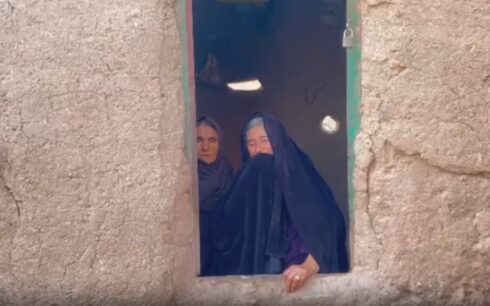
For many, the IOM said, it is their first time seeing Afghanistan in years, only to face the stark reality of unemployment, scarce housing and a strained public health system.
According to the report, more than four million Afghans have returned from Iran and Pakistan since September 2023, including 1.5 million so far in 2025. The influx has overwhelmed Afghanistan’s already fragile economy, stretching the labor market, housing and basic services to breaking point.
Some returnees shared harrowing personal stories. Maryam, a widow with two children who lived in Iran for six years, said her sons are now forced to work to help the family survive. Manzar Shah, a father of eight from Badakhshan, was left severely injured after falling from a building in Iran; he and his family are now shelterless in Herat. Another returnee, Mohammad, spent a year in a coma after a workplace accident during his 11 years in Iran. He told aid workers he wants nothing more than a job and a chance to continue his education.
The IOM said it has tried to cushion the shock. It has provided vocational training for 3,000 displaced people and returnees, supported more than 2,600 small businesses — 22 percent of them run by women — and created nearly 12,000 jobs, including 4,200 for women.
Other UN agencies are also stepping in. In Herat, the UN refugee agency and the UN Development Program are supporting more than 70 small and medium-sized businesses to help returnees integrate. In southern provinces such as Kandahar and Badghis, where water shortages are severe, cash-for-work programs and earthen dams have been introduced to provide drinking water and irrigation while creating employment.
Still, the IOM cautioned that emergency assistance is not enough. “This crisis underscores the need for longer-term solutions — jobs, education, housing and health services — to ensure that returnees can rebuild their lives,” the agency said.
Afghanistan remains one of the world’s most vulnerable countries to climate change and economic shocks. The Taliban’s restrictions on women’s employment, the collapse of foreign aid and recent natural disasters, including deadly earthquakes in the east, have compounded the pressure on millions already struggling to survive.