The United Nations warned on Friday that its life-saving operations in Afghanistan are being severely disrupted by Taliban restrictions barring women from working with the organization.
Relief efforts following the devastating Aug. 31 earthquake in Kunar and Nangarhar Provinces have continued, but essential services have been delayed because female staff are not permitted to participate, U.N. officials said.
“We are all deeply impacted by this escalation of the ban at the U.N. level. We simply cannot work without women,” said Arafat Jamal, the U.N. refugee agency’s representative in Afghanistan. “This comes just a day after agencies warned that these Taliban measures affect life-saving aid for hundreds of thousands of people.”
Last Sunday, Taliban security forces barred Afghan women employed by the United Nations and its contractors from entering U.N. offices in Kabul, extending the restriction to field locations across the country.
In response, the U.N. refugee agency (UNHCR) suspended its cash distribution and returnee assistance centers in Nangarhar, Kandahar, Kabul and Herat earlier this week, saying it could not deliver services safely or fairly without female staff.
“This was an operational decision,” Jamal said. “It was not intended to punish anyone or make a political statement. It was simply to demonstrate that we cannot function without female staff in specific contexts.”
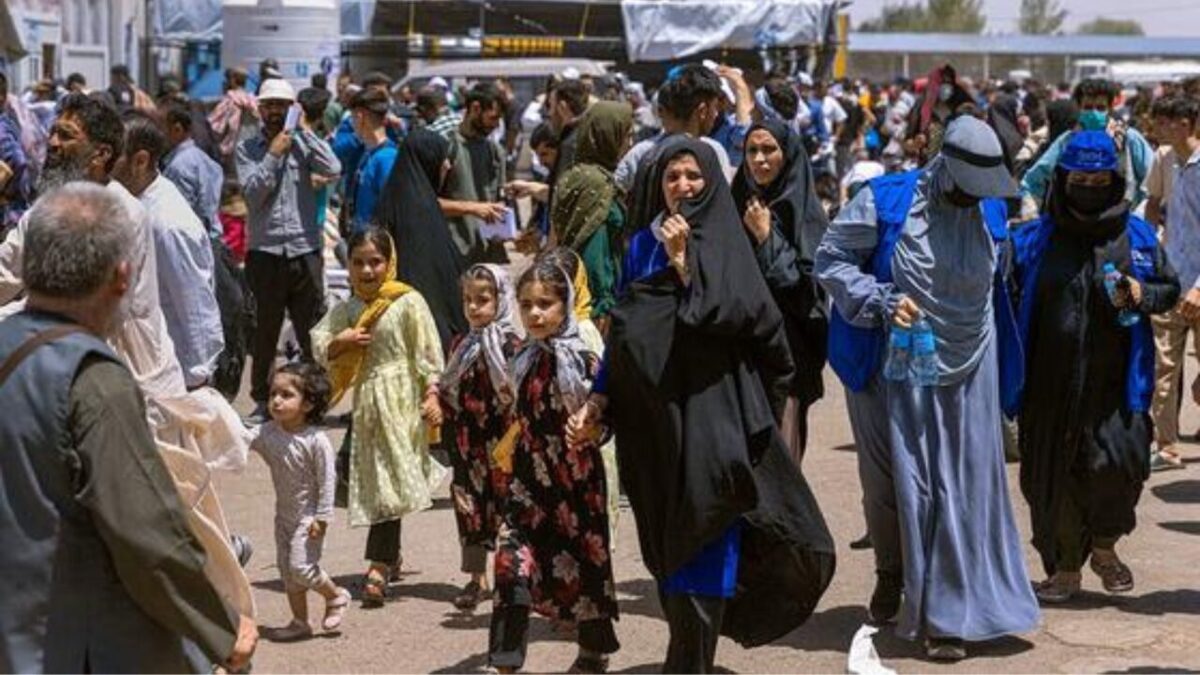
The crisis comes as Afghanistan struggles to cope with both mass displacement and an influx of deported migrants. According to UNHCR, about 2.6 million Afghans have returned from neighboring countries so far this year, many of them forcibly. Nearly 100,000 were deported from Pakistan in just the first week of September alone, straining the already limited capacity of Afghan communities and aid agencies.
The Taliban, who seized power in 2021, have steadily expanded restrictions on women’s education, employment and public life, drawing condemnation from international organizations. Rights groups warn that the latest measures risk further weakening Afghanistan’s fragile humanitarian response at a time when more than half the population depends on aid.