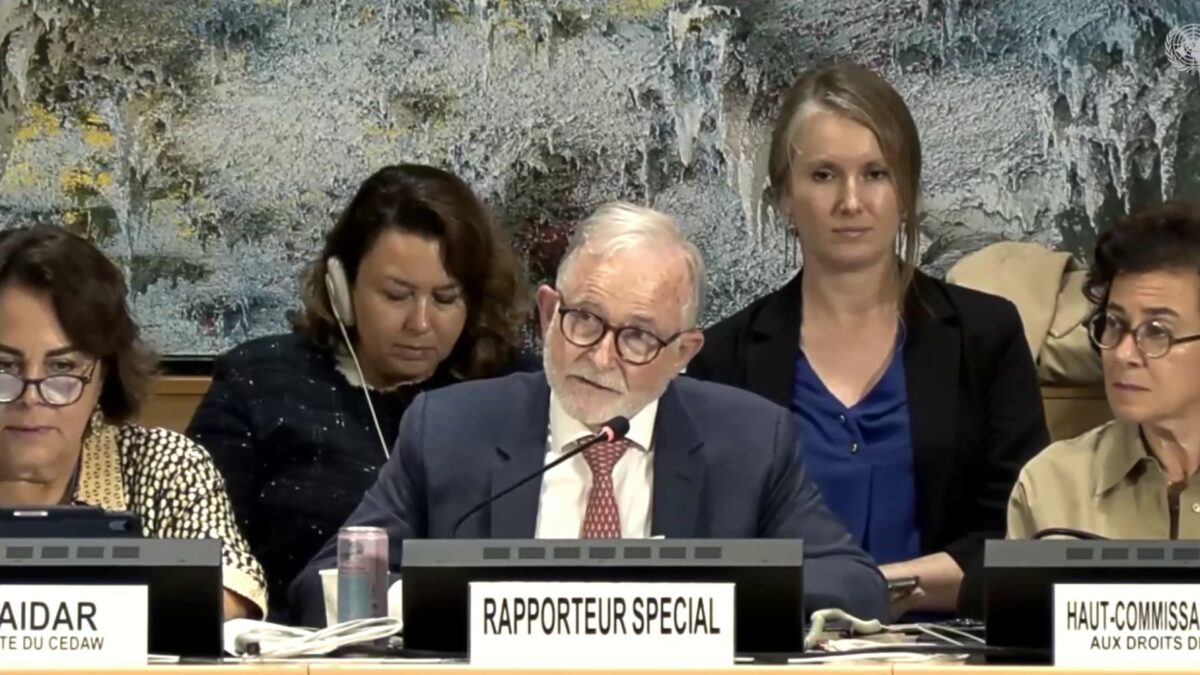
The United Nations Special Rapporteur on the situation of human rights in Afghanistan, Richard Bennett, said Monday the Taliban have intensified repression in 2025, doubling the number of people publicly flogged and introducing new measures further curtailing the rights of women, journalists and ordinary Afghans.
Speaking at the UN Human Rights Council’s 60th session, Bennett said the Taliban have “not rescinded any of their gender-oppressive measures” and have instead expanded them. He cited the introduction of “mahram cards” restricting women’s movement, reported plans to curtail madrasa education for girls, and a new law banning poems that criticize the Taliban leader, praise romantic love or encourage relationships. He also highlighted a directive requiring broadcasters to submit programs for advance approval and restrictions on religious freedom, including forced conversions and blasphemy convictions.
Bennett said at least 672 people — 547 men and 125 women — have been subjected to judicially sanctioned public flogging so far this year, more than double the figure during the same period in 2024.
He warned that Afghanistan is not safe for involuntary returns, criticizing states that continue mass deportations of Afghans despite risks of persecution and reprisals.
Rejecting the idea that Afghanistan is a “lost cause,” Bennett said the country is “a test” of the world’s resolve to stand against gender persecution and impunity. “How do we stop Afghanistan from becoming a lost cause? By using every tool at our disposal,” he said, calling for sustained international pressure, expanded humanitarian aid, accountability for abuses, and recognition of gender apartheid as a crime.
Bennett also urged the creation of an independent investigative mechanism to collect and preserve evidence, identify perpetrators, and support criminal prosecutions.
“What is happening in Afghanistan, though serious and challenging, is neither inevitable nor irreversible,” Bennett said. “It is the result of choices — by the Taliban certainly, and also by the international community. And that means different choices are possible.”
At the same session, Afghanistan’s envoy Nasir Andisha said arbitrary arrests have become routine in Afghanistan, especially of returnees. He warned that children are also victims of “institutionalized oppression.”