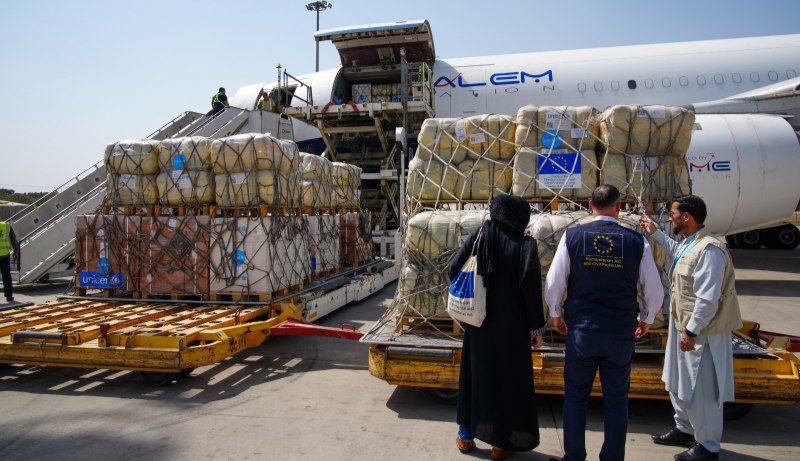
The European Union has committed an additional €14 million ($15.2 million) to support vulnerable communities and women in Afghanistan, the EU mission in Kabul said in a statement Sunday.
The new funding will expand the Afghanistan Community Resilience Programme (ACRP), a joint initiative led by the UN Development Programme, the Food and Agriculture Organization and the International Organization for Migration. The UN Office on Drugs and Crime will also join the program, while the EU’s partnership with UN Women will be strengthened.
The EU said €6 million of the pledge will go toward the ACRP, raising its total support for the initiative to €21 million. The program, launched in 2024, aims to strengthen climate resilience and promote sustainable livelihoods in provinces with high levels of opium cultivation. Initially focused on Helmand and Kandahar, it will now extend into Badghis and support UNODC-led opium crop surveys.
“This additional contribution comes at a critical time when Afghan communities struggle with climate hazards and dramatically eroding natural resources,” said Veronika Boskovic Pohar, the EU’s chargé d’affaires in Afghanistan. She noted that climate change is a key driver of displacement and added that the EU’s support also includes counternarcotics work through the Doha Process and efforts to help farmers transition to alternative livelihoods.
Stephen Rodriques, UNDP’s resident representative in Afghanistan, said the contribution “is not only a financial investment; it is a powerful message of solidarity” to help Afghan communities reduce reliance on illicit economies and adapt to climate change.
The EU also announced €8 million for UN Women, bringing its total support for Afghan women and girls to €23 million over three and a half years. The funding will provide protection, psychosocial support and livelihood services through grassroots women’s organizations and community-based centers.
“Women’s civil society organizations are often one of the only lifelines left for Afghan women and girls to access the services they need in a safe and principled way,” said Susan Ferguson, UN Women’s special representative in Afghanistan. “It is more urgent than ever that we invest in their work and help them keep their doors open.”
Boskovic Pohar said the EU is committed to ensuring Afghan women and girls are not left behind. “This new funding is a testament to our steadfast commitment to the women and girls of Afghanistan, who are the bedrock of their communities,” she said.
The announcement comes as Afghanistan faces overlapping crises, including drought, flooding, the Aug. 31 earthquake in the east and the return of more than 1.7 million Afghans from Iran and Pakistan this year, many of them forcibly.