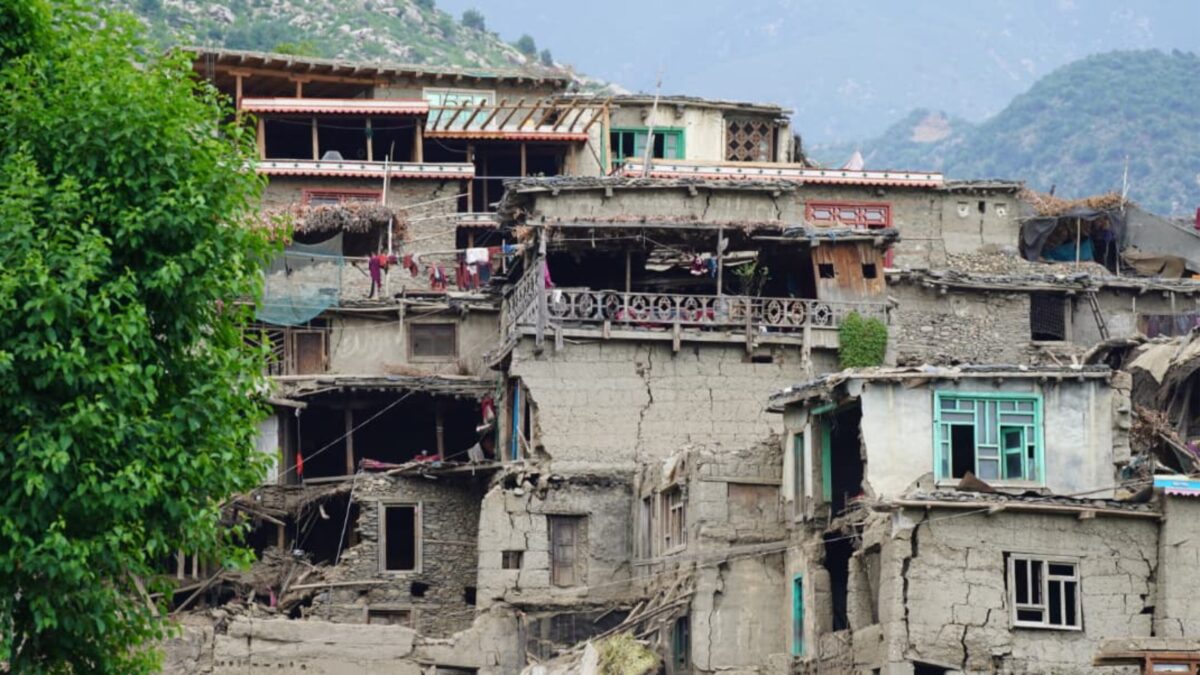
The United Nations refugee agency says it has begun delivering thousands of emergency shelters to some of the most remote and hard-to-reach areas of Kunar province, following a deadly earthquake that struck eastern Afghanistan last week.
The aid is intended for nearly 6,000 families, with distribution managed by the UNHCR’s partner organization, Cooperation for Humanitarian Assistance. The agency said the focus is on reaching vulnerable families and those hardest hit by the disaster.
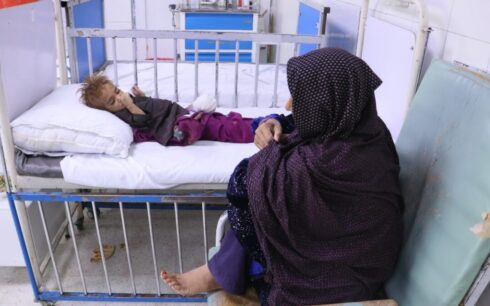
Six days after the 6.0-magnitude quake, bodies remain trapped under rubble, and ambulances are still transporting the injured and dead. In Suki district’s hospital—one of the worst-affected areas—many of the patients are women and children who lost their entire families.
A Taliban Health Ministry official said critically injured patients are being transferred to Kabul for treatment. Field reports indicate that women and children account for the majority of casualties. Local sources also report a shortage of female medical staff in Kunar, creating an urgent need for medical assistance.
In neighboring Nangarhar, the Taliban’s Justice Directorate issued a warning to humanitarian agencies, instructing them to avoid photographing women during aid distributions. “All charitable organizations are strongly advised to respect Islamic and Afghan values and to avoid any actions that may provoke public sensitivity—particularly taking photos of women,” the directive said.
A new report from the UN Development Program (UNDP) said the earthquake killed 2,200 people, injured 3,600 and destroyed 6,700 homes. In total, around 84,000 people have been affected.
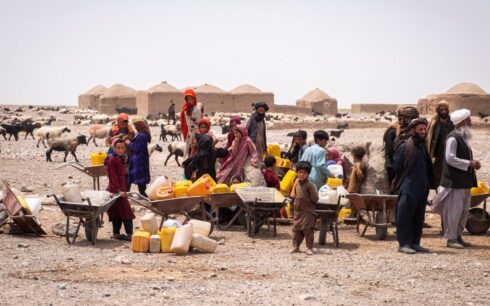
“We estimate that about 84,000 people have been impacted,” said Stephen Rodriguez, head of UNDP in Afghanistan. “Schools and health centers have collapsed, 68 primary water sources have been destroyed, and thousands now lack access to safe drinking water.”
The UN Food and Agriculture Organization (FAO) also reported that nearly 1 million livestock were affected in Nangarhar and Kunar provinces.
A spokesperson for the UN Secretary-General warned that aftershocks have increased the death toll and damage, complicating relief operations. “A failure to mobilize resources immediately will mean more suffering and more lives lost,” the spokesperson said.
Last week’s quake struck the provinces of Kunar, Nangarhar, Laghman, Nuristan and Panjshir, followed by several aftershocks.