August 30 marks the fourth anniversary of the final US military flight from Kabul, ending two decades of war in Afghanistan and beginning a new chapter under Taliban rule.
On this day in 2021, Gen. Christopher Donahue was the last American soldier to depart the country, boarding a plane from Hamid Karzai International Airport late at night. The withdrawal formally concluded America’s longest war.
President Joe Biden, then in office, described the pullout as the end of a conflict that cost the United States over $2 trillion and claimed the lives of 2,238 American service members. He said the war had become unsustainable and that it was time to bring American troops home.
However, critics in Washington and beyond argue the exit was chaotic and left behind thousands of US allies and vulnerable Afghans. Rep. Michael McCaul, R-Texas, said in a statement Saturday that the withdrawal “unleashed terrorism in the region” and left allies “to face retribution at the hands of the Taliban.”
In the years since the Taliban’s return to power, life for many Afghans, particularly women, has drastically worsened. Girls have been barred from education beyond the sixth grade, women are banned from most work and public life, and strict dress codes and travel restrictions have been imposed.
“This is the most dramatic rollback of women’s rights anywhere in the world,” said Richard Bennett, the UN special rapporteur on human rights in Afghanistan. “Women and girls are effectively erased from public life, denied education, work, freedom of movement — even their voices are silenced.”
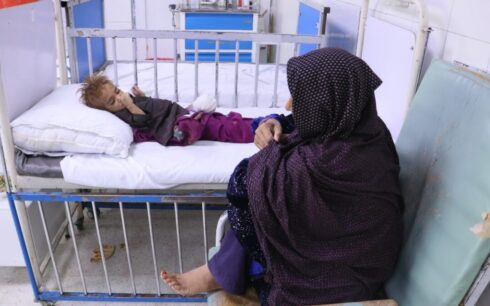
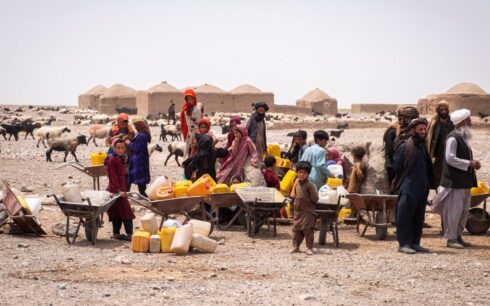
Since August 2021, nearly every sector of Afghan society has suffered. The economy has collapsed, international aid has dwindled, and millions face food insecurity. The UN estimates more than 23 million Afghans need humanitarian assistance.
Taliban spokesperson Zabihullah Mujahid has said the Doha agreement — signed with the United States in 2020 — paved the way for what he described as a “liberation” from occupation.
“Our victory had three stages,” Mujahid said. “First, the Doha agreement; second, the fall of Kabul on Aug. 15; and third, the final US departure on Aug. 31.”
Official US figures report more than 21,000 American troops were injured in the war. Casualties among Afghan security forces and civilians are estimated to exceed 100,000.
No country besides Russia has formally recognized the Taliban government. Meanwhile, many Afghans say their living conditions have deteriorated.
“We are poorer than ever,” said a Kabul resident, who asked not to be named. “There’s no work, and our children sleep hungry.”
For many, the US withdrawal marked a turning point — not just for Afghanistan’s security and governance, but for the future of its people. Four years on, hope remains in short supply.