Three days before the Taliban mark four years in power, some schoolgirls and university students say they have endured severe psychological pressure and a growing sense of hopelessness under the Taliban’s restrictions.
They say the international community has failed to force the Taliban to roll back their curbs on women’s and girls’ rights. The UN gender equality agency has warned that the situation for women and girls in Afghanistan has become increasingly untenable during the past four years.
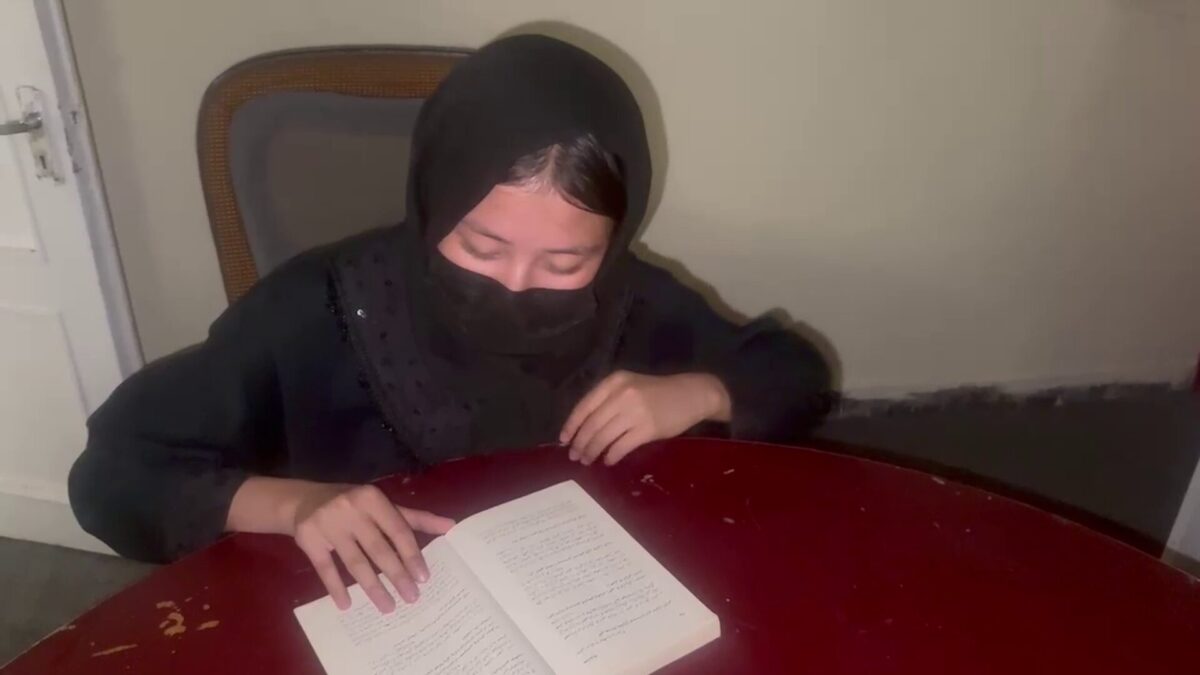
Nadia, a seventh-grade student locked out of school since the Taliban’s return in August 2021, said she has spent these years in deep distress, feeling robbed of her future. The dreams she once saw in her schoolbooks, she said, now seem trapped behind the high walls of the Taliban’s restrictions.
“As an Afghan girl, I want to say that school was a place for knowledge and as our second home. It was a place where we followed our dreams. A place where teachers were like our mothers. Can Taliban give us back those mothers? Can we once again have an opportunity to have teachers who would teach us enthusiastically?” asked Nadia.
Sabria, a former economics student, turned to a medical institute after universities were closed to women — only to see that option shut down as well. She says the repeated denials of education have all but extinguished her hope for the future.
“Over the past four years I could have continued my education, become a doctor and serve my country; but now, I cannot do this, because this right has been taken from us,” Sabria said.
UN Women, marking the fourth anniversary of the Taliban’s ban on girls’ secondary and higher education, warned that without urgent action, this “untenable reality” will become normalized and women and girls will be completely excluded from society.
“The Taliban is closer than ever to achieving its vision of a society that completely erases women from public life,” the agency said in a statement.
Since taking power, the Taliban have barred girls from grades seven and above, banned women from most government and NGO jobs, and restricted their movement without a male guardian. They have closed parks, gyms and public baths to women, imposed strict dress codes, and sharply curtailed women’s and girls’ visibility in media and public life.