Taliban authorities in Kabul have issued direct warnings to the families of detained women, threatening them with harsh punishment if they disclose any details about the arrests, according to several families and witnesses interviewed by Amu.
The warnings, delivered verbally during or after the release process, reportedly accompany the release of detainees on condition of financial payment or signed guarantees. Families said they were told that “any public mention or media engagement regarding the arrests would result in severe consequences.”
Over the past several days, women and girls have been detained in various districts of Kabul by officials from the Taliban’s Ministry for the Promotion of Virtue and Prevention of Vice. The arrests appear to be part of an intensified campaign enforcing the group’s interpretation of Islamic dress codes and restrictions on female mobility.
Kabul residents say the ministry’s enforcers — known locally as muhasibs — have increased patrols across the city, questioning women and girls in markets, on streets, and even outside their homes. In some instances, the inspections have gone beyond visible attire. Witnesses report that Taliban officers are now checking the clothing women wear under their hijab.
“They interrogate even those who comply with their dress code,” said a Kabul woman whose sister was detained earlier this week. “They check the fabric beneath our scarves, question our motives, and now we fear even walking to the corner store.”
Several female journalists and professionals in the city told Amu that local Taliban officials have informally warned them not to appear in public without a male guardian, or mahram. Families said they are now accompanying female relatives to and from their workplaces or medical appointments to prevent detention.
One woman described the growing pressure: “They’ve told us directly — if we leave home without a mahram, we will be arrested. This is not just about religion anymore. It’s control, it’s punishment.”
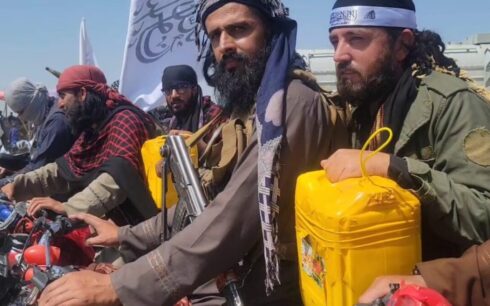
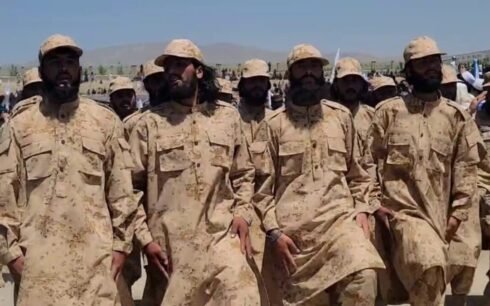
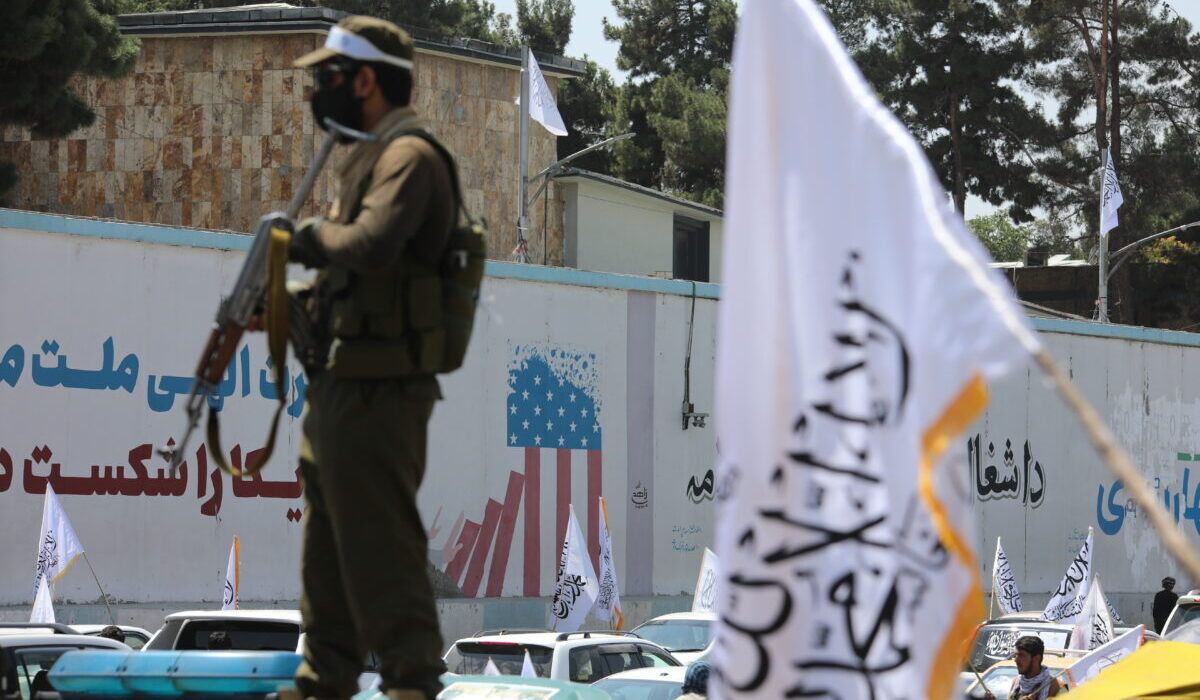
In some areas of Kabul, Taliban vice patrols have begun operating with full military gear, including rifles and armored vehicles, in what observers say is an unusually aggressive show of force. Some believe the escalation is linked to a recent armed attack on a Taliban vice checkpoint in the northern province of Kunduz, claimed by the anti-Taliban National Resistance Front.
“The situation has become unbearable,” said a relative of a recently detained woman. “Afghanistan feels like a prison. The Taliban enforce whatever they please in the name of Islam, but many of them don’t even understand the religion they’re invoking.”
The Taliban have not commented publicly on this recent wave of arrests. However, a spokesperson for the Ministry for the Promotion of Virtue previously told Amu that enforcing the hijab and related moral codes remains one of the ministry’s top priorities.
In a recent public event, the ministry reportedly muted the voices of two female journalists during a live broadcast as they attempted to ask questions. The press conference, led by Taliban Foreign Minister Amir Khan Muttaqi, continued uninterrupted once the women had finished speaking. The censorship appeared consistent with a Taliban edict labeling women’s voices as awrah — or something to be concealed — under their 2023 Law on the Promotion of Virtue and Prevention of Vice.
The restrictions on female voices and visibility come amid broader Taliban policies that have banned girls from secondary schools and universities, blocked women from most forms of employment, and severely limited their access to public space without male accompaniment.
Afghan citizens continue to voice frustration and despair over the growing repression. “We don’t even have the right to go to the city, to a doctor, or to breathe freely,” said a Kabul resident. “This is not life — it’s suffocation.”
Despite mounting criticism from civil society, international rights organizations, and Muslim scholars worldwide, the Taliban have made no indication of reversing their policies toward women.