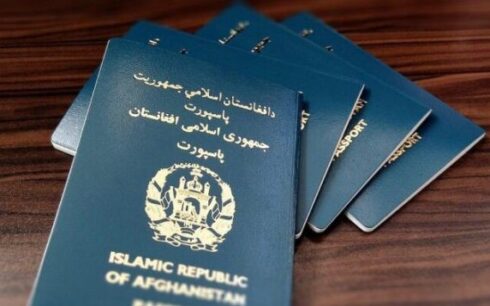
The German government deported a second group of Afghan nationals since the Taliban’s return to power in 2021, sending 81 people on a chartered flight to Kabul early Friday.
The deportation, carried out aboard a Qatar Airways flight that departed Leipzig Airport around 8:30 a.m., included individuals with final deportation orders or criminal convictions, a spokesperson for the German Interior Ministry confirmed. Some passengers were transported to the airport under heavy security, and one was reportedly wearing an electronic ankle monitor.
The operation marks the first deportation flight under Chancellor Faust Hertz’s new coalition government and the second overall since Kabul fell to the Taliban. It comes nearly a year after the German government announced it would resume deporting Afghan nationals with criminal records in response to a series of violent attacks in Mannheim and Solingen.
The last such flight took place on August 30, 2023, when 28 convicted individuals were returned to Afghanistan with logistical support from Qatar. At the time, then-Chancellor Olaf Scholz pledged more flights would follow, though no additional deportations occurred until this week.
With Germany heading toward national elections, immigration and deportation have returned to the forefront of public discourse. In May, newly appointed Interior Minister Thorsten Frei told local media that deportations to Afghanistan and Syria should resume on a “regular and expanded” basis.
Yet, the policy shift faces significant legal and diplomatic hurdles. Germany does not recognize the Taliban government and maintains no formal diplomatic relations with Kabul. Communication is conducted indirectly via a liaison office in Qatar, limiting coordination over deportations.
In an interview with Focus magazine, Mr. Frei acknowledged these limitations, stating: “We need a direct agreement with Afghanistan to facilitate repatriations without relying on intermediaries.”
The renewed deportation efforts have drawn criticism from United Nations officials and human rights groups, who argue that Afghanistan remains unsafe for returnees.
Arafat Jamal, head of the U.N. mission in Kabul, and Ravina Shamdasani, spokesperson for the U.N. Office of the High Commissioner for Human Rights, have both warned against forced returns to Afghanistan, citing widespread human rights violations, particularly against women and ethnic minorities.
As of May 2025, Germany was home to approximately 446,287 Afghan nationals, according to the Federal Office for Migration and Refugees. Of these, 11,423 individuals were under deportation orders or held only temporary legal status.
Since the policy began in 2016, Germany has deported 1,104 Afghan migrants — most prior to the Taliban’s return to power in August 2021.