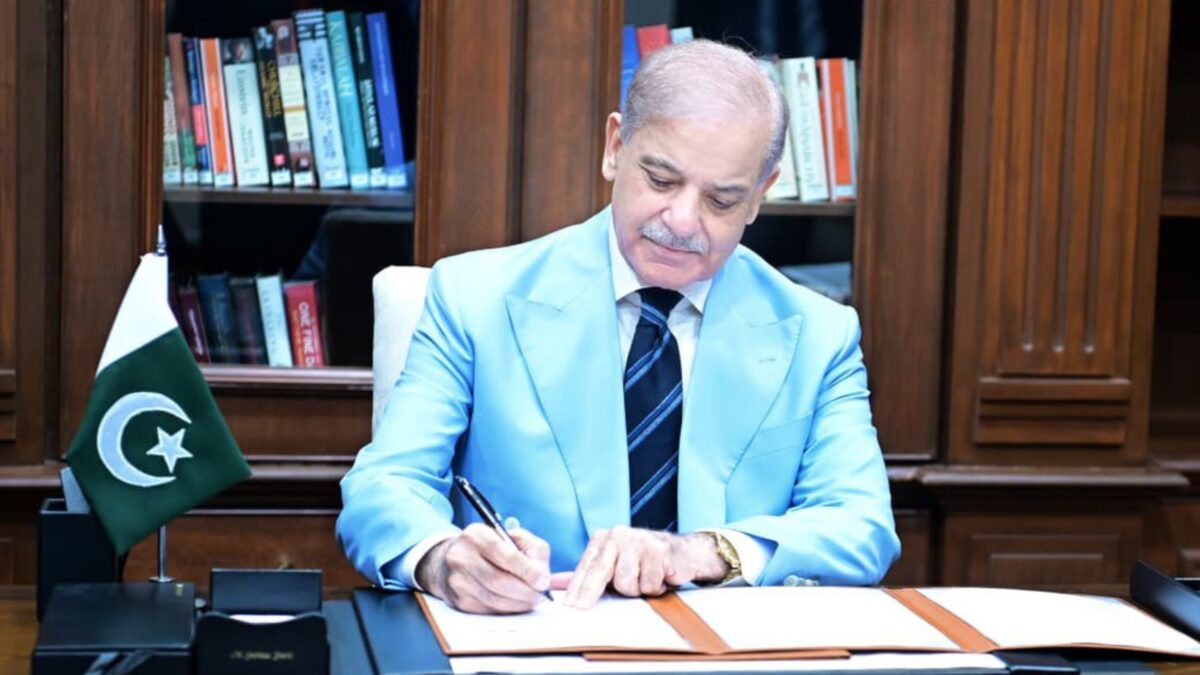
Pakistan Prime Minister Shehbaz Sharif has said that militant groups are crossing into Khyber Pakhtunkhwa from Afghanistan to carry out attacks, as senior Pakistani officials renewed pressure on the Taliban over a worsening security dispute between the neighboring countries.
Speaking during a visit to Quetta, the capital of Balochistan province, Sharif said militants were entering Pakistan from Afghanistan in groups and carrying out attacks in Khyber Pakhtunkhwa. He also accused India of providing financial and military support to militant groups targeting Pakistan.
“There is no doubt that our eastern neighbor plays a major role in this violence,” Sharif said. “They support these terrorists and their affiliated organizations financially and militarily in every possible way.”
He added that militants were crossing from Afghanistan into Khyber Pakhtunkhwa to carry out attacks and claimed that other foreign actors were also involved.
India has repeatedly rejected Pakistani allegations that it sponsors militant violence inside Pakistan. New Delhi, in turn, has long accused Islamabad of supporting militant groups operating in the region.
Sharif’s remarks came as Pakistan faces persistent militant violence, particularly in Khyber Pakhtunkhwa and Balochistan, the two provinces bordering Afghanistan. Relations between Islamabad and the Taliban have deteriorated sharply over Pakistan’s accusations that armed groups use Afghan territory to plan and carry out attacks.
Pakistan’s foreign minister, Ishaq Dar, separately called on the Taliban to uphold their international commitments and prevent Afghanistan from being used as a base for attacks against other countries.
“I emphasized the need for the Afghan Taliban regime to abide by its international obligations and to ensure that Afghan soil is not used to threaten or attack other countries, particularly Pakistan,” Dar said at a news conference with Croatia’s foreign minister.
Pakistani officials say the Pakistani Taliban, formally known as Tehreek-e-Taliban Pakistan, or TTP, the Baloch Liberation Army and affiliated groups maintain a presence in Afghanistan and use the country to organize attacks across the border.
The Taliban have repeatedly denied those remarks, saying they do not allow Afghanistan’s territory to be used against other countries. They have also described the TTP insurgency as an internal Pakistani issue.
Taliban officials have not publicly responded to the latest statements by Sharif and Dar.
The dispute over militant sanctuaries has become the central source of tension between the two sides. Pakistani and Taliban officials have held five rounds of talks in Doha, Istanbul, Riyadh and Urumqi, but the discussions have failed to produce a settlement of their security disputes.
Pakistan has said it will continue military operations against militant targets it says are located inside Afghanistan, a position that has led to repeated cross-border confrontations and strikes.
Asif Durrani, Pakistan’s former special representative for Afghanistan, said Islamabad’s demands regarding the TTP were straightforward.
“First, disarm the group,” Durrani said. “Second, prevent the TTP leaders who have sanctuaries and safe havens in Afghanistan from operating and carrying out propaganda, and, ideally, hand them over to Pakistan.”
The Taliban have not accepted those demands publicly and have continued to reject Pakistan’s assertion that they shelter or support the TTP.
The dispute marks a striking deterioration in relations between Pakistan and the Taliban. Former Afghan governments and Western officials have often said Pakistan was providing sanctuary and support to the Taliban during their insurgency, allegations Pakistan denied.
Since the Taliban returned to power in Afghanistan in August 2021, however, Pakistan has faced a resurgence of militant attacks and has increasingly accused the Taliban of failing to act against armed groups operating near the border.
The Taliban maintain that Afghanistan is not responsible for Pakistan’s internal security problems and that they remain committed to preventing the country’s territory from being used against any other state. Pakistani officials, however, say that commitment has not translated into sufficient action against groups they accuse of operating from Afghanistan.