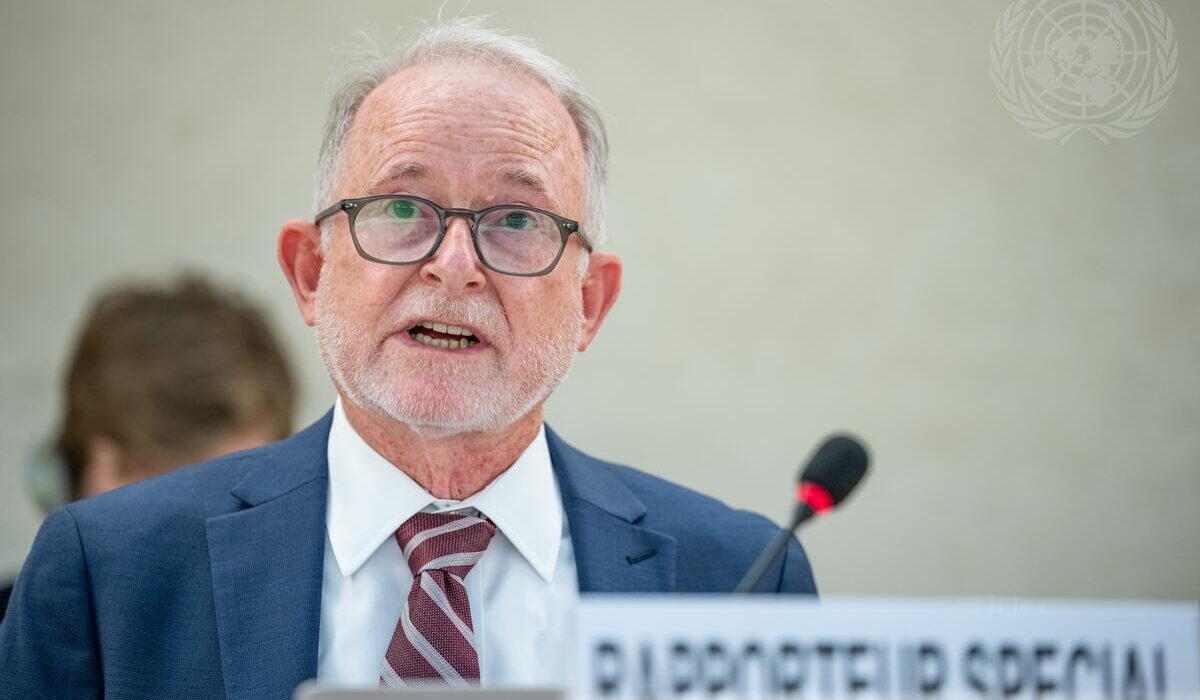
Richard Bennett, the UN special rapporteur on human rights in Afghanistan, said that holding talks with Taliban representatives in Brussels on migrant returns would be “an insult to Afghans, especially women.”
Bennett made the remarks while endorsing a statement by Volker Turk, the UN high commissioner for human rights, who criticized a new European Union regulation designed to accelerate the deportation of migrants and asylum seekers.
“I endorse this statement by Volker Turk regretting a new EU regulation allowing speedy deportations,” Bennett wrote on X. “Respect for human rights and refugee law is imperative. Afghans must not be returned to an unsafe situation. A meeting with Taliban in Brussels would insult Afghans, especially women.”
His comments come amid controversy over plans for a meeting in Brussels between European officials and a Taliban delegation focused on the return and readmission of Afghans who no longer have the right to remain in the European Union.
Reuters previously reported that Belgium had received visa applications from five members of a Taliban delegation invited to attend the discussions. Belgian officials said the applications were undergoing security screening and that no final decision had been made.
According to a letter obtained by Reuters, the talks, expected to take place on June 22 and 23, would focus on the return and readmission of Afghan nationals without legal residency status in the European Union.
The European Commission and Sweden, which is co-hosting the meeting, have said the discussions are technical and do not constitute recognition of the Taliban rule.
The proposed talks have drawn criticism from human rights organizations, Afghan activists and several European lawmakers, who argue that direct engagement with Taliban risks conferring legitimacy on a regime that has committed widespread human rights abuses.
Bennett’s remarks echoed broader concerns raised by Turk over the European Parliament’s approval this week of a new EU returns regulation. The legislation expands the use of pre-removal detention and allows member states to establish so-called “return hubs” in third countries for migrants awaiting deportation.
Turk said he was “deeply regretful” of the regulation’s adoption and urged EU governments to ensure that its implementation complies fully with international human rights and refugee law.
“International human rights law and refugee law are very clear: no one should be returned to a place where they would be at risk of serious human rights violations or other irreparable harm,” Turk said, referring to the principle of non-refoulement, which prohibits returning individuals to countries where they face persecution or serious danger.
He also warned against outsourcing migration responsibilities to third countries and called for safeguards to protect vulnerable migrants, including children and families.
The debate comes as Afghanistan remains mired in a humanitarian and human rights crisis nearly five years after the Taliban returned to power. UN experts have repeatedly documented restrictions on women and girls, arbitrary detentions, and limits on fundamental freedoms, while humanitarian agencies continue to warn of widespread poverty and displacement.
Belgian Foreign Minister Maxime Prévot has also voiced opposition to hosting Taliban representatives in Brussels, highlighting divisions within Europe over how to manage migration while avoiding steps that could be seen as normalizing relations with the Taliban.