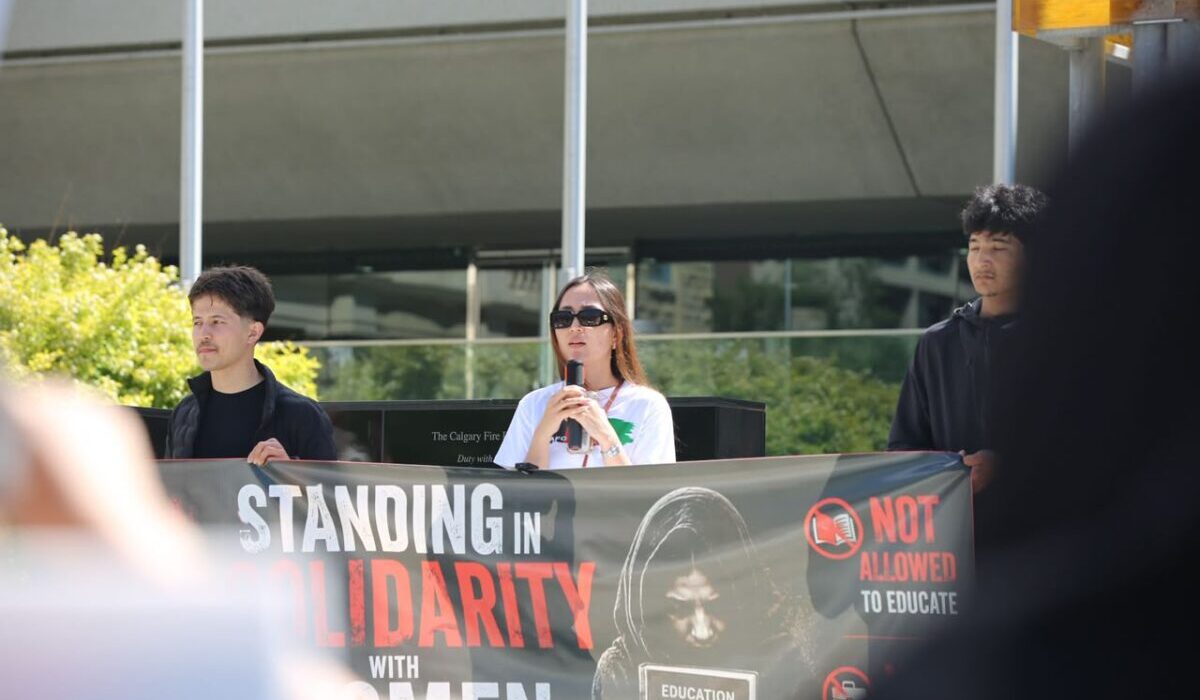
Afghan citizens in cities across Europe and North America have launched a new wave of protests against the Taliban, condemning the recent detention of women and girls in western Afghanistan and what they describe as an escalating crackdown on civil liberties.
Demonstrations have been held in the United States, Canada, Germany, France, Spain, Sweden, Norway, Austria, France, Portugal and several other countries, according to organizers and participants.
Protesters have expressed solidarity with Afghan women and girls and called on the international community to take stronger action in response to Taliban policies. Many carried signs demanding education, employment and freedom for women, while others criticized what they described as the international community’s failure to hold the Taliban accountable.
The protesters have chanted slogans such as “death to Taliban” and “education, work, freedom”, have called for further support to the rights of women and girls in the country.
“We have gathered here in Madrid once again to show solidarity with the women in Afghanistan,” a protester said.
“We are here once again to raise the voice of women in Herat. We call on the international community to listen the voice of women in Afghanistan,” another protester said.
Some of the protesters have criticized the international community for not taking practical steps against the Taliban.
“We call for support for women and girls in Afghanistan. The world has remained silence, and this is shameful,” said a protester.
The demonstrations follow arrests of women and girls in Herat province earlier in June, where Taliban have intensified enforcement of dress-code regulations.
The UN Assistance Mission in Afghanistan (UNAMA) has confirmed receiving reports of women and girls being detained in Herat and expressed concern about the arrests and the response to subsequent protests.

Taliban governor in Herat has defended the measures, saying enforcement actions against women for “violating” the Taliban’s dress requirements will continue. Similar warnings have been issued in the cities of Kabul and Mazar-e-Sharif.
Over the past five years, Taliban have barred girls from secondary schools and universities, restricted women’s employment in many sectors, limited their freedom of movement and excluded them from most public life. The UN has described the restrictions as unprecedented in the modern world.
Protest organizers said the latest demonstrations were intended to draw international attention to what they view as a widening campaign against women’s rights and personal freedoms in Afghanistan.
Human rights groups and UN experts have repeatedly urged the Taliban to reverse policies restricting women and girls, arguing that the measures violate Afghanistan’s international human rights obligations.
Despite sustained international criticism, Taliban have largely maintained their restrictions, insisting that their policies are consistent with their interpretation of Islamic law and Afghan culture.