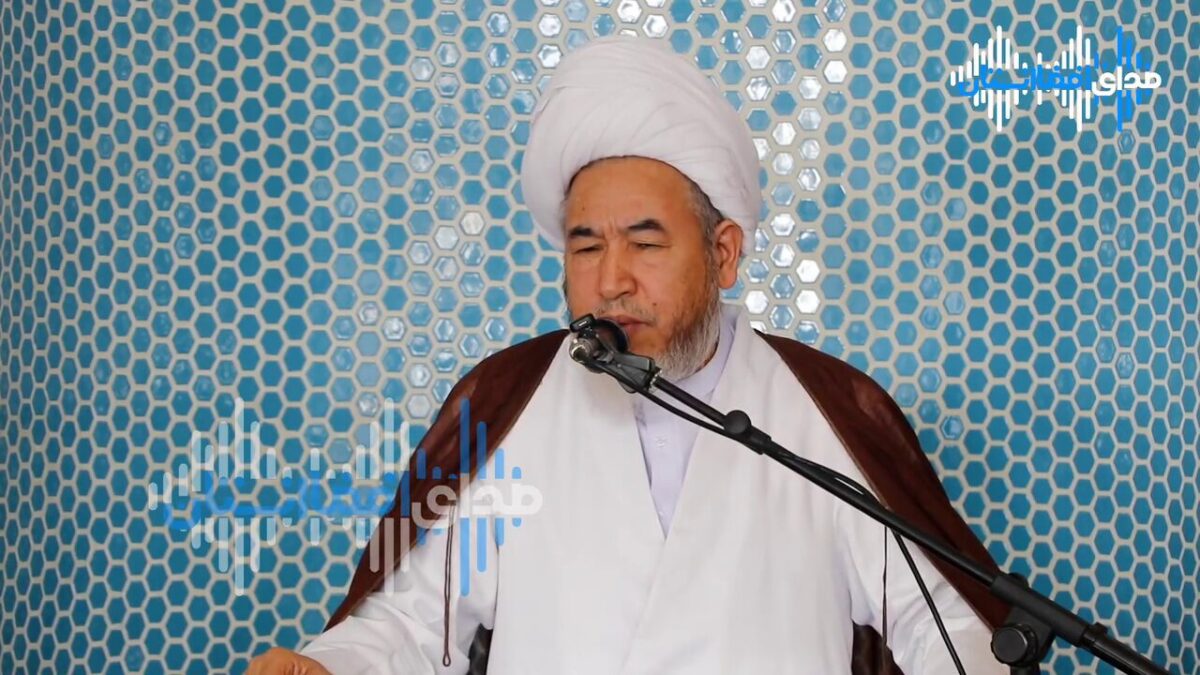
A Shiite cleric in Kabul has said that the Taliban have intensified religious pressure on followers of the Jafari school of Islam, warning that growing restrictions risk deepening social divisions in the country.
Speaking during Eid al-Adha prayers in Kabul, Waezzada Behsudi, a Shiite scholar, said conditions for Afghanistan’s Shiite community have worsened steadily since the Taliban returned to power in 2021.
“We have observed over the past four years and 11 months that religious pressure on followers of the Jafari school has increased year by year, month by month and week by week,” Behsudi said.
He argued that such policies were creating greater distance between communities and undermining social cohesion.
Behsudi also said that Taliban have pressured some Shiite students at universities to abandon their religious affiliation.
“Sometimes at universities, students are told that they must become Hanafi or leave the university,” he said, referring to the Sunni Hanafi school that forms the basis of much of the Taliban’s legal interpretation.
“What is wrong with a student being a follower of the Jafari school and also being a university student?” he asked.
Taliban have not publicly responded to the allegations.
Behsudi also criticized Taliban policies regarding temporary marriage, a practice recognized within parts of Shiite jurisprudence but rejected by many Sunni scholars. He said followers of the Jafari school should be allowed to practice their faith in accordance with their religious beliefs.
His remarks echo concerns raised previously by other Shiite religious leaders.
Earlier, the Shiite cleric Hussain Dad Sharifi said Taliban are pressuring Shiite scholars and attempting to interfere in religious affairs. He claimed that some clerics had been summoned by Taliban and required to sign written pledges restricting certain religious activities.
“They summoned dozens of scholars as if they were criminals,” Sharifi said in earlier remarks. “They took commitments, signatures and guarantees from them.”
Afghanistan’s Shiite population, made up largely of ethnic Hazaras, has long maintained separate religious institutions and legal traditions based on Jafari jurisprudence.
Under the constitution of the former republic government, Shiite personal status law was formally recognized, allowing Shiites to resolve family and personal matters according to Jafari legal principles.
Since the Taliban’s return to power in August 2021, Shiite religious leaders and rights advocates have voiced concerns that the community’s legal and religious autonomy has been eroded. Critics say Taliban have increasingly applied a uniform interpretation of Islamic law that leaves limited space for Afghanistan’s religious minorities and diverse Islamic traditions.
Taliban have consistently said they respect the rights of all Afghans within the framework of Islamic law, but members of the Shiite community have repeatedly complained of restrictions on religious practices, educational activities and community affairs.
Behsudi warned that increasing sectarian pressures would not serve the interests of either the Taliban or Afghanistan.
Without naming specific consequences, he suggested that continued restrictions could fuel greater tensions in society, saying policies that widen social divisions ultimately undermine national unity.