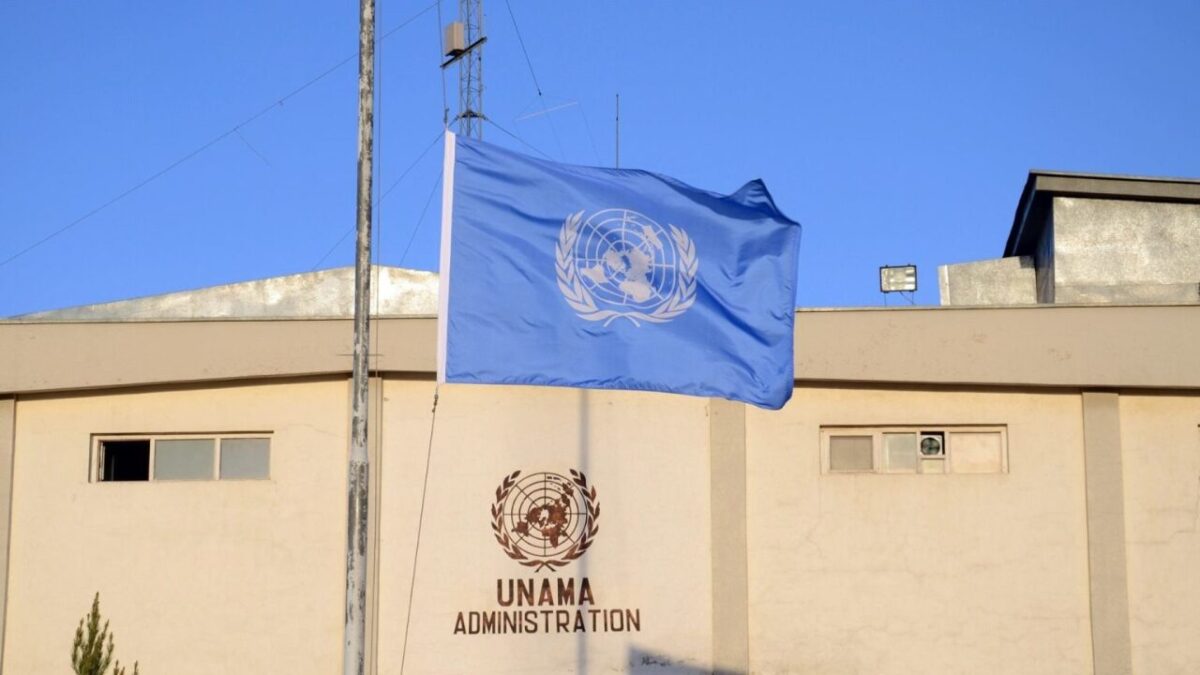
The UN Assistance Mission in Afghanistan (UNAMA) on Thursday expressed “grave concern” over a new Taliban family law regulation, warning that it further entrenches discrimination against women and girls and weakens their access to justice.
The regulation, known as the “Code on Judicial Separation of Spouses,” was published by the Taliban’s Ministry of Justice on May 14 after being approved by Taliban leader Hibatullah Akhundzada.
In a statement, UNAMA said the measure codifies rules governing marital separation within what it described as a “deeply unequal framework,” in which men retain the unilateral right to divorce while women must navigate restrictive judicial procedures to end a marriage.
“Decree No. 18 is part of a broader and deeply concerning trajectory in which the rights of Afghan women and girls are being eroded,” said Georgette Gagnon, the U.N. deputy special representative for Afghanistan and acting head of UNAMA.
“The Decree further institutionalizes discrimination and, when combined with restrictions on girls’ education and women’s public participation, entrenches a system in which Afghan women and girls are denied autonomy, opportunity and access to justice,” she said.
The 31-article regulation outlines rules for the dissolution of marriages under a range of religious and legal circumstances, including cases involving missing spouses, apostasy, accusations of adultery, forced separation and child marriage.
Rights advocates have focused particular attention on provisions concerning minors. According to UNAMA, the regulation includes a chapter addressing marital separation for girls who reach puberty while married, a provision the mission said implies that child marriage is legally recognized.
The UN mission also said the regulation allows a girl’s silence upon reaching puberty to be interpreted as consent to marriage, raising concerns about the principle of free and full consent and the protection of children’s rights.
These measures, with bans on girls’ secondary and higher education and restrictions to women’s access to work, have deprived millions of Afghan women and girls of their right to education, weakened economic participation, and deepened poverty, with long-term consequences for Afghanistan’s development. Within this context, Decree No. 18 compounds existing inequalities by limiting women’s agency in marriage, separation, and access to justice.
“Of particular concern is the impact on girls,” UNAMA said, adding that the regulation fails to safeguard the best interests of the child and undermines protections against child marriage.
UNAMA further warned that access to justice for women remains severely constrained. The mission said women face procedural ambiguity, limited access to courts and discrimination within the justice system and may be directed toward informal dispute-resolution mechanisms that do not guarantee fairness or non-discrimination.
The regulation’s silence on protections against domestic violence could also leave women trapped in abusive relationships, UNAMA said.
The decree follows a series of Taliban measures affecting women since the group returned to power in 2021. UNAMA noted that an earlier decree issued in December 2021, known as the “Special Decree on Women’s Rights,” recognized certain rights for women, including consent to marriage and inheritance. However, the mission said subsequent measures have steadily restricted women’s autonomy before, during and after marriage.
The UN also pointed to a separate Taliban decree issued earlier this year that introduced limited judicial intervention in cases of severe domestic violence but imposed a maximum prison sentence of only 15 days on husbands convicted of serious abuse.
According to UNAMA, these measures, combined with bans on girls’ secondary and university education and restrictions on women’s employment and public participation, have deprived millions of women and girls of opportunities, weakened economic participation and deepened poverty across Afghanistan.
The latest criticism comes as more than 100 Afghan and international human rights organizations have called for the regulation to be repealed, arguing that it institutionalizes gender discrimination and undermines the rights of women and girls.
UNAMA mission called on Taliban authorities to align their laws and policies with international standards, including safeguarding consent to marriage, eliminating child marriage, ensuring access to justice and protecting the rights and dignity of all individuals.
Taliban spokesman Zabihullah Mujahid has defended the regulation, saying it is based on Islamic law.