Flooding triggered by heavy rains across Afghanistan has killed and injured hundreds of people and left nearly 57,000 in need of assistance, the UN Office for the Coordination of Humanitarian Affairs said Wednesday, as humanitarian agencies struggle to scale up relief efforts amid damaged infrastructure and funding shortages.
OCHA said in its latest update that up to 7,500 homes have been damaged or destroyed nationwide, along with critical infrastructure including roads, bridges and agricultural land.
OCHA said that of the 73,300 people initially reported affected, 56,900 have been confirmed to require assistance, while more than 31,100 people have already received aid, including food, cash, shelter and medical support.
OCHA said assessments have been completed in 115 districts, with additional evaluations ongoing in 34 districts, meaning the overall impact could rise further.
According to OCHA, flooding has disrupted essential services across multiple sectors. At least 61 health facilities in provinces including Kandahar, Nangarhar and Logar have been partially damaged, affecting access to care for thousands, though no facilities have fully closed.
OCHA said education has also been heavily affected, with at least 68 schools damaged in Nangarhar province and 55 more impacted across southern Afghanistan, disrupting learning for tens of thousands of students.
OCHA said humanitarian needs remain acute, particularly in eastern and southeastern provinces such as Kunar, Nangarhar, Khost and Paktika, where many families have lost homes and livelihoods or remain displaced in temporary shelters.
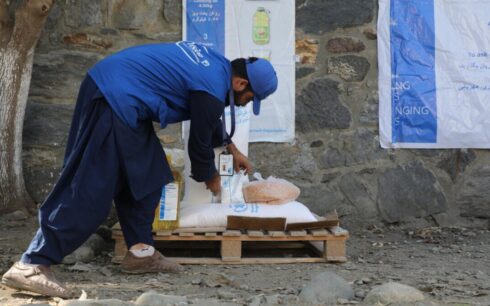
According to OCHA, aid agencies have delivered a range of emergency assistance, including food distributions, shelter materials, water and sanitation services and health care. Mobile teams are providing services in hard-to-reach areas, including health care and civil documentation support.
OCHA said the response is increasingly strained by overlapping crises, including ongoing border tensions with Pakistan, supply chain disruptions and a surge in returning migrants. These pressures are rapidly depleting emergency stocks and limiting the ability to deliver aid.
OCHA said the World Food Program has approved assistance for more than 7,400 affected families across 28 provinces, providing two months of food rations, but warned that supplies are being used quickly without confirmed replenishment.
According to OCHA, health partners have treated more than 9,700 people, delivering trauma care, primary health services and psychosocial support. OCHA said concerns are rising over public health risks, including an estimated 25% increase in diarrheal diseases in affected areas.
OCHA said protection risks are also escalating, with more than 14,000 people in flood-affected areas at risk of gender-based violence, while some 2.7 million people remain exposed to explosive ordnance hazards, which can shift due to flooding.
OCHA said women, children and vulnerable groups — including those in female-headed households or with disabilities — face heightened risks as displacement and loss of livelihoods deepen the humanitarian crisis.
OCHA said access constraints remain a major obstacle, with damaged roads, insecurity in remote areas and limited funding continuing to delay aid delivery, particularly in hard-to-reach districts.
Despite the challenges, OCHA said humanitarian agencies are adapting operations, including through mobile services and community-based delivery, to maintain life-saving assistance.