The Taliban’s foreign minister on Tuesday expressed cautious optimism on Taliban-Pakistan talks in China, saying that “constructive” negotiations are underway there aimed at easing tensions with Islamabad.
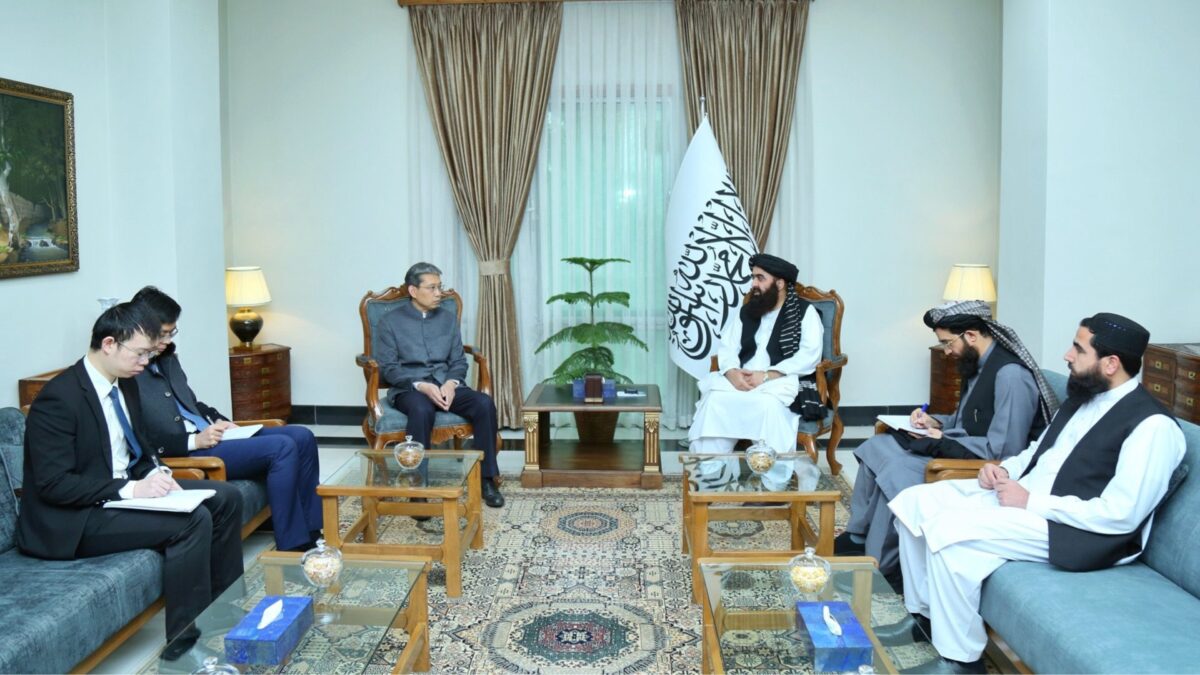
In a meeting with China’s ambassador, Zhao Xing, in Kabul, Amir Khan Muttaqi said discussions in the city of Urumqi had so far been productive and should not be derailed by minor disagreements, according to a statement from the Taliban’s Foreign Ministry.
Muttaqi thanked China for hosting the talks and praised mediation efforts by regional countries, including Saudi Arabia, Turkey, Qatar and the United Arab Emirates.
He reiterated that the Taliban remain committed to resolving disputes through dialogue, while describing their position as defensive and focused on protecting Afghanistan’s territorial integrity.
China’s ambassador said Beijing was working to build trust between the two sides and had initiated the talks with neutrality and cooperation, expressing hope that the process would continue without violence.
Core disputes remain
Despite the positive tone, significant disagreements persist. Pakistan has pressed the Taliban to formally designate Tehrik-i-Taliban Pakistan (TTP) as a terrorist organization and dismantle its infrastructure inside Afghanistan, according to Pakistani officials cited by local media.
The demand is a central part of Islamabad’s position in the talks.
Pakistan has long accused the Taliban of allowing TTP fighters to operate from Afghanistan’s territory, a claim the Taliban deny. A United Nations monitoring team has estimated that the group has 6,000 of fighters based in Afghanistan.
Taliban have largely remained silent on the details of the negotiations. However, Naeem Wardak, their deputy foreign minister, said the outcome would depend on Pakistan’s approach, while emphasizing that disputes could be resolved through diplomatic means.
The talks in Urumqi have now entered their sixth day, according to sources familiar with the process, but neither side has released substantive details about progress.
The talks come against the backdrop of weeks of cross-border clashes that began in late February and have included airstrikes and artillery exchanges.
While negotiations are ongoing, Taliban have continued to report Pakistani shelling in eastern provinces, and some residents have described displacement and loss of homes.
Previous rounds of talks held in Doha, Istanbul and Saudi Arabia failed to produce lasting agreements, raising questions about whether the current effort can achieve a breakthrough.