A board member of the Afghanistan Chamber of Commerce and Investment (ACCI) has warned that increasing pressure on traders to sell food at lower prices could push the country toward “famine” as regional tensions disrupt trade routes and drive up food costs.
Khan Jan Alokozay told Amu TV that Taliban authorities have been pressuring traders to sell basic food items at lower prices amid ongoing clashes with Pakistan and instability in the region.
“If traders are treated in a way that puts them under pressure and forces them to sell goods cheaply, they will stop importing food items,” Alokozay said on Sunday. “If this situation continues, Afghanistan could move toward famine. We have already shared this concern with Taliban officials.”
Alokozay said food prices have risen partly because trade routes with Pakistan remain closed and tensions in the region—particularly in Iran—have disrupted Afghanistan’s main transit corridors.
He said markets currently have enough food supplies for about one to one-and-a-half months but warned that Taliban authorities must take urgent measures.
“I think there are enough supplies in the market for one to one and a half months, but a solution must be found,” he said.
Alokozay said one of the main concerns is imported food items, particularly rice, which is not produced in Central Asian countries and must be imported from South Asia.
Although Afghanistan has reached an understanding with Bangladesh to import rice, shipments must pass through Iran’s Abbas and Chabahar ports, he said, and recent tensions in the region have affected those routes.
He called for coordination between ACCI, trade unions, business associations and the Ministry of Commerce and Investment to address the situation.
“If the war in the region continues under the current conditions, the situation will worsen,” he said.
Rising food prices
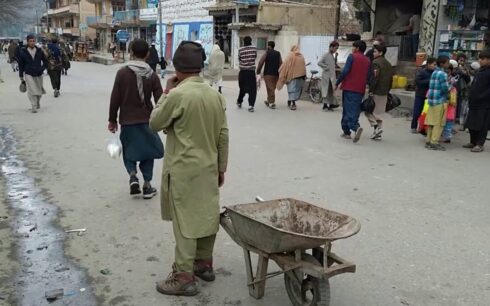
Afghanistan is facing growing economic pressure as food prices rise sharply across markets.
In Kabul, a 24.5-kg sack of rice now costs between 4,200 and 4,500 Afghanis ($60–$64), compared with about 2,500 Afghanis ($36) previously.
Prices of other staple foods have also increased as potatoes are sold about 300 Afghanis ($4.30) per 7 kilograms, up from 200 Afghanis ($2.85).
Tomatoes are sold for 80–100 Afghanis ($1.15–$1.40) per kilogram, up from about 50 Afghanis ($0.70). A 49-kg sack of flour costs 1,550–1,600 Afghanis ($22–$23), up from 1,400 Afghanis ($20).
A five-liter bottle cooking oil costs about 600 Afghanis ($8.50), compared with 550 Afghanis ($7.85) earlier.
Residents across the country say the rising prices are worsening economic hardship.
“We used to buy milk for 250 Afghanis per kilogram, but now it costs 300 Afghanis ($4.30),” said a resident of Ghor province. “Prices have increased a lot.”
A resident of Badghis province said many families are struggling to afford basic goods.
“The prices of all food items have increased. We have no money, and economic difficulties are growing,” the resident said.
Trade disruptions
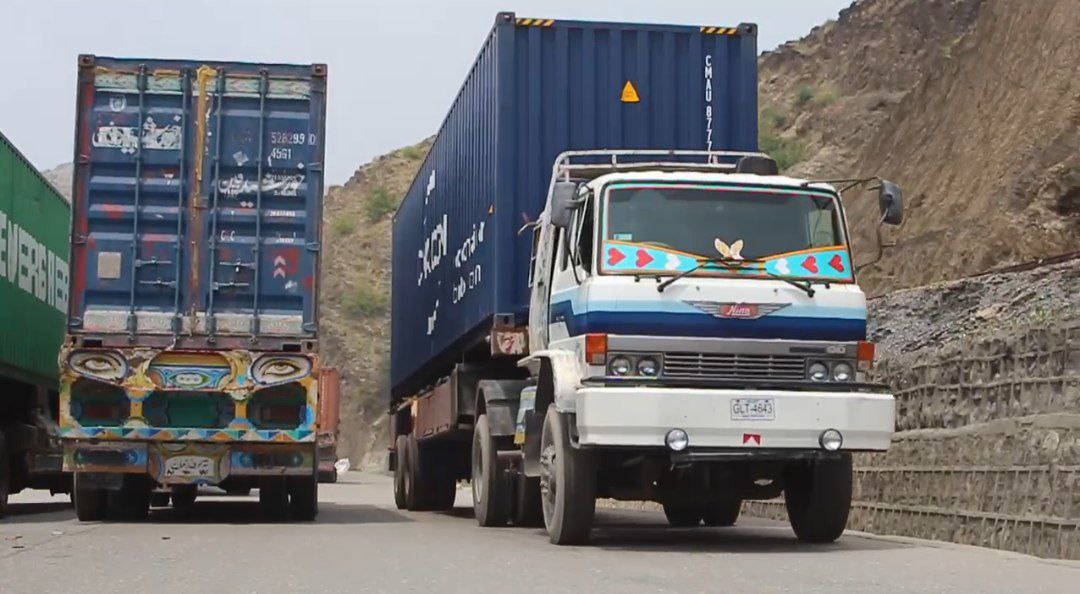
The price increases come after key border crossings between Afghanistan and Pakistan have remained closed for nearly four months because of tensions between Taliban and Pakistan.
Recent tensions in Iran have also disrupted Afghanistan’s access to the port of Chabahar, which had served as an alternative trade route in recent months.
Economic analyst Sayed Masoud warned that Afghanistan could face a serious economic crisis if the situation continues.
“With tensions in Iran and the closure of routes with Pakistan, ports such as Gwadar, Karachi and Chabahar are effectively blocked,” Masoud said. “Northern routes alone cannot meet Afghanistan’s market needs. Strategic reserves must be created urgently.”
Taliban have sought to portray the economic situation as stable, but residents say they are bearing the brunt of rising prices.
Analysts say only a few northern border crossings remain open while demand for goods across the country continues to rise. Afghanistan also lacks government strategic reserves of basic food supplies.