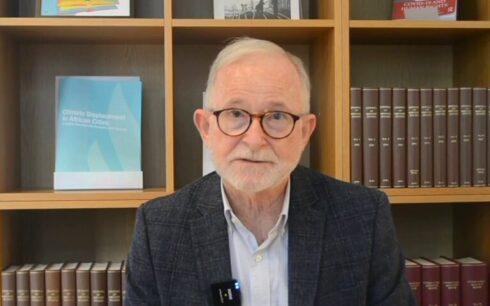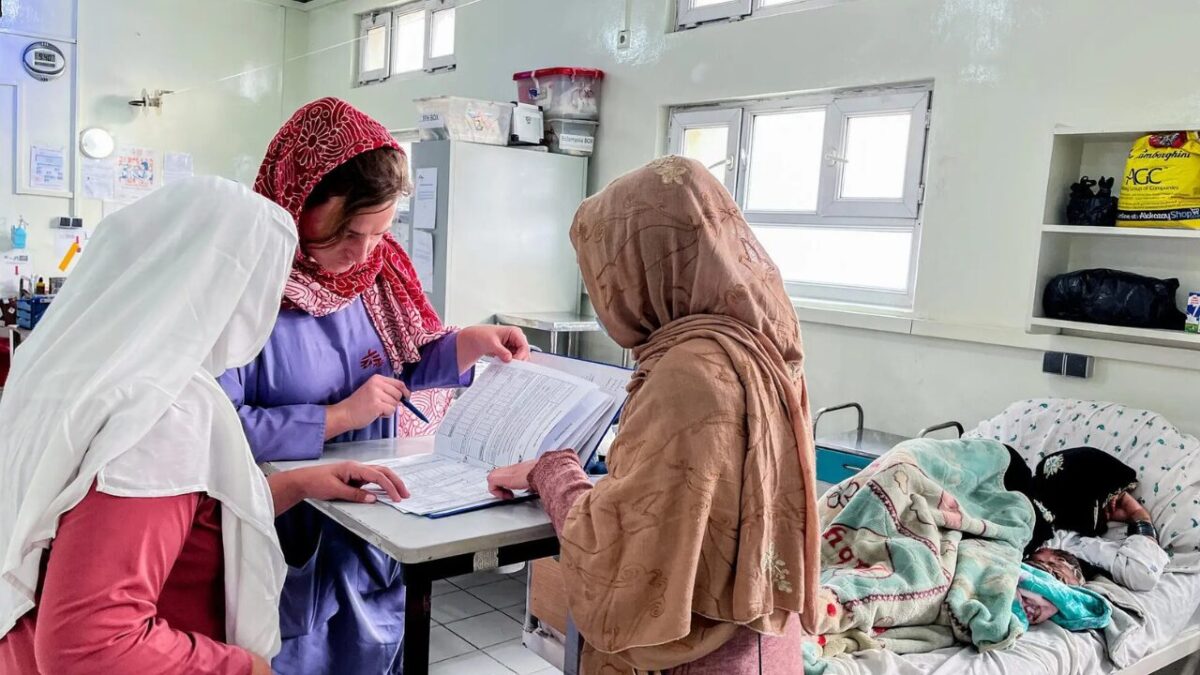
UN Special Rapporteur Richard Bennett has warned that Taliban restrictions on women’s medical education and access to care could amount to “femicide,” describing a health system that is being systematically dismantled in ways that endanger women and girls across Afghanistan.
In December 2024, the Taliban issued a directive banning women from attending medical and health training institutions. Medical, nursing, midwifery, laboratory and other clinical programs for women were forced to close, and women were prevented from taking the exit examinations required to enter the professional health work force. The report that covers women and girls’ access to healthcare in Afghanistan says the move has “effectively halted the pipeline of new women health professionals entering the workforce.”
Bennett states that the ban is “completely unjustifiable” and warns that, unless reversed, it “will lead to unnecessary suffering, illness, and deaths, and could amount to femicide.”
A system under strain
Afghanistan already faces long-standing challenges in the availability of health facilities, goods and services, including underinvestment in infrastructure, shortages of trained health workers — particularly women — and reliance on imported medicines, the report says. Health workers across the country describe chronic shortages of facilities, equipment, essential medications, staff and operational funding, according to the report. Many facilities have closed or operate at reduced capacity. Patients who can afford it seek private treatment or travel abroad, if able to secure visas, the report notes.
United Nations agencies, international organizations and civil society groups continue to play a central role in health service delivery, and some states support efforts to expand health infrastructure, the report says. But sharp reductions in international funding in 2025, notably by the United States, have had “serious consequences,” the report says. An estimated 445 health facilities have been forced to close, and community awareness initiatives, education programs, referrals and protection activities have been scaled back, according to the report.
According to the 2026 Humanitarian Needs and Response Plan, cited in the report, 21.9 million people in Afghanistan require humanitarian assistance, including 14.4 million in health.
Following the Taliban takeover in 2021, the withdrawal and redirection of external aid disrupted service continuity and staff salaries, the report says. Humanitarian and emergency-focused assistance replaced long-term development support, prioritizing short-term interventions over sustained public health programs. Aid providers have also faced the challenge of delivering support without conferring legitimacy on the Taliban or breaching international sanctions, the report notes.
Staff shortages are particularly acute among women health workers and specialists in emergency care, the report says. Outmigration of qualified personnel, driven by economic pressures and restrictive policies, has further weakened the system. Rural areas have been especially affected, as health workers relocate to urban centers, according to the report.
Medicine and medical supply shortages remain critical, the report says. Domestic pharmaceutical production is minimal, leaving the country dependent on imports that are vulnerable to cross-border disruptions. Health workers report high costs, increased reliance on poor-quality or expired medicines and severe gaps in essential drugs, the report states.
Decision-making in the health sector has become highly centralized under the Taliban authorities, the report says. Senior officials appointed to the Taliban Ministry of Public Health often lack technical expertise or health sector experience, reflecting a broader pattern of appointments based on political and ideological affiliation.
According to the report, many managerial roles in hospitals and health directorates are now held by individuals without health-sector training, and women previously employed in managerial and administrative positions have been removed.
Allegations of corruption persist, including bribery for appointments, misuse of health funds, overcharging and inappropriate referrals to private clinics, the report says.
According to the report, governance and accountability mechanisms have weakened or been dismantled, including grant management bodies and independent monitoring.
Opportunities for redress of human rights violations remain “extremely limited,” the report says, citing a justice system that lacks independence and severe restrictions on independent media.
Movement and dress restrictions
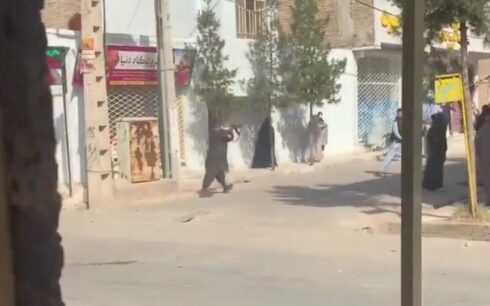
Among the most immediate barriers to care are restrictions on women’s freedom of movement, including the requirement that women be accompanied by a mahram, or male guardian, and mandatory dress codes, the report says. Both were formally codified in August 2024 in a Taliban law on the promotion of virtue and the prevention of vice.
Access to health facilities often depends on having a mahram willing and able to accompany a woman, the report says. The requirement disproportionately affects women-headed households, widows, internally displaced and returnee women, separated or unaccompanied women and girls, and those whose guardians have disabilities. It undermines women’s ability to seek care independently and confidentially and imposes additional financial burdens, the report states.
The rapporteur received multiple reports of women being denied access to urgent medical care because they did not have a mahram, the report says. In Balkh Province, one woman was forced to deliver her baby at a hospital gate after being refused entry. Another woman was unable to take her four-year-old son to hospital while her guardian was away; by the time she reached a facility, the child had died. In Herat Province, a woman saw another turned away from a dental clinic and left “screaming in pain.” Ambulance services, generally only available in large cities, are frequently inaccessible to women without a mahram, with some male operators refusing to speak to women at all, the report says.
The requirement also restricts women health workers, according to the report. In some provinces, a mahram must accompany a woman to and from her workplace and remain nearby during her shift, particularly at night. Workers report having to present marriage certificates or identity cards to prove the relationship. In some southern provinces, women must register their mahram and carry verification cards, the report says.
Mandatory dress codes further limit access, the report says. Implementation varies by province, but both patients and health workers have been denied entry for noncompliance. In November 2025, Taliban authorities in Herat barred female patients and staff from public hospitals for noncompliance, resulting in an immediate 28 percent drop in admissions, the report says. Although the measure was partially relaxed after public pressure, enforcement continues to cause delays and anxiety.
Regular inspections for compliance have led to frequent questioning, constant surveillance and warnings against noncompliance, the report says. Enforcement is inconsistent, creating opportunities for arbitrary or abusive application. Fear of arrest, detention or harassment for perceived noncompliance has led some women to delay or avoid seeking care, while health workers report colleagues leaving their jobs for the same reasons. Stigma attached to being questioned or detained has prompted some families to restrict women’s movements preemptively, the report says.
Women in the health sector
The report says that healthcare remains one of the few sectors where women have been permitted to continue to work, but the exemption is inconsistently applied, frequently subject to local interpretation and vulnerable to sudden reversal.
Health service providers explain that ensuring women’s work in the health sector often requires continuous engagement with the Taliban officials, community leaders and families, creating additional administrative, security and operational burdens for organizations, according to the report.
Restrictive working conditions, surveillance and uncertainty have driven burnout and attrition among women staff, the report says. Health workers describe compulsory religious orientation sessions, including questioning or testing on Islamic knowledge, with threats of dismissal for those deemed to lack the requisite understanding.
Men have also reported being subjected to verbal abuse for “allowing” or otherwise supporting their female relatives to work in the health sector. One man in southern Afghanistan recalled being told by Taliban officials: “Aren’t you ashamed to bring your wife here? Even if someone paid me one hundred thousand Afghanis (USD1,500) per month, I would not allow my wife to go to work.”
Long-term collapse
The cumulative effect of Taliban policies targeting women’s education, work, mobility and participation in public life is, the rapporteur writes, inflicting “deep and lasting damage” on Afghanistan’s health system.
There is already a critical shortage of women health workers: a recent analysis estimates that women make up just 27 percent of non-specialized physicians, 18 percent of specialized physicians and 29 percent of nurses, the report says. Today, only an estimated 4.1 million of Afghanistan’s approximately 15 million women in 2024 have reliable access to health care, according to the report.
By curtailing access to medical, nursing and midwifery education, the Taliban authorities have “effectively dismantled the pipeline of future health professionals,” the report says.
The report says existing women health workers are retiring, emigrating or being forced out of practice, leaving entire communities — particularly rural and underserved areas — without trained personnel able to provide safe and acceptable care.
While poverty, insecurity, infrastructure gaps and aid reductions also affect health outcomes, they do not sufficiently account for the current trajectory of the health sector, the report concludes. Rather, it states, Taliban policies have “deliberately design[ed] and implement[ed] a system that withholds essential healthcare from women and girls,” with predictable consequences: rising maternal and child mortality, preventable complications and worsening chronic illnesses under a governance framework that “institutionalises gender discrimination, oppression, and domination.”