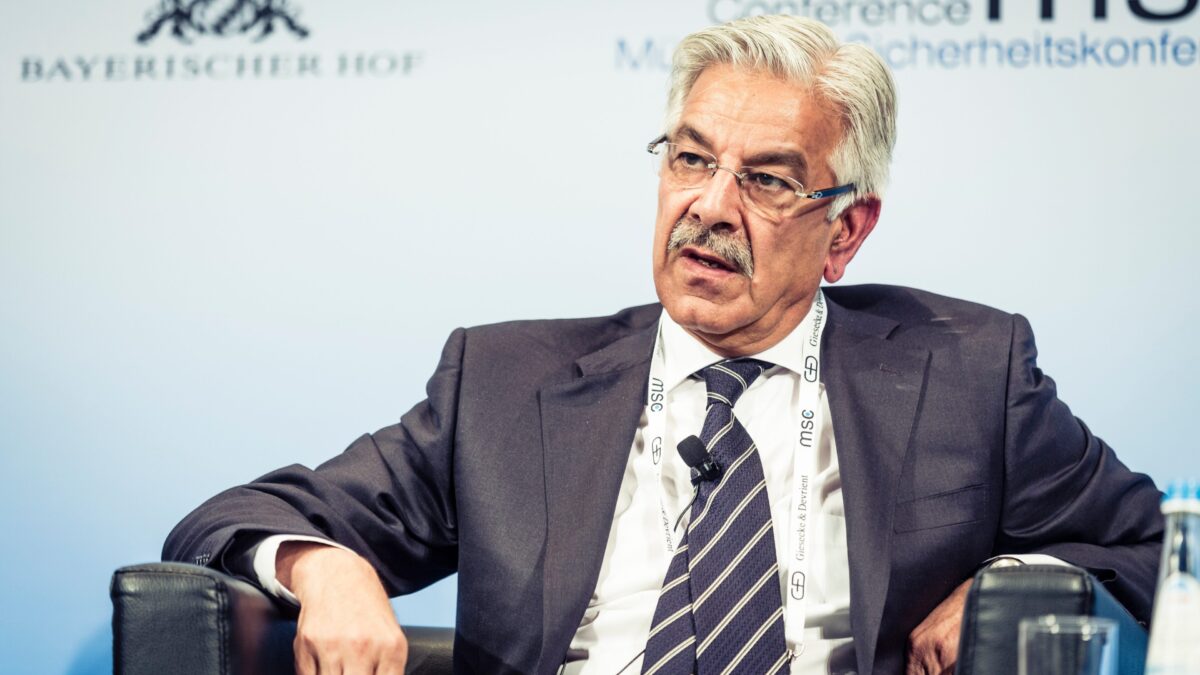
Pakistan’s defense minister said that the instability surrounding Afghanistan today is, in part, the consequence of Islamabad’s own past policies, including its role in the 1980s anti-Soviet war and the years following the Sept. 11 attacks.
Speaking on the sidelines of the Munich Security Conference in an interview with Deutsche Welle, the minister, Khawaja Muhammad Asif, said he did not blame any single party for the current situation.
“I do not blame anyone,” he said. “What is happening in Kabul is essentially the price we are paying for what we did in the 1980s and what we did after 9/11.”
Pakistan played a central role during the 1980s when Afghan mujahedeen groups fought Soviet forces. Islamabad served as a key conduit for support. After the Sept. 11, 2001, attacks, Pakistan joined the US-led coalition in Afghanistan but faced persistent accusations that it provided support or sanctuary to Taliban figures — allegations Pakistani officials have long denied.
In his remarks, Asif also addressed recent tensions with the Taliban authorities, accusing India of backing unrest along Pakistan’s western border.
“I believe, and I have reasons for this belief, that what is happening on our western border is supported by India,” he said, adding that relations between New Delhi and Kabul had grown closer in recent months.
Relations between Pakistan and the Taliban have deteriorated sharply since deadly border clashes in October. Islamabad has accused Baloch separatist militants and members of Tehrik-e-Taliban Pakistan of operating from Afghan territory with support from India and the Taliban, claims both New Delhi and the Taliban deny.
The Taliban have repeatedly said they will not allow Afghanistan’s territory to be used against other countries.
In recent months, the Taliban have moved to expand ties with India. In October, Amir Khan Muttaqi, the Taliban’s foreign minister, traveled to India. Shortly afterward, India’s Foreign Ministry said it would upgrade its representation in Kabul from a technical office to an embassy-level presence. The Taliban have also dispatched diplomats to India.