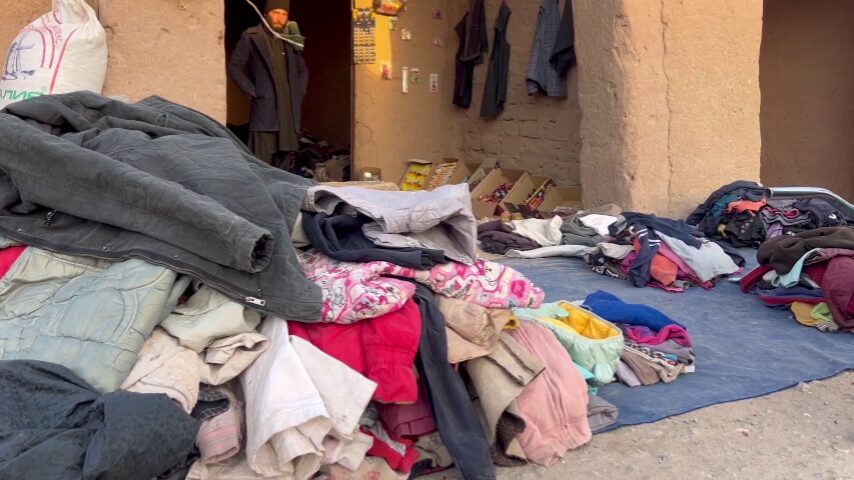
Clothing sellers in Zabul province in southern Afghanistan say their businesses have slowed sharply as rising prices and deepening economic hardship reduce customers’ ability to buy basic goods.
Shopkeepers at the district’s main market said the cost of clothing has increased due to supply disruptions, while residents struggling with unemployment and falling incomes have cut back on non-essential purchases.
Kamaluddin Malik, a second-hand clothing seller in Khak-e-Afghan, Zabul province, said higher import costs and shop rents had squeezed shopkeepers’ margins and driven prices beyond what many customers can afford.
“The border between Afghanistan and Pakistan is closed, and prices for second-hand clothes have gone up,” he said. “Each bundle costs 1,000 to 2,000 afghanis more, but people don’t have the money to buy because the economy is very weak.”
Other shopkeepers said demand for both men’s and women’s clothing had fallen sharply, leaving shopkeepers unable to sell goods even when purchased on credit.
“The main problem is that people have no money,” said Rahmatuddin, another clothing seller. “I bring these goods on credit, but no one is buying. People are scattered and struggling.”
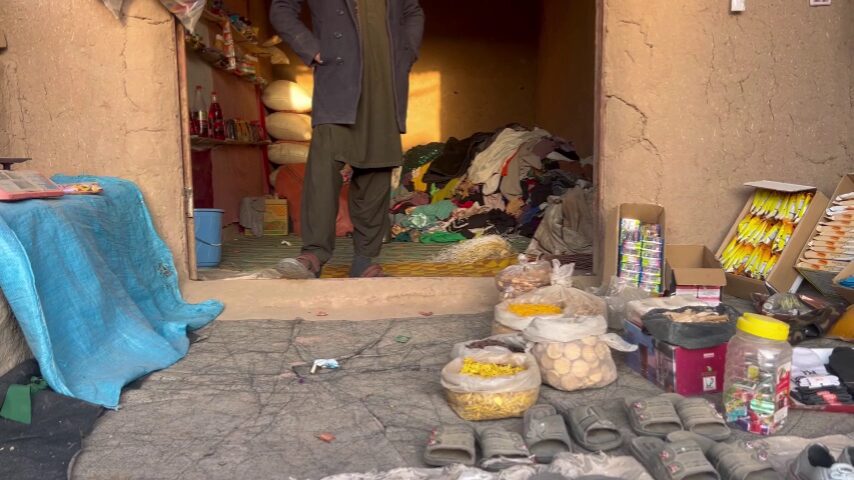
Another shopkeeper, Jalal, summed up the situation more bluntly. “There is no business,” he said. “There is no work at all.”
Residents and clothing sellers cited rising unemployment, the return of migrants, climate pressures and cuts in foreign aid as key drivers of poverty and reduced consumer spending in Zabul.
The United Nations has warned that economic contraction, border disruptions and declining assistance are worsening living conditions across Afghanistan, particularly in rural and southern provinces.