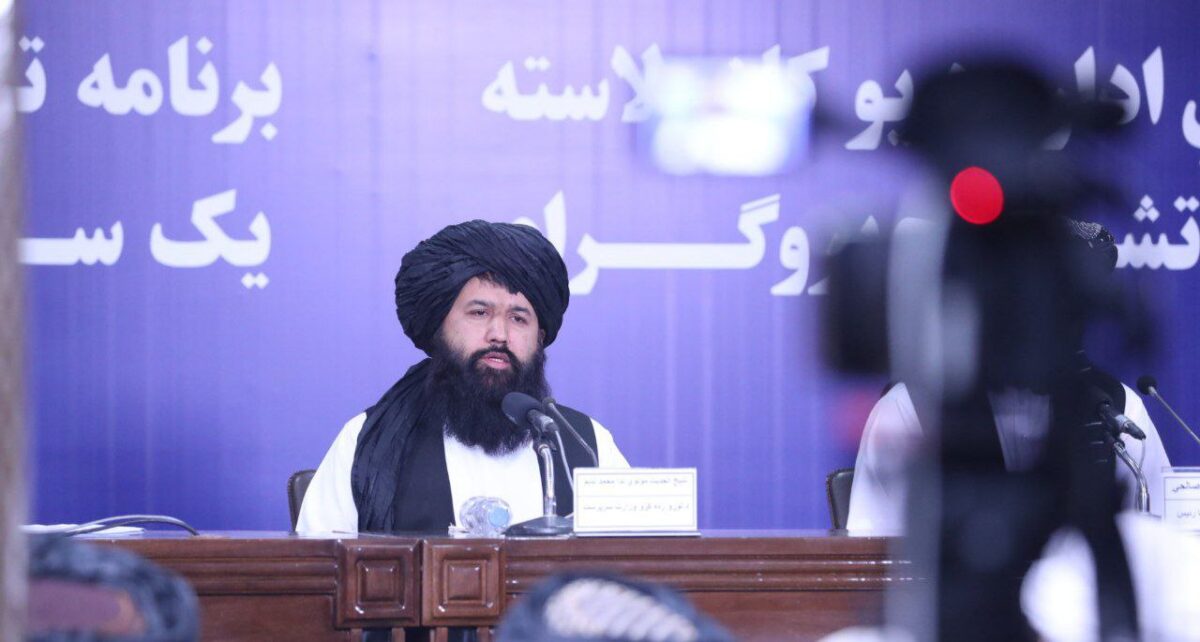
Taliban higher education minister Neda Mohammad Nadim has warned against internal dissent, urging unity and loyalty to the Taliban’s leadership amid signs of divisions within their ranks.
Nadim, a close ally of Taliban leader Hibatullah Akhundzada and his son-in-law, said critics of the Taliban administration were “hypocrites and enemies of Islam,” speaking at a gathering at the Central Jihadi Madrasa in Kabul.
He stressed the need for obedience and trust in the leadership, saying the survival of the Taliban’s rule depended on maintaining internal unity.
“On one side they try to undermine your faith, on another your religion, and on another the Islamic system and the scholars,” Nadim said. “They seek to create distrust and division. These are hypocrites and enemies of Islam.”
His remarks appeared to be a response to recent comments by Taliban Interior Minister Sirajuddin Haqqani, who last week criticised what he described as governance through fear.
“A government that rules people only through fear is not a government,” Haqqani said in a speech in the eastern province of Khost. “There must be a bond of trust and affection between the rulers and the people.”
The exchange has highlighted renewed tensions between factions within the Taliban, particularly between leaders based in Kandahar, where Akhundzada is headquartered, and the Haqqani network, analysts say.
A day earlier, Akhundzada also addressed internal criticism, saying Taliban laws and decrees were not based on individual opinion but derived from Islamic principles.
“The laws and decrees of the Islamic Emirate are not the views of a few individuals,” Akhundzada said in remarks published by Taliban officials. “They are based on the commands of God and invite people towards religion.”
The comments have drawn criticism from some Afghans, particularly over the Taliban’s restrictions on women and girls, including bans on secondary education, university study and many forms of employment.
Political analysts say the increasingly public differences over governance reflect deeper fractures within the Taliban’s leadership structure. The United Nations has previously reported internal disagreements among Taliban officials, noting efforts by Akhundzada to consolidate power by appointing loyalists to key positions.
Taliban have repeatedly denied the existence of internal divisions.