Pakistan’s Defense Minister Khawaja Asif has warned that Islamabad “does not need even a fraction” of its military arsenal to “obliterate the Taliban regime and push them back to the caves.”
He said Islamabad would no longer tolerate what he called “treachery” and “mockery” from across the border.
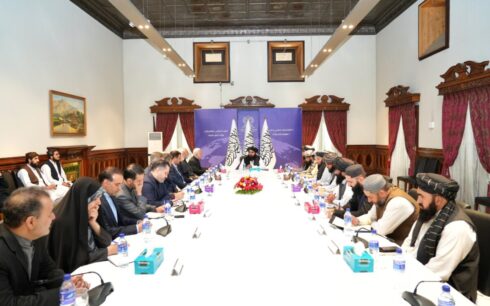
His remarks followed the collapse of four-day talks between Pakistani and Taliban delegations in Istanbul, where the two sides failed to reach any agreement on addressing cross-border militancy.
“Pakistan does not require even a fraction of its full arsenal to completely obliterate the Taliban regime and push them back to the caves for hiding,” Asif said in a strongly worded statement. “If they wish so, the repeat of the scenes of their rout at Tora Bora… would surely be a spectacle to watch.”
Asif accused the Taliban of dragging Afghanistan toward another war to preserve what he called a “usurped rule” and a “war economy.” He added that the Taliban’s “war cries” were hollow and performative, and warned that any further attacks on Pakistani soil would be met with decisive retaliation.
The Istanbul negotiations, facilitated by Qatar and Turkey, focused on Pakistan’s demand that the Taliban take action against the Tehrik-i-Taliban Pakistan (TTP), a militant group it claims is using Afghan territory to launch attacks. According to Pakistani officials, “irrefutable evidence” of such activity was presented during the talks, which they say was acknowledged by the hosts — but met with no commitment from the Taliban side.
A senior Taliban official, however, told Amu TV that the sticking point in the talks was Pakistan’s demand that Afghanistan prevent all TTP activity. The official said they made it clear that while the Taliban remain committed to not allowing Afghan soil to be used for attacks, they could not be responsible for what happens inside Pakistan.
“The TTP issue is Pakistan’s internal problem,” the Taliban official said. “It existed long before we returned to power, and it is not our responsibility to control what happens on the other side of the border.”
The official also said Taliban negotiators raised three key demands that went unanswered: preventing ISIS attacks from Pakistani territory into Afghanistan, halting Pakistani drone activity over Afghan airspace, and separating trade from political disputes.
Accusations and counter-accusations
In his statement, Asif accused the Taliban of pushing Afghanistan toward conflict to preserve its hold on power. He said the Taliban had misjudged Pakistan’s resolve and warned that future attacks would carry “a bitter cost.”
“If the Taliban regime is madly hellbent upon ruining Afghanistan and its innocent people once again, then so be it,” Asif added.
The Taliban, for their part, have rejected what they see as threats and coercion. In recent days, Taliban officials have warned that any military action by Pakistan would be met with a “strong and equivalent” response. Mohammad Naeem Wardak, the Taliban’s deputy foreign minister for finance and administration, said on social media that Islamabad would “receive a crushing reply” in case of any attack.
The talks come at a time of heightened friction between the two sides. Border crossings remain largely closed for trade and travel for a 18th consecutive day, disrupting commerce and livelihoods on both sides. Meanwhile, Pakistan has accelerated its deportation of undocumented Afghans, with nearly 8,000 people expelled in a single day last week.
Human rights groups and international organizations have voiced concern over both the mass deportations and rising hostilities. Analysts warn that the collapse of talks could push both nations into a more confrontational posture with dangerous implications for regional security.