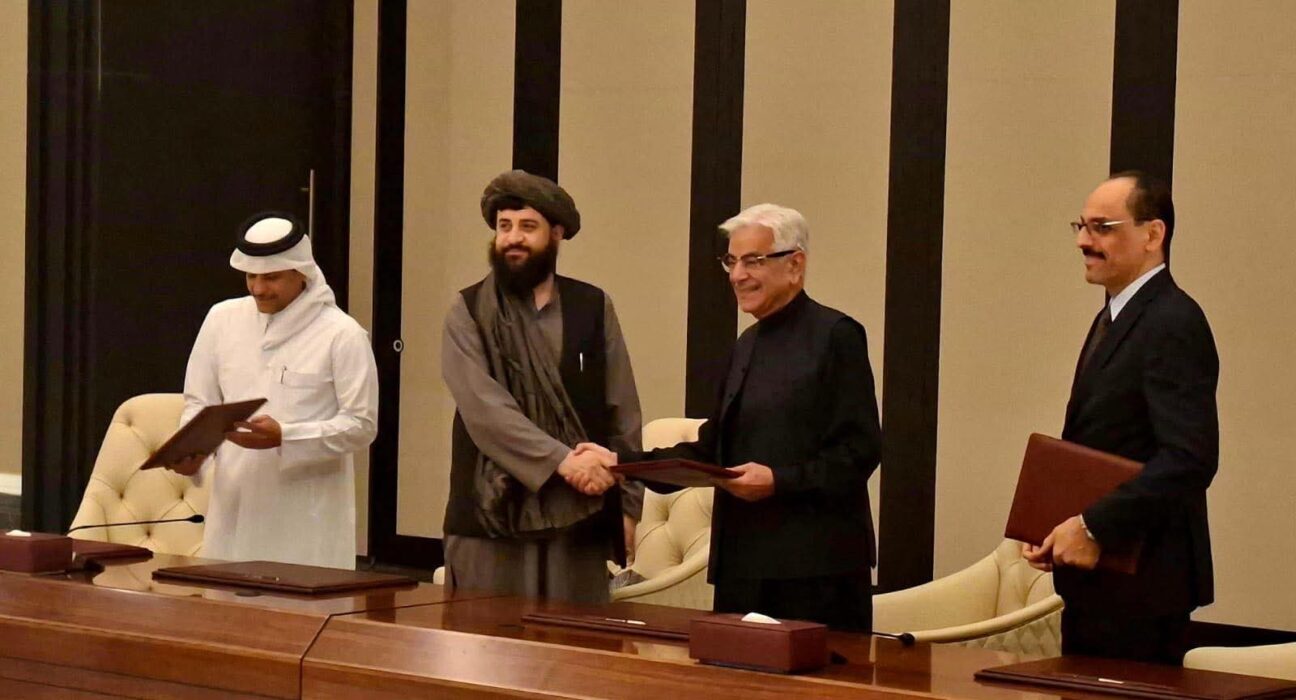
Taliban chief spokesman Zabihullah Mujahid confirmed Monday that the negotiations with Pakistan in Istanbul have entered the third and are ongoing, and that they remain hopeful for a resolution.
“We believe in resolving issues through dialogue,” Mujahid said as quoted by the Taliban-run national broadcaster, RTA. “But if any country attacks Afghanistan, it will face a reciprocal response.”
The meetings, held in Istanbul, are the second round of formal talks between the two sides following weeks of escalating tensions and deadly border clashes. However, Pakistani news outlet Geo News reported late Sunday, Oct. 26, that the talks had effectively stalled after Pakistan presented its final position to the Taliban delegation without reaching an agreement.
According to sources cited in the report, the Pakistani side demanded “clear and actionable steps” from the Taliban to dismantle terrorist infrastructure operating from Afghan territory — specifically referencing Tehrik-e-Taliban Pakistan (TTP), which Islamabad accuses Kabul of harboring.
The sources said Pakistan emphasized that there would be “no compromise” on its core demands regarding terrorism. Taliban representatives, they added, offered responses viewed by Islamabad as “unrealistic” and “disconnected from ground realities,” suggesting a divergent agenda inconsistent with regional stability.
Security officials familiar with the negotiations said Pakistan had warned that the continuation of talks depends on “positive behavior and serious cooperation” from the Taliban side. The Turkish hosts, according to the same sources, are reportedly mediating intensively to convince the Taliban delegation to acknowledge the seriousness of the threat and to take concrete steps.
Taliban have not officially responded to Pakistan’s claims or to reports of a deadlock.
The Istanbul talks follow a week of armed clashes along the Afghanistan-Pakistan border that left dozens dead and disrupted cross-border trade. Despite a ceasefire brokered earlier this month in Doha, both sides remain on edge, with accusations of cease-fire violations persisting.
Moreover, five major border crossings between the two countries remain closed to trade and transit for the past 16 days.
The discussions have also come against the backdrop of broader tensions over Taliban reluctance to curb the activities of extremist groups Pakistan says are operating from Afghanistan’s soil. Islamabad has consistently warned that inaction could force it to pursue more aggressive military options.
Turkey, which has maintained open diplomatic channels with both sides, is attempting to salvage the dialogue, but observers remain skeptical that the current round will yield lasting results without a formal enforcement mechanism or regional backing.