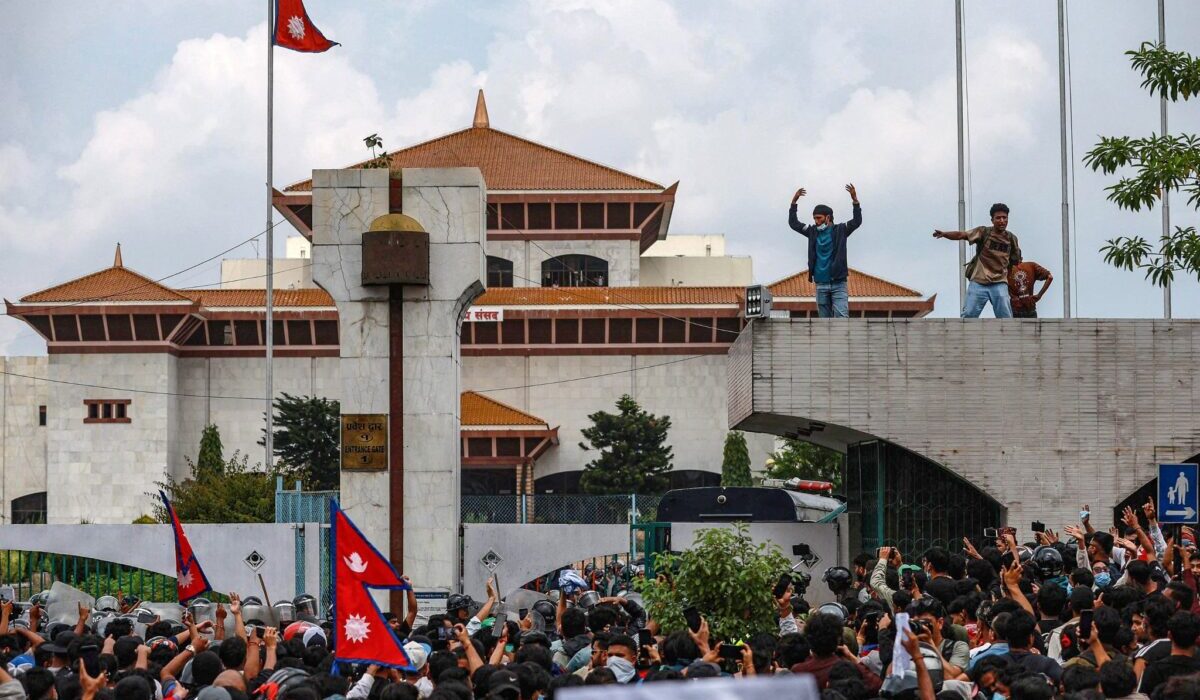
Soldiers surrounded Nepal’s Parliament on Wednesday, two days after violent anti-corruption protests left at least 19 people dead and forced Prime Minister K.P. Sharma Oli to resign.
The unrest — the worst in decades in the Himalayan nation — was triggered by a government ban on social media last week. Although the ban was quickly rescinded, anger spilled into the streets as demonstrators clashed with security forces who used tear gas, rubber bullets and live ammunition. More than 200 people were wounded.
By midweek, Kathmandu was under an indefinite curfew. Armored vehicles patrolled empty streets, shops and markets were shuttered, and burned vehicles and debris lined the roads near Parliament. Army firefighters were still battling flames inside the chamber after protesters set the building ablaze Tuesday.
“We are trying to normalize the situation first,” army spokesman Raja Ram Basnet said. “We are committed to protect the life and property of people.”
Protesters also torched several other government buildings, including the Supreme Court and homes of ministers. Flights at Kathmandu’s international airport were halted for much of Wednesday before limited service resumed in the evening.
The army said on X that restrictions would remain in place until Thursday morning while political leaders worked to stabilize the situation.