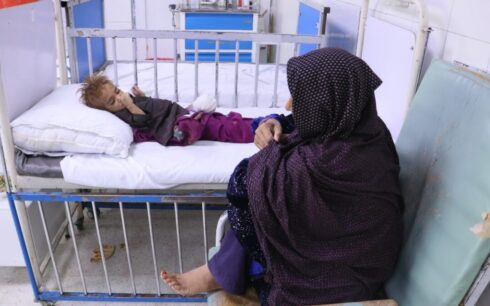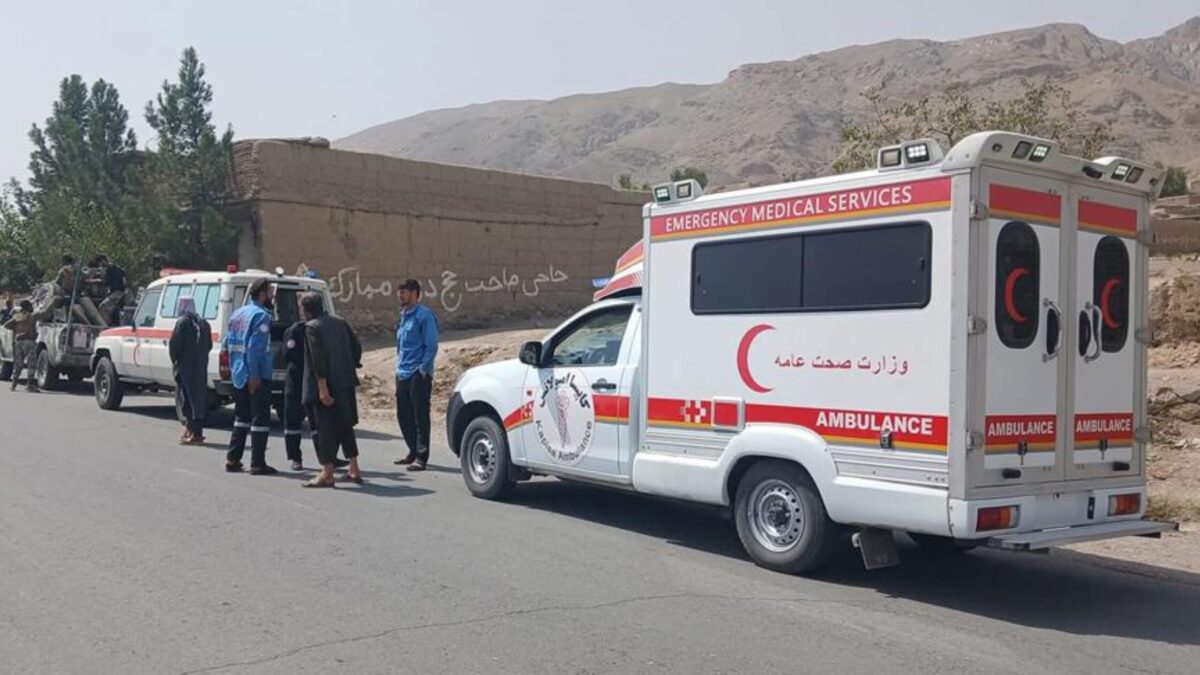
Female survivors of the deadly earthquake in eastern Afghanistan, particularly in Kunar province, are still facing a critical shortage of women doctors, local sources told Amu TV.
Although male doctors are trying to treat the injured, the absence of female medical staff has severely hampered care for many women patients, the sources said.
They added that the health condition of some of the injured women is serious and requires urgent attention.
Taliban have confirmed that the death toll from the August 31 earthquake in Kunar has risen to 2,205, with 3,640 others wounded.
Taliban deputy spokesman Hamdullah Fitrat said the casualties are concentrated in Mazar Dara in Nurgal district, Diwa Gul Valley in Suki district, and Manugi district of Kunar. He added that rescue operations are still ongoing.
Since returning to power in August 2021, the Taliban have imposed sweeping restrictions on women’s rights, including bans on secondary and higher education, most forms of employment, and travel without a male guardian. These restrictions have severely limited women’s access to healthcare — both as patients and as professionals.
One of the most critical consequences has been the growing shortage of female healthcare workers, especially in rural and conservative areas. Under Taliban policy, women are often discouraged — and in some cases outright banned — from working in hospitals and clinics. In many regions, cultural norms also prevent women from being treated by male doctors, leaving female patients with limited or no access to medical care.
The issue becomes particularly urgent during emergencies, such as the recent earthquake in eastern Afghanistan, where thousands of women were injured. Humanitarian organizations have repeatedly warned that these policies put women’s lives at greater risk, especially in disasters when timely medical treatment is essential.
International agencies, including the United Nations, have called on the Taliban to lift restrictions on women in healthcare and to allow the full participation of women in humanitarian response efforts. However, enforcement of these recommendations remains limited, and access for female staff continues to be a significant challenge.