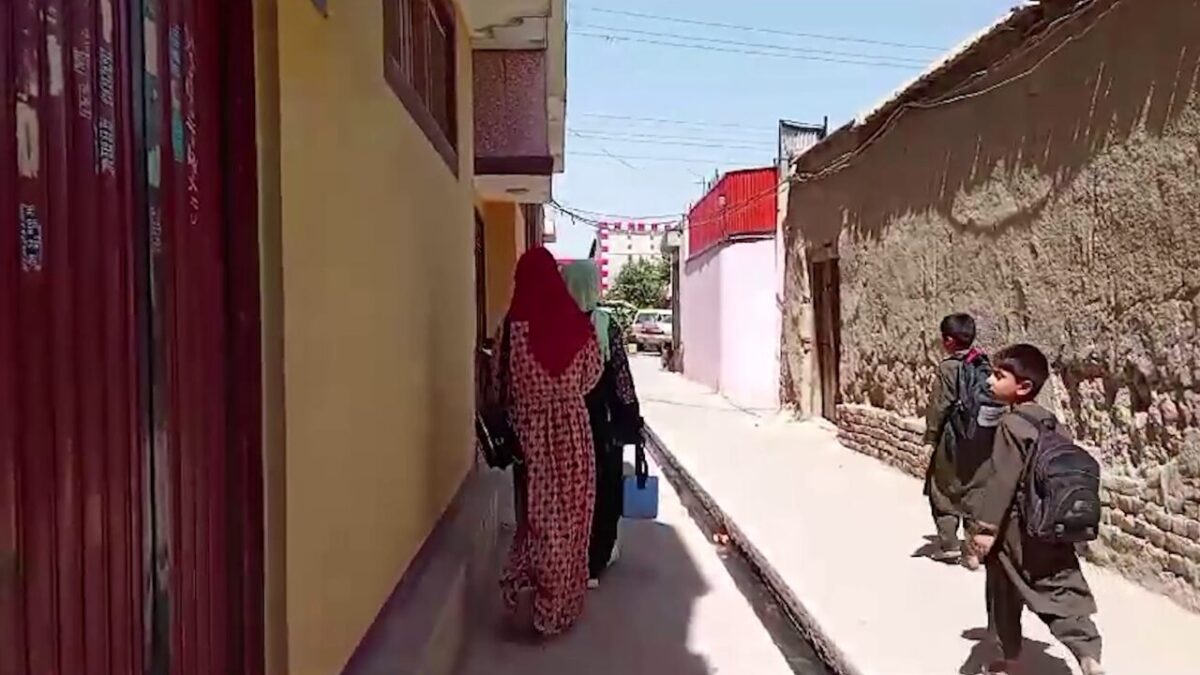
Muzhgan, not her real name, graduated in general medicine from Balkh University and worked for three years as a doctor at a nongovernmental organization. She was the sole breadwinner for her family after her father became paralyzed.
When the Taliban banned women from working in NGOs in late 2022, she lost her job. She found temporary work as a child vaccinator, but was dismissed again when the Taliban restricted vaccination work for women.
“My father is paralyzed, I have no brothers and I am the head of the family,” Muzhgan said. “I have six sisters. I studied for years, went into medicine, and my father worked hard to feed us while I covered my study expenses. Now I earn just 200 afghanis a week sewing, barely enough for dry bread. Where else in the world are women treated this helplessly and miserably?”
Her story is part of a wider pattern. Four years after the Taliban returned to power, Afghan women have been the hardest hit by sweeping restrictions — from the closure of schools and universities to bans on most jobs, sharp pay cuts for female employees, and growing limits on movement and appearance under the Taliban’s “Promotion of Virtue and Prevention of Vice” law.
The law, enacted in August 2024, expanded restrictions further, requiring women to cover themselves entirely, banning travel without a male guardian, and forbidding them from reciting the Quran aloud in public. Girls are barred from schooling beyond sixth grade, and women are excluded from most sectors, political participation, and public spaces including parks, gyms and beauty salons.
“With the Taliban’s arrival, we lost our right to education and work,” said one Kabul resident. “Every day, the problems for women get worse. We need work and education, and we want to achieve our rights.”
Over the past four years, women have staged protests against the Taliban’s policies, but such demonstrations have been quickly suppressed, often leading to arrests.
The United Nations says the Taliban have issued around 100 anti-women decrees, describing them as “devastating” for Afghan women and girls. The group has shown no sign of easing its restrictions — instead tightening them, leaving millions shut out of education, employment and basic freedoms.